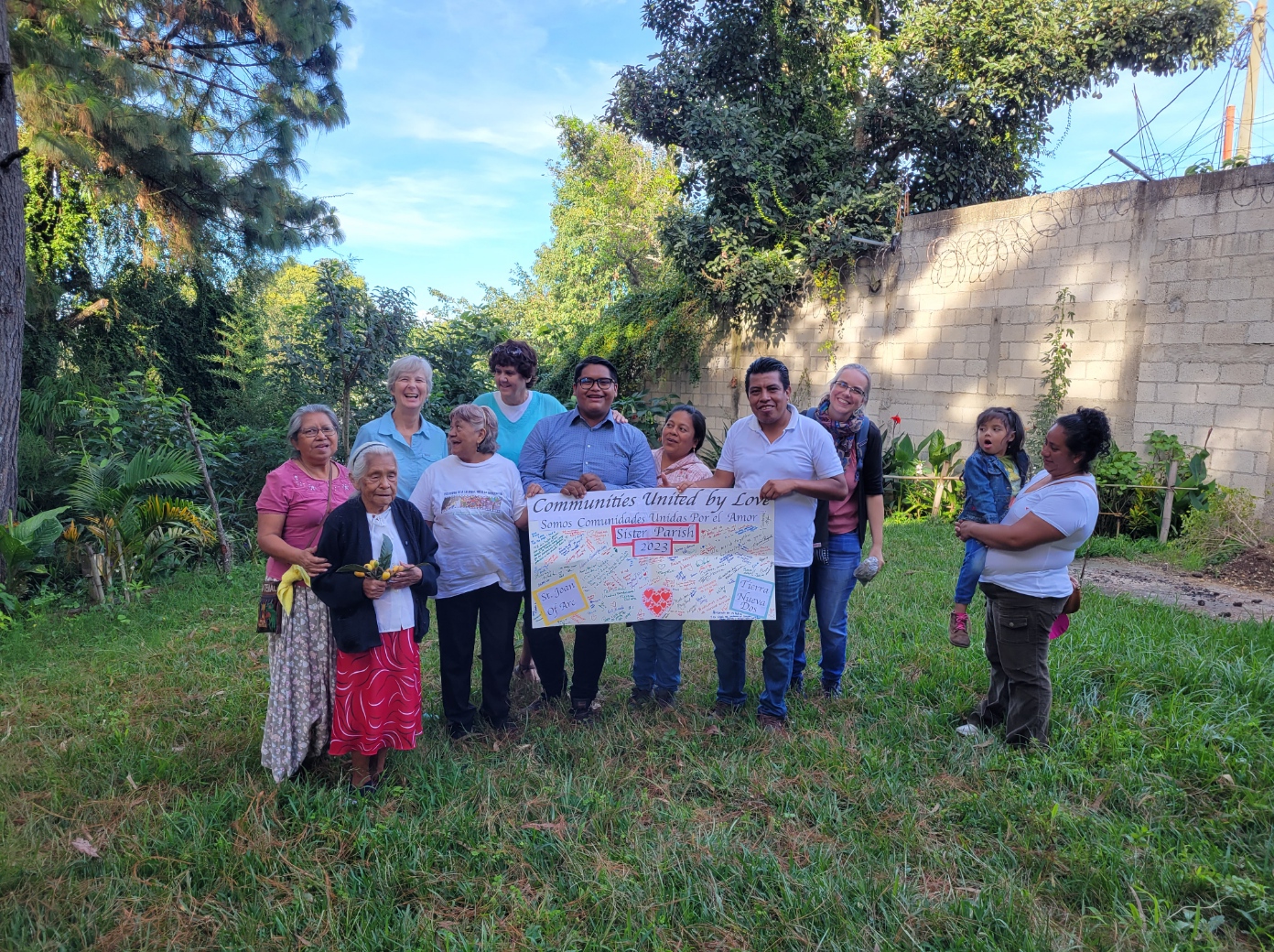
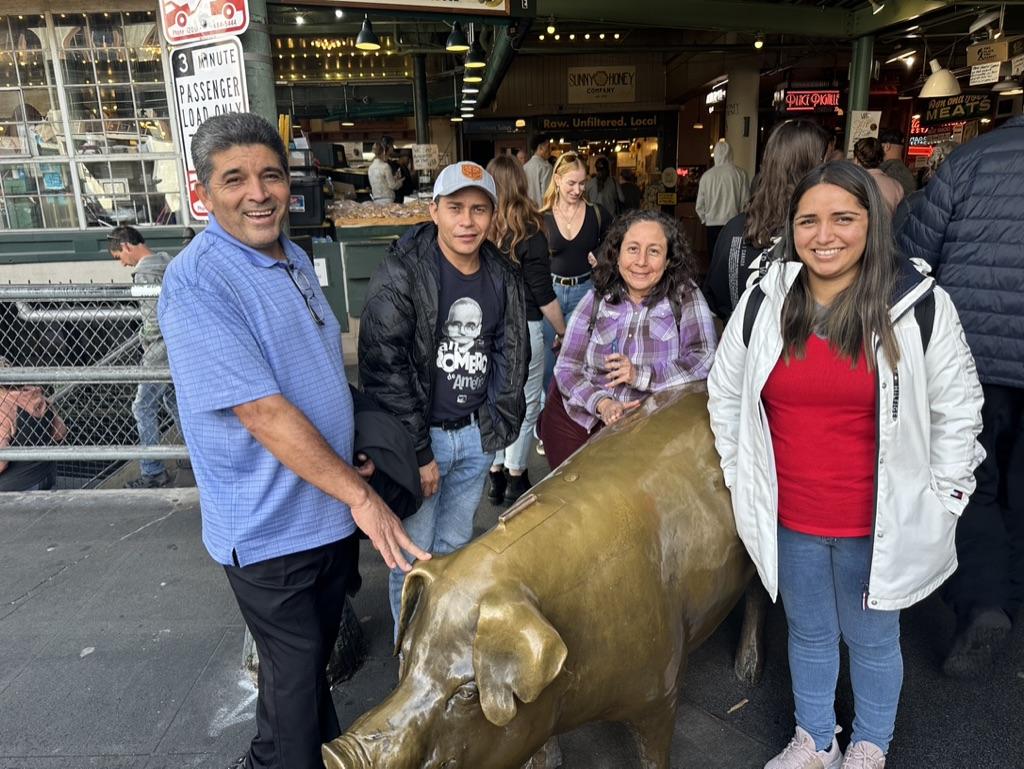
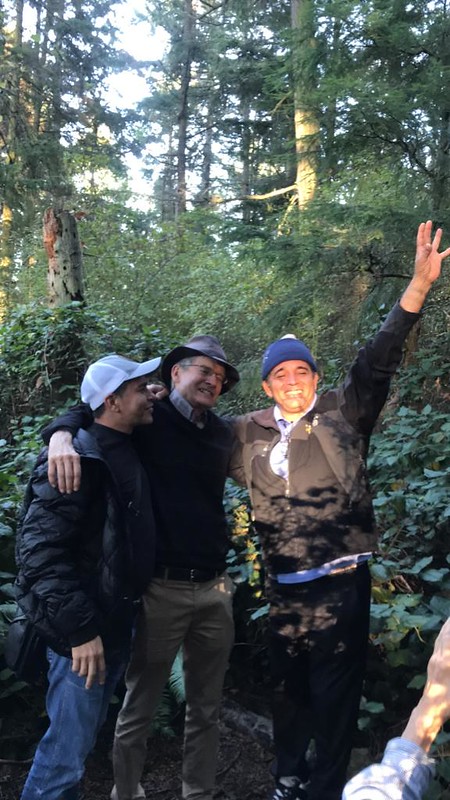
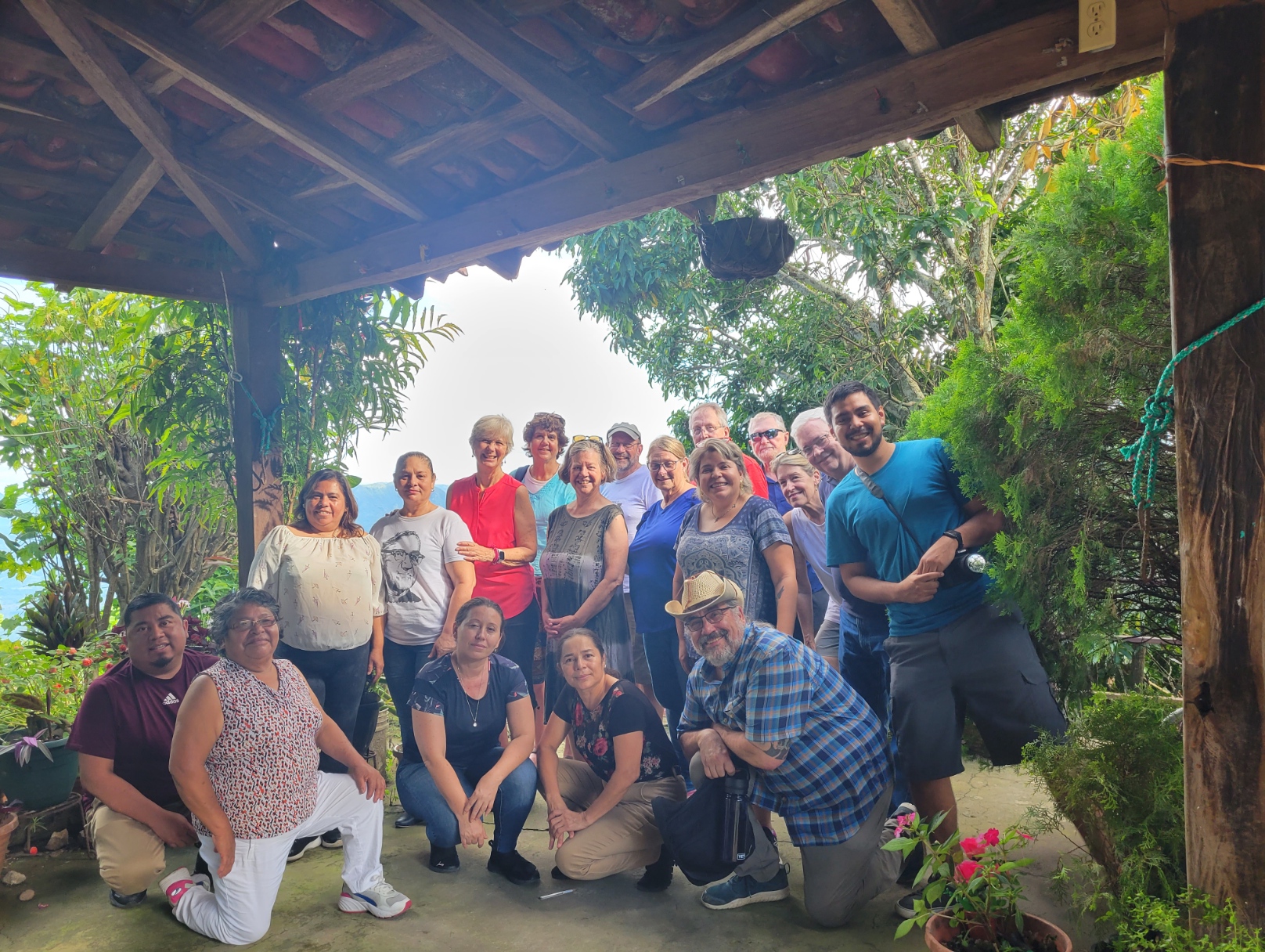
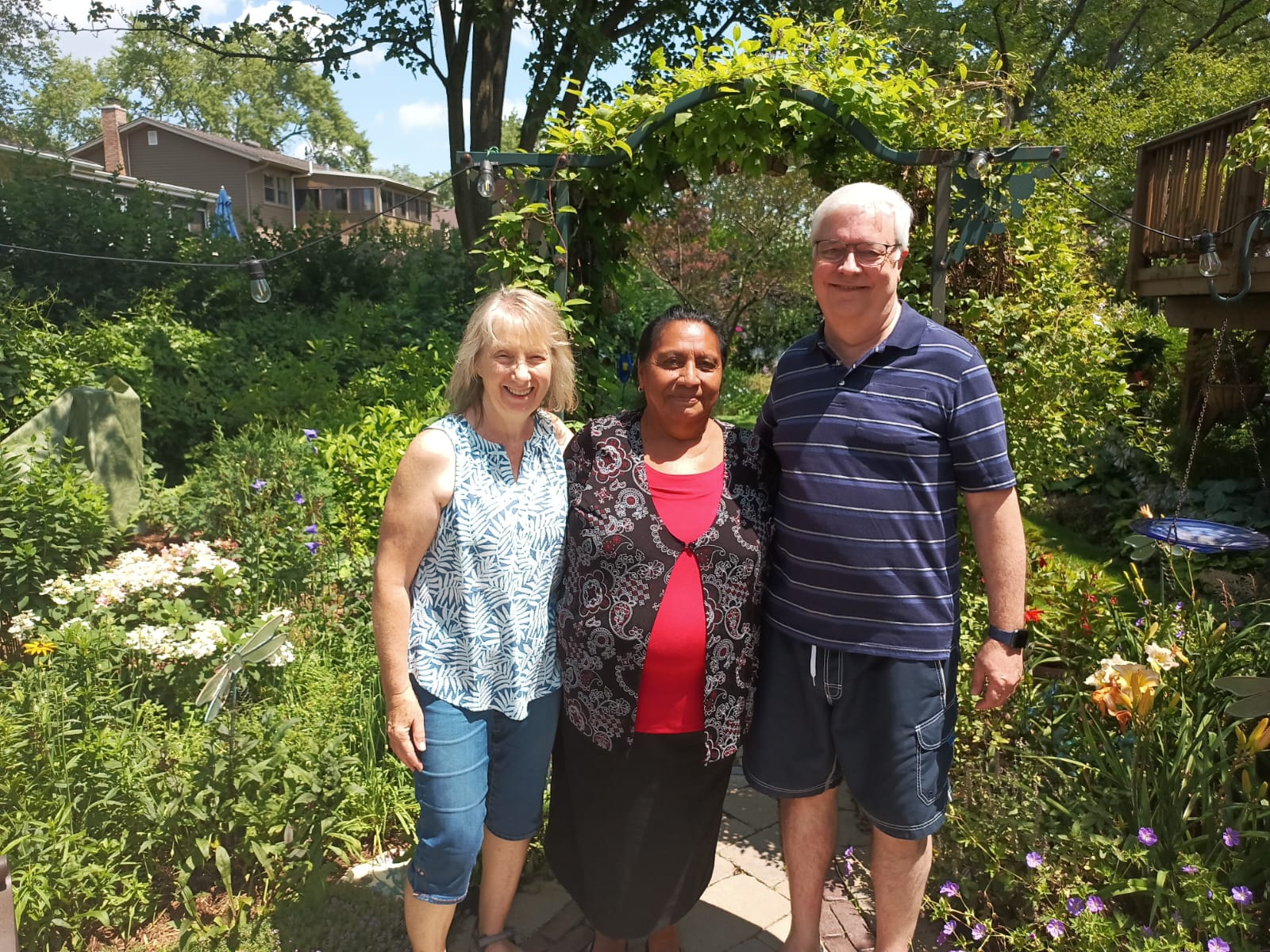
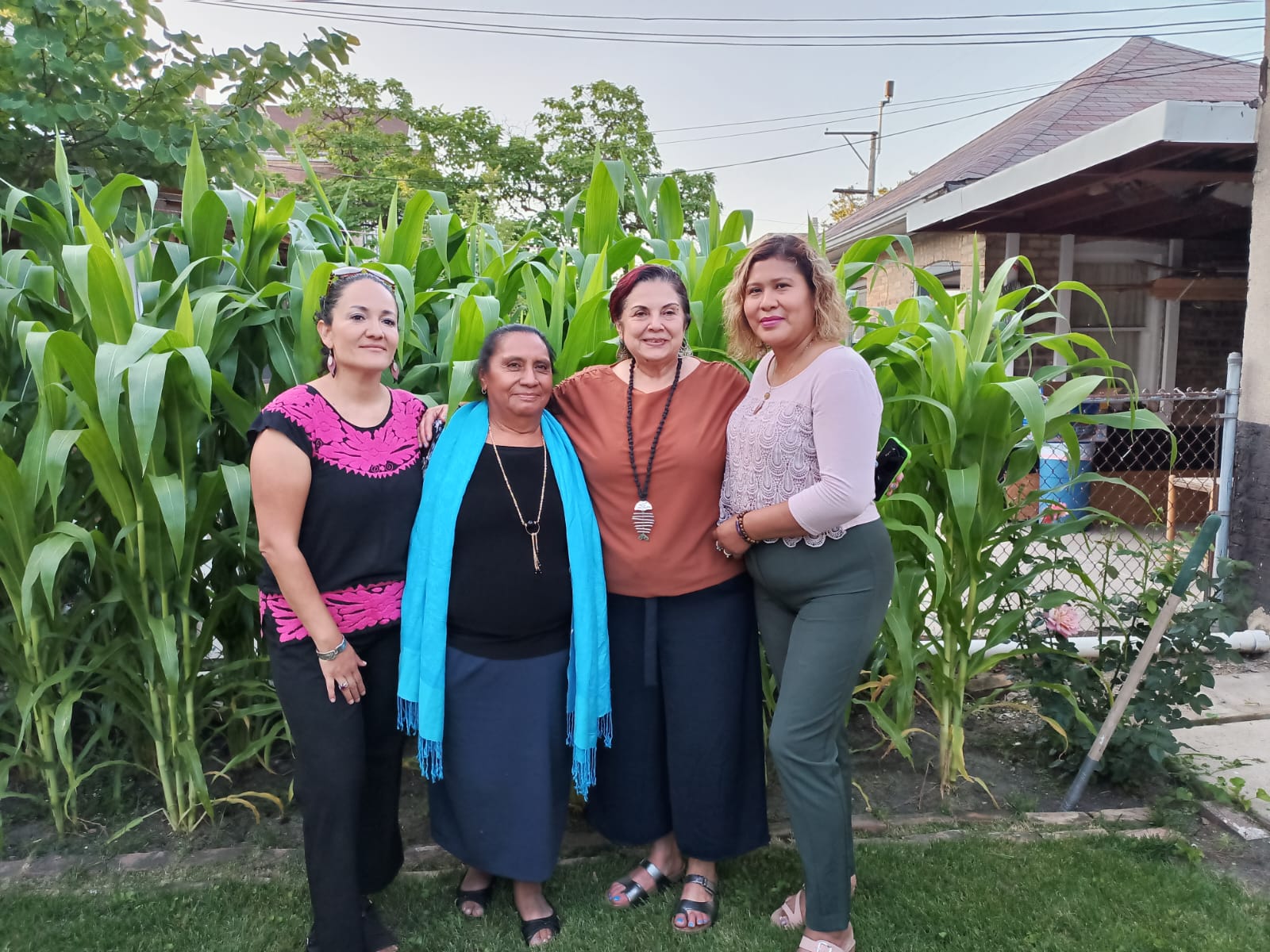
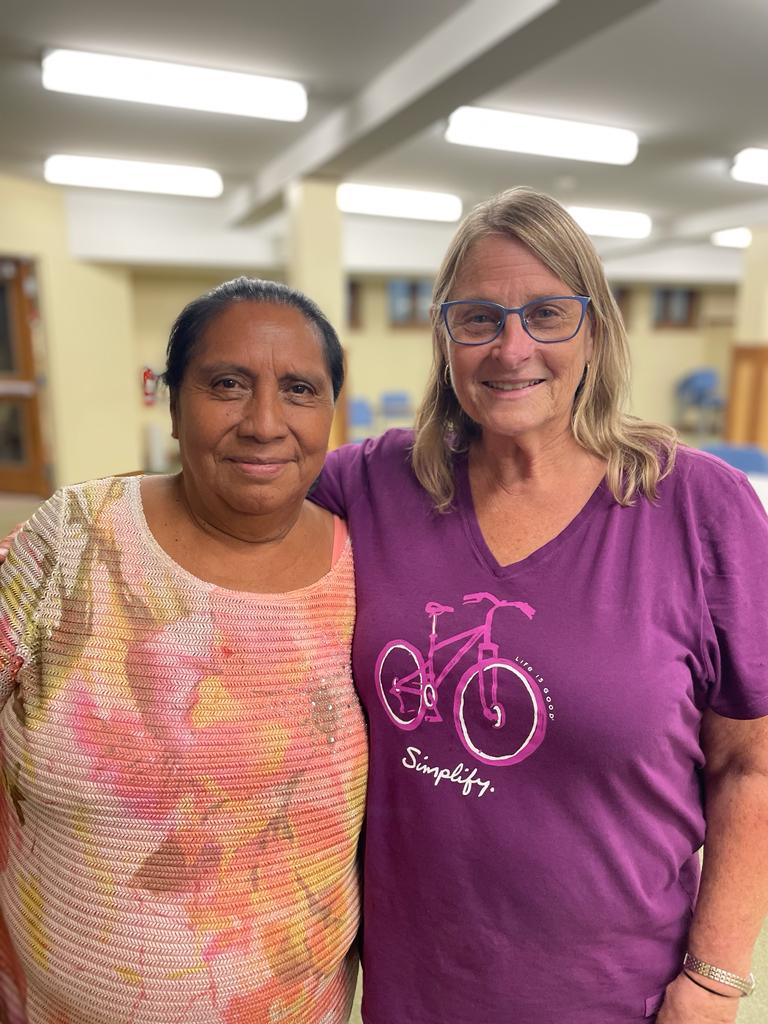
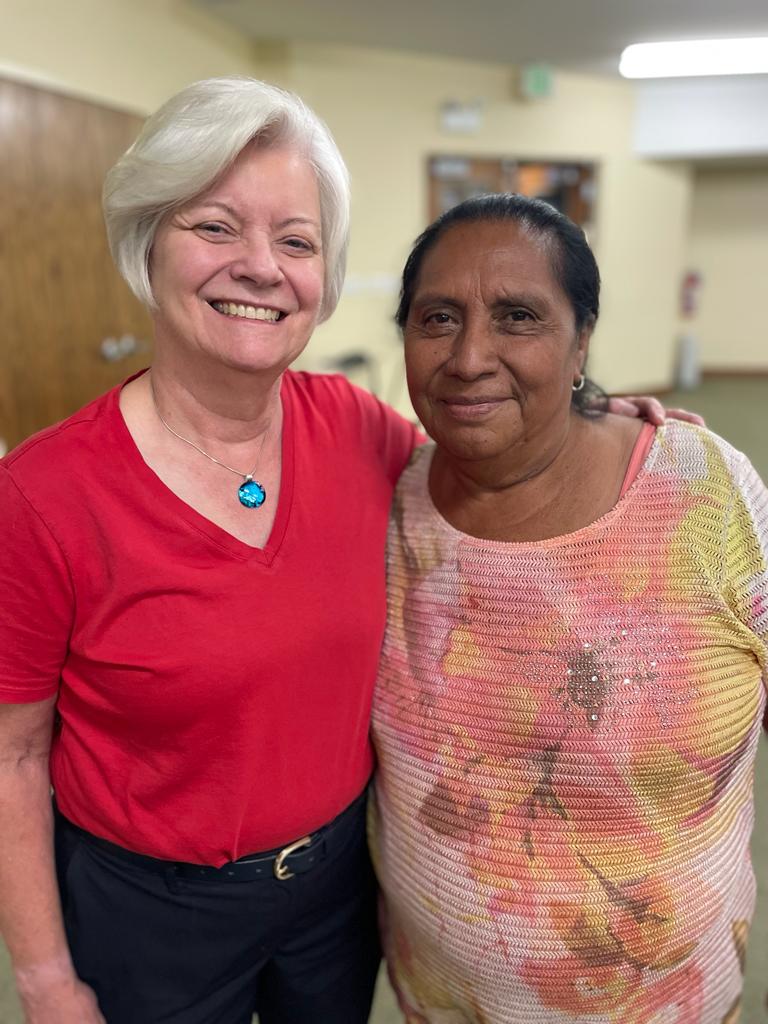
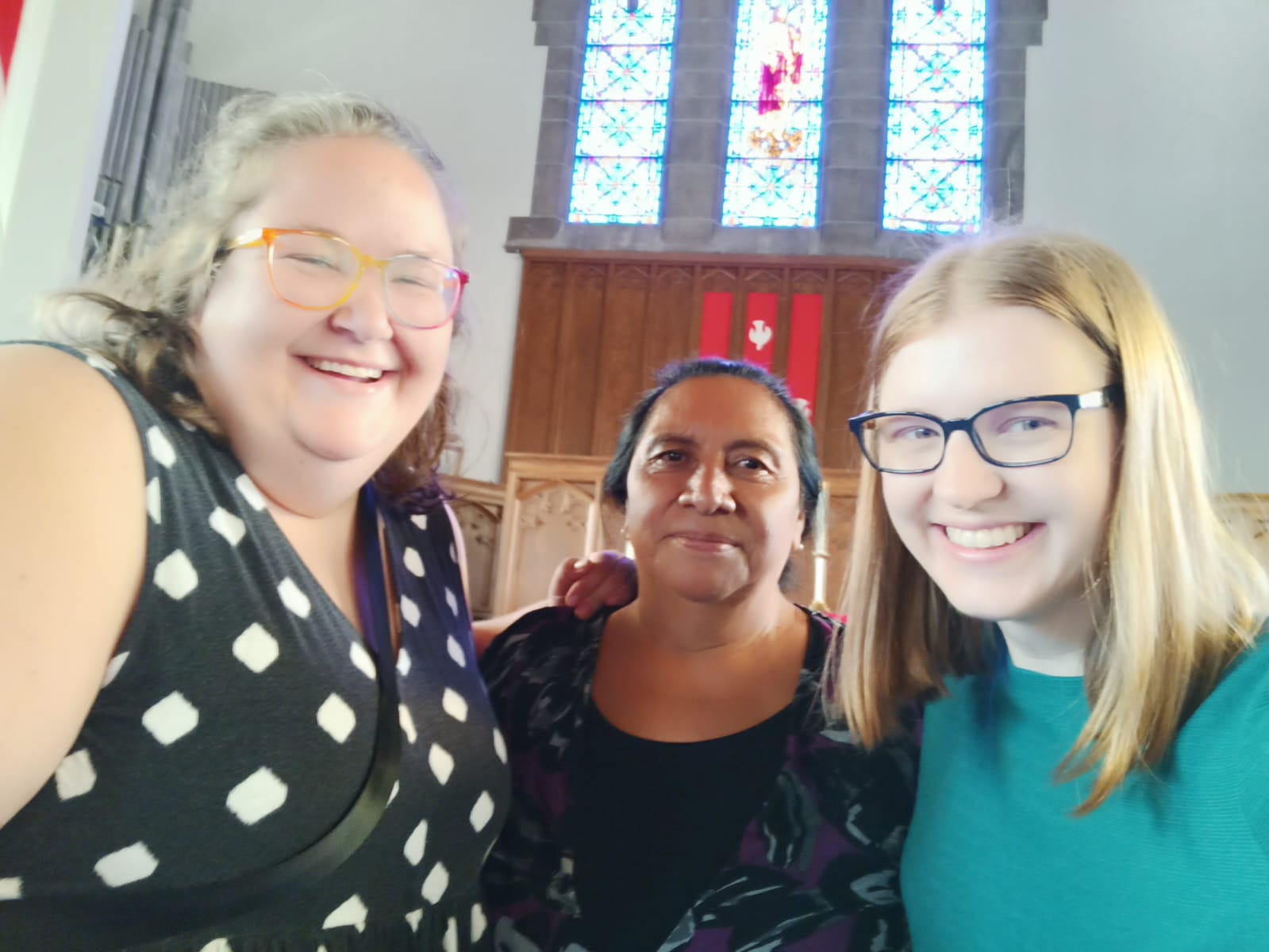
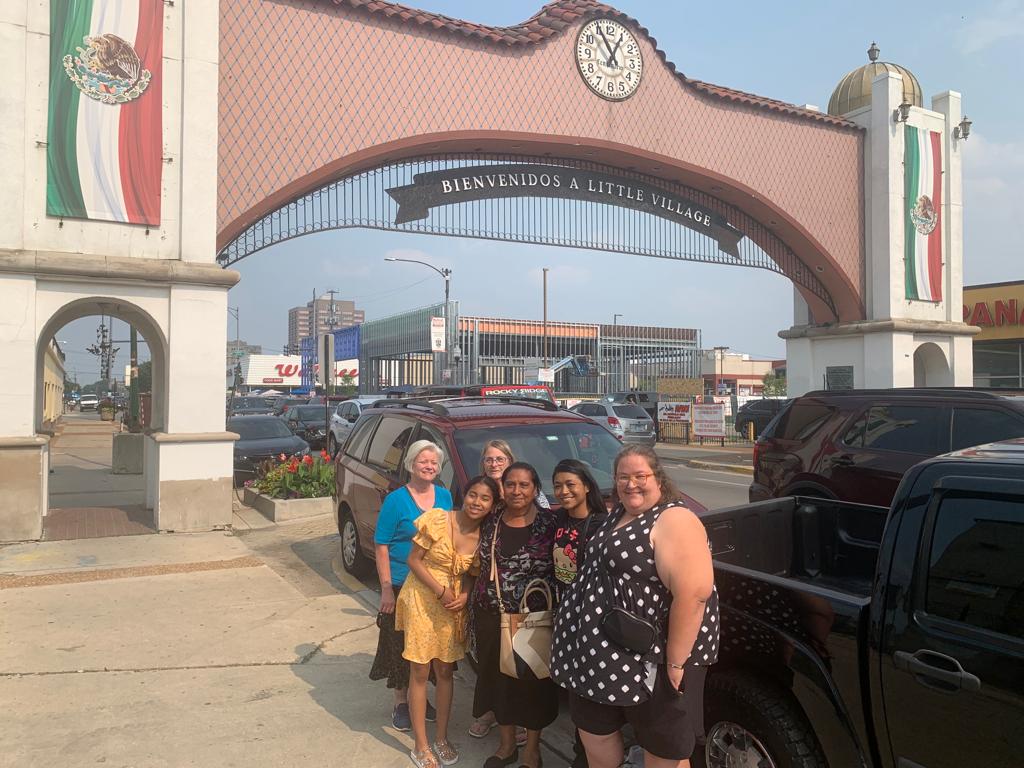
Patricia Cespedes-Schueller, a member of the Sister Parish Board of Directors, gave the following talk during a Sister Parish-themed service at Wallingford United Methodist Church in Seattle, Washington. The Sister Parish board rotates the location of meetings to visit current and potential Sister Parish churches. Contact us if you would like to host our board for a meeting. It is a great opportunity to gather and share Sister Parish with more people.
Buenos días, Good Morning, my name is Patricia Cespedes-Schueller I am a member of a Catholic community called Saint Joan of Arc (SJA) located in Minnesota. SJA has been walking in solidarity with Tierra Nueva II in Guatemala for more than 26 years and our relationship gets stronger every year. In preparation for this talk, there was one reading in particular that called my attention: Acts 4:32. “Now, all the believers were one in heart and soul. No one claimed that any of their possessions was their own, but they shared everything they had.”
The acts of the apostles tell us about the profound spirit of community within the early church. In the same way, I feel that our relationship with the community of TN II in Guatemala follows the same spirit. When our two communities encountered each other more than 26 years ago, this profound encounter moved us to open not only our hearts, but also our lives and share our struggles together and understand injustices and possibilities.
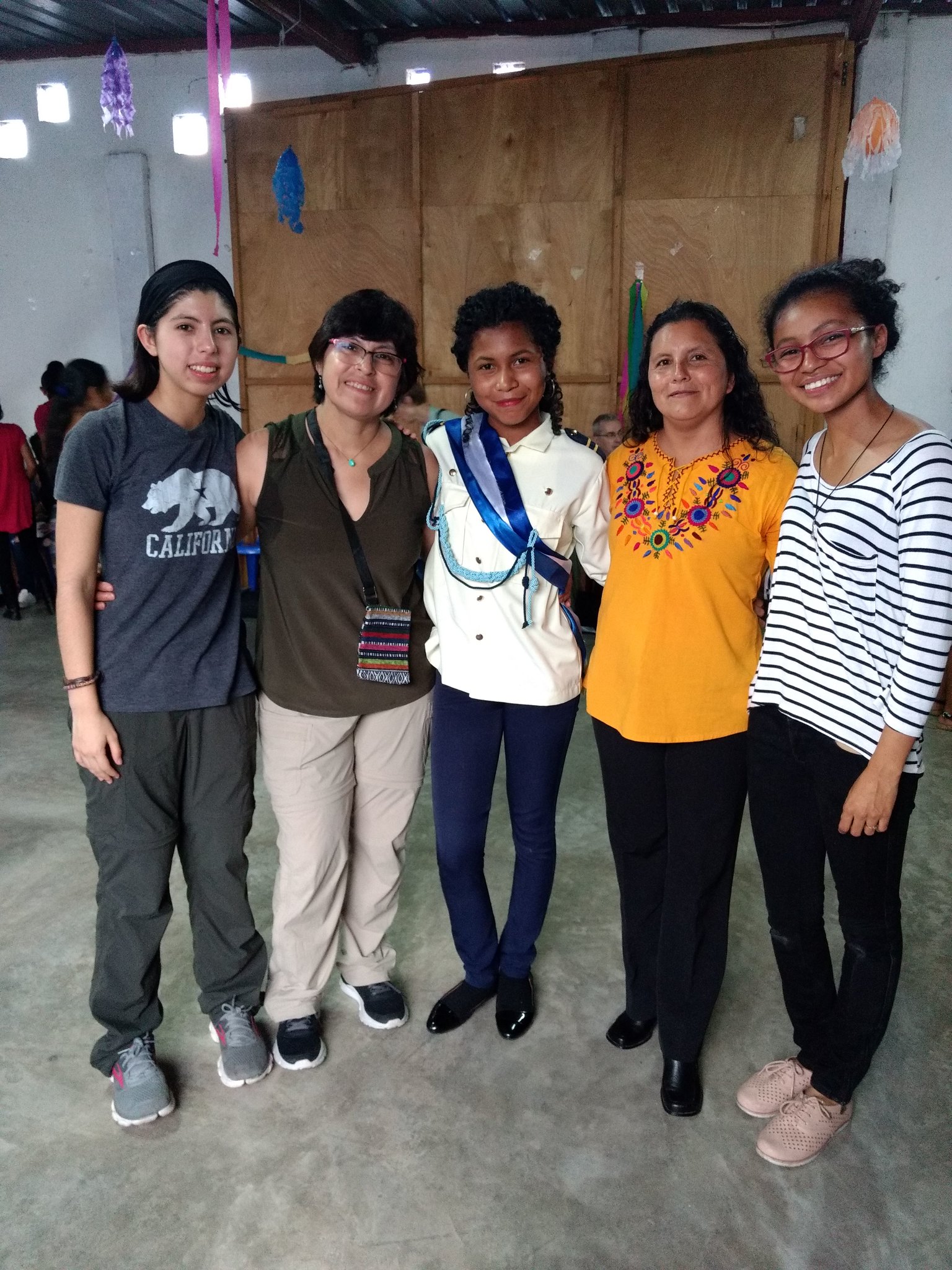
My daughter and I traveled to Guatemala to visit TN II in August of 2018. We had the honor to stay with a family which consisted of a mom, a dad and two daughters. We slept in the best bed they had in the house and sat in the best places at the table when sharing a meal. They explained their identity as a mixed family, Ladina (of mixed Indigenous and European descent) and Garifuna (of Afro-Caribbean descent), with pride in their heritage. The dad was not in town when we were staying with his family due to the lack of jobs in the area. He needed to travel far away to find jobs. Sometimes he could not find work for long periods of time. The mom had a small room where she sold bread that she picked up from the bakery at 4:30 am. In addition, she sold some homemade “empanadas” which are small pies made by wrapping a pastry around cheese in this case. She sold these things to provide for her daughters. The older daughter was studying to be a teacher, but at the same time, she also needed to work to help the family, and her commute was long, and her days were very tiring. The younger daughter was still in high school. Both daughters were very dedicated students. A year later, I learned that the dad’s health had worsened, and he could not work any longer, and the older daughter stopped studying to support her family.
This family shared their lives with us. We talked for hours telling each other funny and sad family stories. We sang together. We danced. I helped the mom to cook empanadas at 4am in the morning one day. My daughter dressed up in some of the daughters’ dresses just for fun. The three young women played a game called Dos (a version of the game Uno in USA). We took many pictures. We shared so many meals together even when we were not hungry at all. One day I mentioned that I liked a fruit called lychee and the next day I had many waiting for me at the house. We talked with the dad on the phone because they wanted to share that with us. We were a family united in one heart and soul.
This is what sister parish offered to my daughter and I, a real encounter with real people, the gift to struggle for justice together with our brothers and sisters in TN II. The understanding that our families had many similarities, but also the awareness that our geographic locations either limited or offered more opportunities to us, and the realization that the injustices were keeping us from fully answering our call to be a community who shared everything together, to fully be a family.
After my visit to TN II in Guatemala I joined the Sister Parish community at Saint Joan of Arc and later I joined the board of Sister Parish Inc. The Acts of the Apostles says, “Now, all the believers were one in heart and soul. No one claimed that any of their possessions was their own, but they shared everything they had.” Sister Parish offered us the opportunity to share our lives, to be One with our brothers and sisters in TN II, Guatemala and that is a gift that we accepted. I know many of you are sharing your lives with Guatemalans and Salvadorans, but there is always more space for more to join us in this journey.
Buenos días, mi nombre es Patricia Céspedes-Schueller. Soy miembro de la Comunidad Católica de Santa Juana de Arco (SJA) en Minnesota. SJA ha estado caminando en solidaridad con Tierra Nueva II en Guatemala por más de 26 años y nuestro hermanamiento se fortalece cada año. En preparación para esta charla, una lectura en particular me llamó la atención: Hechos 4:32. “La multitud de los que creyeron era de un corazón y un alma. Ninguno decía ser suyo lo que poseía, sino que todas las cosas eran de propiedad común.”
Los Hechos de los apóstoles nos hablan del profundo espíritu de comunidad dentro de la iglesia en ese entonces. De la misma manera, siento que nuestro hermanamiento con la comunidad de TN II en Guatemala sigue en el mismo espíritu.
Cuando nuestras dos comunidades se encontraron hace más de 26 años, este profundo encuentro nos movió a abrir no solo nuestros corazones, sino también nuestras vidas y compartir nuestras luchas, así como comprender las injusticias y las posibilidades.
Mi hija y yo viajamos a Guatemala para visitar TN II en agosto de 2018. Tuvimos el honor de quedarnos con una familia: una mamá, un papá y dos hijas. Dormimos en la mejor cama que tenían en la casa y nos sentamos en los mejores lugares de la mesa cuando compartíamos una comida. Nos explicaron su identidad como una familia mixta, Ladina (de ascendencia mixta indígena y europea) y Garífuna (de ascendencia afrocaribeña), con orgullo en su herencia. El papá no estaba en la ciudad cuando nos quedamos con su familia debido a la falta de empleos en el área. Necesitaba viajar lejos para encontrar trabajo. A veces no podía encontrar trabajo durante largos períodos de tiempo. La mamá tenía una pequeña habitación donde vendía pan que recogía de la panadería a las 4:30 am. Además, vendía algunas “empanadas” caseras que son pequeñas tartas hechas envolviendo una masa alrededor del queso en este caso. Ella vendía la comida para poder mantener a sus hijas. La hija mayor estaba estudiando para ser maestra, pero al mismo tiempo, también necesitaba trabajar para ayudar a la familia y su viaje era largo y sus días eran muy largos también. La hija menor todavía estaba en la escuela secundaria. Ambas hijas eran estudiantes muy dedicadas. Un año después, me enteré de que la salud del padre había empeorado y ya no podía trabajar, y la hija mayor dejó de estudiar para ayudar a su familia.
Esta familia compartió sus vidas con nosotros. Hablamos durante horas contándonos historias familiares divertidas y tristes. Cantamos juntos. Bailamos. Un día ayudé a la mamá a cocinar empanadas a las 4am de la mañana. Mi hija se vistió con algunos de los vestidos de las hijas solo por diversión. Las tres jóvenes jugaron el juego de mesa Dos (una versión del juego Uno en EE. UU.). Tomamos muchas fotos. Compartimos muchas comidas juntas incluso cuando no teníamos hambre en absoluto. Un día mencioné que me gustaba una fruta llamada lichi y al día siguiente tenía muchas esperándome en la casa. Hablamos con el padre por teléfono porque querían compartir eso con nosotros. Éramos una familia unida en un corazón y un alma.
Esto es lo que el hermanamiento nos ofreció a mi hija y a mí, un encuentro real con personas reales, el regalo de luchar por la paz y la justicia junto con nuestros hermanos y hermanas en TNT II. La comprensión de que nuestras familias tenían muchas similitudes, pero también la conciencia de que nuestras ubicaciones geográficas afectaban nuestras oportunidades de forma injusta.
Después de mi visita a TN II en Guatemala, me uní a la comunidad del hermanamiento en Santa Juana de Arco y más tarde me uní a la junta directiva de Iglesias Hermanas. Los Hechos de los Apóstoles dicen: “La multitud de los que creyeron era de un corazón y un alma. Ninguno decía ser suyo lo que poseía, sino que todas las cosas eran de propiedad común.”. Iglesias Hermanas nos ofreció la oportunidad de compartir nuestras vidas, de ser Uno con nuestros hermanos y hermanas en TN II, Guatemala y ese es un regalo que aceptamos. Sé que muchos de ustedes están compartiendo sus vidas con guatemaltecos y salvadoreños, pero siempre hay más espacio para que más personas se unan a nosotros en este camino.
Jan Heikes, a member of the Sister Parish Board of Directors, gave the following talk during a Sister Parish-themed service at Wallingford United Methodist Church in Seattle, Washington. The Sister Parish board rotates the location of meetings to visit current and potential Sister Parish churches. Contact us if you would like to host our board for a meeting. It is a great opportunity to gather and share Sister Parish with more people.
Hi! I’m Jan Heikes from Decorah, Iowa.
Our affiliation with Sister Parish began in about 1996 after my husband, Lee Zook, took a three-week summer course in Guatemala in preparation for course that he was leading for Luther College students. One of the activities was a visit to UPAVIM where he met Dick Fenske, one of Sister Parish’s founders. He came back very excited, and a core group including our current pastor, Jim Dale, started exploring the idea.
After some time of education and discernment, our first delegation traveled to Nebaj, Guatemala in June of 1999. Over the next three years, we had two additional delegations south, and one north. Although none of us considered ourselves financially well off, the living situations of our hosts showed us the reality of how many people lived…dirt floors, cooking over an open fire, hand dug pits in the corn field for bathrooms. But incredible hospitality in sharing all that they had with us, and with those even less fortunate than they were. And we struggled in how to be in solidarity with these folks given our wealth. We financed scholarships and a chicken raising project. I’m not sure exactly what happened…internal conflicts, politics, the leadership not acting on behalf of the entire Nebaj community…it’s all a little murky. And, staff recommended that the relationship end.
I tell you this because we don’t tend to talk about the things that can go wrong. The experience shook us, and it took a couple of years to regroup. Could we really make the same connection with another community like we did with the people of Nebaj? What would be our role in funding projects? How could we make sure that our relationship was based on our solidarity with each other?
But in 2003, we had our first delegation to Potrerillos, El Salvador with delegations going north (January & November of 2005, 2007, 2011, 2013, and 2017) or south (2006 and 2014) every year until 2017. Maria Van Der Maaten & I have been back as part of open delegations, but COVID, Sister Parish active members growing older, and busy schedules interrupted several “almost” delegations. About 2 years ago, the group expanded to include the Congregational UCC across the street.
I continue to be struck by the importance of relationships built through Sister Parish, relationships that have long-lasting impacts even if the contact is not frequent. We know their stories. We can tell their stories. And this is powerful in a community that continues to have an increasing immigrant population that fill jobs in meat packing plants and on farms that would otherwise go unfilled. One of our delegates was a Decorah police officer who wanted to see what life was like for those people that he was running into on the streets. Now, Warren is a big man who towered over most of our friends in El Salvador. And when the host family found out that he was a policeman from the US, they were terrified. This was not the reaction that this teddy bear of a man had expected.
Personally I’ve had to confront and become aware of prejudices that I didn’t think I had…things like poor people aren’t in touch with the political situation. Boy, was I wrong there!!
But, I think that a piece that my younger son, Sam, wrote on return from his first visit as a 14 year old might say it best….
“Since I have come back from El Salvador, I have changed the way that I look at the world, the U.S., and everyday items that are supposedly necessities in America. Potrerillos, where we stayed as a delegation, was the poorest place I have been in all of my life. But it was remarkably one of the places with the most smiles walking the streets… This joyfulness that surrounded me affected the way I acted, and what I did. So when I came back home, I felt almost sad—that I wasn’t in that environment and that I had so many things around to distract me unlike my time in El Salvador.”
¡Hola! Soy Jan Heikes de Decorah, Iowa.
Nuestra conexción con Iglesias Hermanas comenzó alrededor de 1996 después de que mi esposo, Lee Zook, tomó un curso de verano de tres semanas en Guatemala como preparación para el curso que estaba dirigiendo para los estudiantes de la universidsad Luther College. Una de las actividades fue una visita a UPAVIM donde conoció a Dick Fenske, uno de los fundadores de Iglesias Hermanas. Regresó muy entusiasmado y un grupo en nuestra iglesia que incluía a nuestro pastor en ese entonces, Jim Dale, comenzó a explorar la idea.
Después de un tiempo de educación y discernimiento, nuestra primera delegación viajó a Nebaj, Guatemala en junio de 1999. Durante los siguientes tres años, tuvimos dos delegaciones más al sur y una al norte. Aunque ninguno de nosotros nos considerábamos económicamente ricos, las condiciones de vida de nuestro hermanamiento nos mostraron la realidad de cómo vivía mucha gente. También una hospitalidad increíble al compartir todo lo que tenían con nosotros y con aquellos aún más pobres que ellos. Y luchamos para ser solidarios con la gente dada nuestra riqueza. Financiamos becas y un proyecto de cría de pollos. No estoy seguro de qué sucedió exactamente… conflictos internos, política, unos líderes que tal vez no actuaron en nombre de toda la comunidad de Nebaj… todo es un poco confuso. Y el personal de Iglesias Hermanas recomendó que la relación terminara.
Les cuento esto porque no solemos hablar de las cosas que pueden salir mal. La experiencia nos sacudió y nos llevó un par de años reagruparnos. ¿Podríamos realmente establecer la misma conexión con otra comunidad como la que establecimos con la gente de Nebaj? ¿Cuál sería nuestro papel en la financiación de proyectos? ¿Cómo podríamos asegurarnos de que nuestra relación se basara en nuestra solidaridad mutua?
En 2003, tuvimos nuestra primera delegación a nuestro nuevo hermanamiento en Potrerillos, El Salvador, con delegaciones que iban al norte (en 2005, 2007, 2011, 2013 y 2017) y al sur (2006 y 2014) cada año hasta 2017. Maria Van Der Maaten y yo hemos vuelto como parte de delegaciones abiertas, pero el COVID, el envejecimiento de los miembros activos de Iglesias Hermanas y las agendas ocupadas interrumpieron varias delegaciones “casi”. Hace 2 años, el grupo se expandió para incluir a la la Iglesia Unida Congregacional al otro lado de la calle.
Sigo sorprendiéndome por la importancia de los hermanamientos construidos a través de Iglesias Hermanas, relaciones que tienen impactos duraderos incluso si el contacto no es frecuente. Conocemos la historia. Podemos contar sus historias. Y esto es poderoso en una comunidad que sigue teniendo una población inmigrante en aumento que ocupa puestos de trabajo en plantas empacadoras de carne y en granjas que de otra manera quedarían vacantes. Uno de nuestros delegados era un policía de Decorah que quería ver cómo era la vida de las personas con las que se cruzaba en la calle en Decorah. Warren es un hombre corpulento que superaba en altura a la mayoría de nuestros amigos de El Salvador. Y cuando la familia anfitriona descubrió que era un policía de los Estados Unidos, se aterrorizaron. Esta no era la reacción que este hombre con corazón grande esperaba.
Personalmente, he tenido que enfrentarme y tomar conciencia de prejuicios que no creía tener… cosas como que la gente pobre no está en contacto con la situación política. ¡Vaya, estaba muy equivocada!
Creo que un texto que mi hijo menor, Sam, escribió al regresar de su primera visita a los 14 años lo explica mejor…
“Desde que regresé de El Salvador, he cambiado la forma en que veo el mundo, los Estados Unidos y los artículos cotidianos que supuestamente son necesidades en Estados Unidos. Potrerillos, donde nos quedamos como delegación, fue el lugar más pobre en el que he estado en toda mi vida. Pero, sorprendentemente, era uno de los lugares con más sonrisas al caminar por las calles… Esta alegría que me rodeaba afectó la forma en que actuaba y lo que hacía. Así que cuando regresé a casa, me sentí casi triste, porque no estaba en ese entorno y tenía tantas cosas a mi alrededor que me distraían, a diferencia de mi tiempo en El Salvador.”
In April 2024, Danville Congregational Church hosted a Sister Parish Sunday that included special hymns, a children’s message about Holy Week traditions in Guatemala, video messages and prayer requests from their sister community in San Antonio, Guatemala and a sermon from Sister Parish staff Carrie Stengel (below). The service was livestreamed so that people in San Antonio could watch.
Mark 6:7-10
Calling the Twelve to him, he began to send them out two by two and gave them authority over impure spirits. These were his instructions: “Take nothing for the journey except a staff—no bread, no bag, no money in your belts. Wear sandals but not an extra shirt. Whenever you enter a house, stay there until you leave that town.
Good morning, Buenos Días, Saqarik (in Maya Quiche to San Antonio watching now).
On one of my first delegations with Sister Parish, an elder in the community told our group that we were like the 12 disciples sent out by Jesus in the reading today. They were told to bring nothing but their staff and their clothes and to stay in the homes of the people they visited. This elder told us we were doing God’s work just like the disciples, just by visiting.
We were struck and moved by his comment. We hadn’t thought of it that way and weren’t sure how the community saw us, though it is true that some of us felt called to be there.
We had come to humbly accept radical hospitality, to approach this relationship not as helper and helped, but as equals, each serving both as the giver and the receiver while also recognizing the inequalities of the world. Though we did bring more than just a staff and clothes in our suitcases, in other ways, we brought very little. No health brigade, no building project. We hoped to build bridges of a different kind. As Pope Francis said, God had come and called us out of our house, to be encountered so as to encounter others.
Since 2011, Sister Parish, the non-profit organization I work with, has had the honor of facilitating DCC’s relationship with the Catholic Community of San Antonio in Guatemala – it is a small church in a rural Indigenous Maya Quiche community. We facilitate similar relationships for 10 other U.S. churches, from Maine to Seattle to Minnesota, and each of them has a partner community in Guatemala or El Salvador. As an organization, we connect people, provide opportunities for cultural and faith-based exchanges. At our best, we also foster a commitment to social justice that is both local and global.
12 years ago, I visited San Antonio for the first time. In the house I stayed in, the two teenagers took care of me. Erica and Olga made sure I had enough to eat and that I was warm enough and not lonely at night. They taught me how to sing “Head, shoulders, knees and toes” in the Maya Quiche language so we could entertain their nieces and nephews while their mothers made tortillas and beans for 12 of us. Paola sang us hymns as we fell asleep.
There, on that day, I started building bridges, not out of cement or brick or metal, but out of moments of connection. Over the years, I have added many other moments to what I carry in my heart.
As we have shared our joys. I remember Juana and Ana teaching me their dance routine for a school performance and hanging out with Yoselin and Leslie in Antigua during a visit from DCC. On another visit with DCC, Tomás surprised our group, taking us to a beautiful mountain lookout and serving us “shecas”, the special bread served with honey during Holy Week that I showed a picture of during the children’s message. Tomás and the community didn’t want us to miss out on this special community tradition just because we visited a few weeks before Holy Week.
We have shared our struggles too. I remember talking with one woman in San Antonio after her son left for the U.S. He had not found work in Guatemala and had two little kids to support. She hadn’t heard from him for days. She found out later he had made it, but at that time she didn’t know if he was dead or alive. Many mothers never even get an answer to that question. During the pandemic they told me the young men were leaving in “truckloads”. Over the years, we have prayed for many members of both San Antonio and DCC who have lost loved ones, faced illness or long struggles with addiction. When 16-year-old Caty from San Antonio passed away, we grieved for her and the grief was double for me knowing that the injustice of poverty and entrenched racism played a role in her death. In San Antonio they received our prayers for Caty and sent videos of the funeral march. They know that Caty’s picture sits on DCC’s altar during the All Saints Day mass.
We have shared our movements and resilience. I remember Pedro talking to DCC about the historical and ongoing displacement of Indigenous peoples in Guatemala and the creative organizing happening now to protect Indigenous territory and Mother Earth. Last fall, Indigenous leaders in Guatemala led the nation-wide efforts to protect democracy and the elected president was able to take office thanks, in part, to their efforts. When a group from San Antonio came up to visit DCC, they learned about the church’s call as an open and affirming church and the movements in the U.S. to promote the rights of the LGBTQIA+ community.
We have shared our faith. I remember San Antonio’s reflection after visiting DCC. “We learned a new way to pray,” they told me. In Danville, they hold hands, uniting with each other and with God. “We will do that now,” they said.
I remember 12-year-old David’s reflection after visiting San Antonio. We asked him what he gave and what he received, and he told us, “I gave my time and I received the truth.”
That’s just it. Through Sister Parish, we expand our circle of understanding and we deepen our faith. We are called to our visits and our encountering of each other, not just because we enjoy it and we learn from it, though those are both good things. We are called to it because of God’s love for us and for the human dignity of all people. All those moments of connection I now carry in my heart add up to love.
In a world that seeks to divide us by nation, by language, by racism and classism, by the haves and have nots of the world, what is more transformational than connecting across those barriers? What force is more powerful than love in changing the global systems of oppression that divide us and obscure our shared humanity? You simply cannot view injustice with indifference or apathy when the people you love are harmed by it. Though it can be hard to see from here, the struggles for justice in the U.S. and Guatemala are inextricably linked.
The bridges we build cannot be built in a matter of days or weeks. We build them over time, in the moments we listen together, pray together, laugh together, and speak out against injustice together. If a group of delegates from the U.S. is like the 12 disciples, then so too is San Antonio, as we minister to each other.
And we invite you all to join us. You can connect with the Sister Parish committee here, help plan activities, join a call with San Antonio, or travel to Guatemala. There is an opportunity this November to travel with Trish and others from DCC who will join a Sister Parish trip to Guatemala and El Salvador – please reach out if you are interested in learning more.
The reading from Micah today asks, “And what does the Lord require of you?” The answer is straightforward, though not always easy in practice, “To do justice, to love mercy and to walk humbly with your God.” This is what Sister Parish calls us to do.
Because of the relationship built over many years, you are invited into something that I believe is sacred and holy. You are invited to eat beans and tortillas over an open fire, to carry water from the well, to sing “head, shoulders, knees and toes” in Maya Quiche, to kneel on the floor of a rural church in Guatemala as you pray in 3 languages, to join hands in prayer and action to change injustice, and to share your own knowledge and gifts. It is not always easy. Sometimes it is awkward, sometimes it is hard and painful.
But you are invited in in the spirit of love. And you are invited to let that love and humility transform you as we work together toward that better world we need and know is possible.
In the video below, Pedro and Gabriel from San Antonio talk about what the Sister Parish relationship means to them and their community.
En el video arriba, Pedro y Gabriel hablan de lo que significa el hermanamiento para ellos y su comunidad.
En abril de 2024, la Iglesia Congregacional de Danville organizó un servicio para celebrar su hermanamiento que incluyó himnos especiales, un mensaje para niños sobre las tradiciones de la Semana Santa en Guatemala, mensajes en video e intenciones de su comunidad hermana en San Antonio, Guatemala y un sermón de Carrie Stengel, miembro Iglesias Hermanas (abajo). El servicio se transmitió en vivo para que la gente de San Antonio pudiera verlo.
Marcos 6:7-10
Llamando a los Doce, comenzó a enviarlos de dos en dos y les dio autoridad sobre los espíritus impuros. Estas fueron sus instrucciones: “No llevéis nada para el viaje excepto un bastón: ni pan, ni bolsa, ni dinero en vuestros cinturones. Usen sandalias pero no una camisa extra. Siempre que entres en una casa, quédate allí hasta que salgas de ese pueblo.”
Good morning, Buenos Días, Saqarik (en Maya Quiché para los de San Antonio viéndonos ahora).
En una de mis primeras delegaciones con Iglesias Hermanas, un anciano de la comunidad nos dijo a nuestro grupo que éramos como los 12 discípulos enviados por Jesús en la lectura de hoy. Se les dijo que no trajeran nada más que sus artículos personales y su ropa y que se quedaran en las casas de las personas que visitaban. Este anciano nos dijo que estábamos haciendo la obra de Dios al igual que los discípulos, con sólo visitarlos.
Su comentario nos impresionó y nos conmovió. No lo habíamos pensado así y no estábamos seguros de cómo nos veía la comunidad, aunque es cierto que algunos nos sentíamos llamados a estar ahí. Habíamos llegado a aceptar humildemente la hospitalidad radical, a abordar este hermanamiento no como servidor y servido, sino como iguales, cada uno dando y recibiendo a la vez, y al mismo tiempo reconociendo las desigualdades del mundo. Aunque trajimos mucho más que un bastón y ropa en nuestras maletas, en otros aspectos trajimos muy poco. Ni brigada de salud, ni proyecto de construcción. Esperábamos construir puentes de otro tipo. Como decía el Papa Francisco, Dios vino y nos llamó a salir de nuestra casa, para encontrarnos a nosotros mismos y reencontrarnos con los demás.
Desde 2011, Iglesias Hermanas, la organización sin fines de lucro con la que trabajo, ha tenido el honor de facilitar la relación de la iglesia de Danville con la Comunidad Católica de San Antonio en Guatemala: es una pequeña iglesia en una comunidad rural indígena maya quiché. Facilitamos otros hermanamientos similares para otras 10 iglesias estadounidenses, desde Maine hasta Seattle y Minnesota, y cada una de ellas tiene una comunidad hermana en Guatemala o El Salvador. Como organización, conectamos a las personas y brindamos oportunidades para intercambios culturales y religiosos. En el mejor de los casos, también fomentamos un compromiso con la paz y la justicia que es tanto local como global.
Hace 12 años visité San Antonio por primera vez. En la casa donde me quedé, los dos adolescentes me cuidaron. Erica y Olga se aseguraron de que tuviera suficiente comida y de que estuviera lo suficientemente abrigada y que no se sintiera sola por la noche. Me enseñaron a cantar “Cabeza, hombros, rodillas y pies” en el idioma maya quiché para que pudiéramos entretener a sus sobrinos y sobrinas mientras sus madres hacían tortillas y frijoles para 12 de nosotros. Paola nos cantó himnos mientras nos dormíamos.
Allí, ese día, comencé a construir puentes, no con cemento, ladrillo o metal, sino con momentos de conexión. A lo largo de los años, he compartido muchos otros momentos que ahora llevo en mi corazón. Hemos compartido nuestras alegrías. Recuerdo a Juana y Ana enseñándome su rutina de baile para una presentación escolar y recuerdo como Yoselin y Leslie jugaban con mi hijo en Antigua durante una visita con la iglesia de Danville. En otra visita, Tomás sorprendió a nuestro grupo, llevándonos a un hermoso mirador de montaña. Nos dieron “shecas”, el pan especial servido con miel durante la Semana Santa (mostré una foto durante el mensaje de los niños). Tomás y la comunidad no querían que perdiéramos esta tradición comunitaria especial solo porque visitamos unas semanas antes de Semana Santa.
También hemos compartido momentos difíciles. Recuerdo haber hablado con una mujer en San Antonio después de que su hijo se fue a los Estados Unidos. No había encontrado trabajo en Guatemala y tenía dos hijos pequeños que tenía que mantener. Hacía días que no sabía nada de él. Más tarde descubrió que él lo había logrado, pero en ese momento no sabía si estaba vivo o muerto. Muchas madres ni siquiera obtienen una respuesta a esa pregunta. Durante la pandemia me dijeron que los jóvenes se iban al Norte en “camiones llenos”. A lo largo de los años, hemos orado por muchos miembros tanto de San Antonio como de la iglesia de Danville que han perdido a seres queridos, han enfrentado enfermedades o han luchado durante mucho tiempo contra la adicción. Cuando falleció Caty, de 16 años, de San Antonio, lamentamos su muerte y lloramos. En San Antonio recibieron nuestras oraciones por Caty y enviaron videos de la marcha fúnebre. Saben que la fotografía de Caty se encuentra en el altar del la iglesia de Danville durante la misa del Día de Todos los Santos.
Hemos compartido nuestras luchas y resiliencia. Recuerdo que Pedro habló con la iglesia de Danville sobre el desplazamiento histórico y actual de los pueblos indígenas en Guatemala y la organización creativa que se está llevando a cabo ahora para proteger el territorio indígena y la Madre Tierra. El otoño pasado, los líderes indígenas de Guatemala lideraron los esfuerzos a nivel nacional para proteger la democracia y el presidente electo pudo asumir el cargo gracias, en parte, a sus esfuerzos. Cuando un grupo de San Antonio vino a visitar la iglesia de Danville, aprendieron sobre el llamado de la iglesia como una iglesia abierta y afirmativa y los movimientos en los EE. UU. para promover los derechos de la comunidad de la diversidad sexual.
Hemos compartido nuestra fe. Recuerdo la reflexión de San Antonio luego de visitar a la iglesia de Danville. “Aprendimos una nueva forma de orar”, me dijeron. En Danville, se toman de la mano, uniéndose entre sí y con Dios. “Lo haremos también ahora”, dijeron.
Recuerdo la reflexión de David, de 12 años, después de visitar San Antonio. Le preguntamos qué había dado y qué había recibido durante el viaje y nos dijo: “Di mi tiempo y recibí la verdad”.
Es eso. En Iglesias Hermanas, ampliamos nuestro círculo de entendimiento y profundizamos nuestra fe. Estamos llamados a nuestras visitas y a nuestro encuentro mutuo, no sólo porque lo disfrutamos y aprendemos de ello, aunque ambas son cosas buenas. Estamos llamados a ello por el amor de Dios por nosotros y por la dignidad de todas las personas. Todos esos momentos de conexión que ahora llevo en mi corazón se suman al amor.
En un mundo que nos divide por nación, por idioma, por racismo y clasismo, por los que tienen y los que no tienen, ¿qué es más transformador que conectarse a través de esas barreras? ¿Qué fuerza es más poderosa que el amor para cambiar los sistemas globales de opresión que nos dividen y oscurecen nuestra humanidad compartida? Simplemente no puedes ver la injusticia con indiferencia o apatía cuando las personas que amas resultan perjudicadas por ella. Aunque puede ser difícil verlo desde los Estados Unidos, las luchas por la paz y la justicia en Estados Unidos y Guatemala están totalmente vinculadas.
Los puentes que construimos no se pueden construir en cuestión de días o semanas. Los construimos con el tiempo, en los momentos en que escuchamos juntos, oramos juntos, reímos juntos y hablamos juntos contra la injusticia. Si un grupo de delegados de los EE.UU. es como los 12 discípulos, entonces San Antonio también lo es, mientras nos ministramos unos a otros.
Y los invitamos a todos a unirse a nosotros. Puede conectarse con el comité del hermanamiento aquí en la iglesia de Danville, ayudar a planificar actividades, unirse a una llamada con San Antonio o viajar a Guatemala. Este noviembre existe la oportunidad de viajar con Trish y otras personas de DCC que se unirán a un viaje de Iglesias Hermanas a Guatemala y El Salvador; comuníquese con nosotros si está interesado en obtener más información.
La lectura de Miqueas de hoy pregunta: “¿Y qué requiere el Señor de ti?” La respuesta es sencilla, aunque no siempre fácil en la práctica: “Hacer justicia, amar la misericordia y caminar humildemente con tu Dios”. Esto es lo que Iglesias Hermanas nos llama a hacer.
Debido a la relación construida durante muchos años, estás invitado a algo que es sagrado y bonito. Estás invitado a comer frijoles y tortillas a fuego abierto, a sacar agua del pozo, a cantar “cabeza, hombros, rodillas y pies” en maya quiché, a arrodillarte en el suelo de una iglesia rural en Guatemala mientras oras en 3 idiomas, para unir tus manos en oración y tus esfuerzos en acción para cambiar la injusticia y compartir tus propios conocimientos y dones. No siempre es fácil. A veces es incómodo, a veces es duro y doloroso.
Pero estás invitado a entrar con un espíritu de amor. Y estás invitado a dejar que el amor y la humildad te transformen mientras trabajamos juntos hacia ese mundo mejor que tanto necesitamos. Sabemos que es posible.
I love to travel. As a tourist – for sure. But also to learn and grow. I lived in Singapore for a year, visited the USSR (when it was the USSR), mainland China before it “opened up”, met with perpetrators and victims of the genocide in Rwanda, and with people who lived through “the troubles” in Northern Ireland.
So I came aboard the Sister Parish Open Delegation last November expecting an interesting, meaningful trip — and the chance to meet people in Guarjilla, El Salvador, whom my fiancé, Tom Pouliot, has known for nearly 25 years.
And I did learn a lot! –Central American history, which is also U.S. history; Guatemalan and Salvadoran cultures and foods; the beauty of the landscapes. I heard accounts of the horrific civil wars and armed conflicts from people who suffered, fought in, rebuilt after, and are still recovering from them.
But something else, harder to put into words, set the Sister Parish trip apart from all my other travels. I keep mulling it over, and right now, three biblical words seem to get me closest to the deeper experience I had: Witness. Covenant. And Hope.
WITNESS: Most church trips to developing countries bring money, expertise, or materials to those “in need.” When we “have so much”, why wouldn’t we? Why wouldn’t Sister Parish?
I began to understand the “why” of that even before we left Seattle. Guatemala was roiling in pro-democracy protests and blockades to stop the erosion of basic human rights, as powerful elites worked to undermine the winner of the recent presidential election. In conversations about risks we could face, I suddenly realized our trip wasn’t just to learn or see. We were also going to let people under the thumb of repression and injustice know they were not alone. We could see them. We could hear them. We believed them. Decades-long relationships with one another meant they could trust us with their truth, even when telling the truth was often extremely dangerous for them.
I asked people in both countries, “How can we support you?” They answered swiftly: “Tell what you see happening here.” Be a witness. Get the word out. Give our suffering and increasing vulnerability a voice in the ear of people like you, people in power in your country, and in God’s ear as you pray for us.
As essential as money can be, witness and solidarity, born of deep trust, is even more precious. And rare. Thank God Sister Parish exists to support this.
COVENANT–An old-fashioned word, mostly reserved for real estate these days. But it’s the Bible’s word for God’s abiding relationship with humanity, culminating in Christ’s solidarity with the powerless, and with all of us in our suffering, sorrow, complicity and shame. It seems to me the only word adequate for describing the beauty and power of Sister Parish’s decades-long relationships of mutual solidarity and friendship is “covenant”. As God with us, we seek to be faithful to each other. Human though we are, we live into the promise: “We will never give up on each other.”
Why was this trip richer than any other for me? I was traveling with people and to people who loved each other. With warm covenant love!
Getting out of the van in Tierra Nueva Dos, Guatemala, I knew none of the people waiting for us. But they seemed to know me! Such warm hugs! Immediately! This wasn’t forced or fake. I was family because Sister Parish is family, now I was part of Sister Parish! Somehow, with no shared language, a tiny abuela and I felt a deep connection. Over lunch, I asked enough questions to learn of her separation from her parents as a child, servitude, loss of family members in the war–with her daughter’s explanations and Jorge’s translating. I found great comfort in her unflinching gaze right into my eyes, and her tight hugs. I feel her still.
I will never forget our last night in Guarjila. Seven of us sat around the dining table –3 former guerillas, now teachers; 3 from the States and Ruth, translating. We weren’t Salvadorans, Guatemalan, and Americans, though. These were old friends reconnecting after a long absence. Like old friends do, gifts were exchanged. We talked deeply. About the painful past. With resolute, heart-broken eyes, they told of old traumas they have worked so hard to erase, rearing their ugly heads in new ways. We talked possibilities. We laughed until we cried or until things turned serious again. A group photo which somehow turned into a chorus line (?!?) concluded the evening. Such a rich blessing of an evening. Thanks only to the 24-year covenant relationships between the communities of Wallingford United Methodist Church and Guarjilla,
HOPE My awe grew with every community visit. Each had its stories of trauma, determination, resilience and continuing injustices and violence. And in each, people didn’t just withstand this, they lived in courage and hope. Are you frightened? “Yes.” Are you sick at heart to see the health, equality and compassion you have rebuilt since the war, being enthusiastically assaulted? “Yes, of course.” Are you thinking about leaving your country for the safety of another country? “No. No way. Our young people, yes — to avoid gangs, make money and have a better life. But we, we must resist. We must care for the communities that cared for us.“ No one wavered in this. They were matter of fact.
I already knew that for hope to BE hope, it has to be more than a fleeting feeling. But how can people who have experienced the decimation of all they hold dear, who then summoned the will to rebuild, and now are faced with the prospect of going through it all again, how can they still have hope enough to stay and do it again? On that last Guarjila evening, Carlos (former guerilla, now teacher of the children who are El Salvador’s future) said: There is only one good thing that came out of the war — That we will never let it happen again.
Is Carlos out of touch with reality? Or might he hope for more than what he can accomplish? And might his hope reach beyond our lifetimes? If so, where does such hope come from? On this trip, he and others showed me hope is a work of love. As St. Paul says in I Corinthians:13: Love does not rejoice in wrongdoing but rejoices in the truth. Love bears all things, believes all things, hopes all things, endures all things.
Sister Parish, thank you! For sustaining hope, North and South, through the witness of those who seek to walk together; through faithful, joyful covenant relationships for the long haul; and most of all, for inviting us to take hold of the promise of God’s transforming love, and, to take heart! Being part of how God’s resurrecting power is still loose in the world.
Thanks be to God. Alleluia!
Me encanta viajar. Como turista, por supuesto. Pero también para aprender y crecer. Viví en Singapur durante un año, visité la URSS (cuando era la URSS), fui a China antes de que se “abriera”, me reuní con perpetradores y víctimas del genocidio en Ruanda, y con personas que vivieron “los problemas” en Irlanda del Norte.
Así que me uní a la Delegación Abierta de Iglesias Hermanas el pasado noviembre (2023) esperando un viaje interesante y significativo, y la oportunidad de conocer a gente de Guarjilla, El Salvador, a quienes mi prometido, Tom Pouliot, conoce desde hace casi 25 años.
¡Y aprendí mucho! –La historia de Centroamérica (que también es la historia de los EE. UU.); culturas y comidas de Guatemala y El Salvador; la belleza de los paisajes. Escuché relatos de las horribles guerras civiles y conflictos armados de personas que sufrieron, lucharon en ellos, se reconstruyeron después y todavía se están recuperando de ellos.
Pero algo más, más difícil de poner en palabras, diferenció el viaje de Iglesias Hermanas de todos mis otros viajes. Sigo dándole vueltas, y ahora mismo, tres palabras bíblicas parecen acercarme más a la experiencia más profunda que tuve: Atestiguar. Alianza. Y Esperanza.
ATESTIGUAR o SER TESTIGO: La mayoría de los viajes de la iglesia a los países en desarrollo llevan dinero, experiencia o materiales a los “necesitados”. Cuando “tenemos tanto”, ¿Por qué no lo haríamos? ¿Por qué no lo haría Iglesias Hermanas?
Empecé a entender el “por qué” de eso incluso antes de que saliéramos de Seattle. Guatemala estaba afectada por protestas y bloqueos a favor de la democracia para detener la erosión de los derechos humanos básicos, mientras las élites poderosas trabajaban para socavar al ganador de las recientes elecciones presidenciales. En las conversaciones sobre los riesgos que podríamos enfrentar, de repente me di cuenta de que nuestro viaje no era solo para aprender o ver. También íbamos para que las personas bajo el yugo de la represión y la injusticia supieran que no estaban solas. Podíamos verlos. Podíamos escucharlos. Les creíamos. Los hermanamientos que se han mantenido durante décadas significaron que podían confiar en nosotros con su verdad, incluso cuando decir la verdad era extremadamente peligroso para ellos.
Pregunté a las personas de ambos países: “¿Cómo podemos apoyarlos?”. Respondieron rápidamente: “Cuenten lo que ven que está sucediendo aquí”. Sean testigos. Haga correr la voz. Denle voz a nuestro sufrimiento y a nuestra creciente vulnerabilidad en los oídos de personas como ustedes, personas en el poder en su país, y en los oídos de Dios mientras oran por nosotros.
Por más esencial que pueda ser el dinero, el testimonio y la solidaridad, nacidos de una confianza profunda, son aún más preciosos. Y raros. Gracias a Dios, Iglesias Hermanas existe para apoyar esto.
ALIANZA: Una palabra anticuada en el contexto estadounidesnse, reservada principalmente para bienes raíces en estos días en nuestro país (nota: la palabra “alianza en español no tiene el mismo significado). Pero es la palabra de la Biblia para la relación duradera de Dios con la humanidad, que culmina en la solidaridad de Cristo con los débiles y con todos nosotros en nuestro sufrimiento, dolor, complicidad y vergüenza. Me parece que la única palabra adecuada para describir la belleza y el poder de las relaciones de solidaridad y amistad mutuas de décadas de Iglesias Hermanas es “alianza”. Como Dios con nosotros, buscamos ser fieles unos a otros. Aunque somos humanos, vivimos la promesa: “Nunca nos daremos por vencidos el uno al otro”.
¿Por qué este viaje fue más enriquecedor que cualquier otro para mí? Estaba viajando con personas y para personas que se amaban. ¡Con un cálido amor de una alianza!
Al bajarnos del micro en Tierra Nueva Dos, Guatemala, no conocía a ninguna de las personas que nos esperaban. ¡Pero parecían conocerme a mí! ¡Qué cálidos abrazos! ¡Inmediatamente! Esto no fue forzado ni falso. Yo era familia porque Iglesias Hermanas es familia, ¡ahora yo era parte de Iglesias Hermanas! De alguna manera, sin un idioma en común, una pequeña abuela y yo sentimos una conexión profunda. Durante el almuerzo, hice suficientes preguntas para enterarme de su separación de sus padres cuando era niña, la servidumbre, la pérdida de familiares en la guerra… con las explicaciones de su hija y la traducción de Jorge. Encontré un gran consuelo en su mirada firme a los ojos y sus fuertes abrazos. Todavía la siento.
Nunca olvidaré nuestra última noche en Guarjila. Siete de nosotros nos sentamos alrededor de la mesa del comedor: 3 ex-guerrilleros, ahora maestros; 3 de los Estados Unidos y Ruth, traduciendo. Sin embargo, no éramos salvadoreños, guatemaltecos y estadounidenses. Éramos viejos amigos que se reencontraban después de una larga ausencia. Como hacen los viejos amigos, intercambiamos regalos. Hablamos profundamente. Sobre el doloroso pasado. Con ojos decididos y desconsolados, nos contaron viejos traumas que habían trabajado tanto para borrar, y que ahora asoman sus horribles cabezas de nuevas maneras. Hablamos de posibilidades. Nos reímos hasta llorar o hasta que las cosas se volvieron serias nuevamente. ¡Una foto grupal que de alguna manera se convirtió en un coro concluyó la velada! Una velada de gran bendición. Gracias únicamente a las relaciones de esta alianza de 24 años entre las comunidades de la Iglesia Metodista Unida de Wallingford y la comunidad de Guarjilla,
ESPERANZA: Mi asombro creció con cada visita a cada comunidad. Cada una tenía sus historias de trauma, determinación, resiliencia e injusticias y violencia continuas. Y en cada una, la gente no solo soportó esto, vivió con valentía y esperanza. ¿Tienes miedo? “Sí”. ¿Te duele el corazón al ver que la salud, la igualdad y la compasión que has reconstruido desde la guerra están siendo atacadas con entusiasmo? “Sí, por supuesto”. ¿Estás pensando en dejar tu país para ir a la seguridad de otro país? “No. De ninguna manera. Nuestros jóvenes, sí, para evitar las pandillas, ganar dinero y tener una vida mejor. Pero nosotros, debemos resistir. Debemos cuidar a las comunidades que nos cuidaron”. Nadie vaciló en esto. Eran objetivos.
Ya sabía que para que la esperanza SEA esperanza, tiene que ser más que un sentimiento fugaz. Pero, ¿cómo pueden las personas que han experimentado la aniquilación de todo lo que aprecian, que luego convocaron la voluntad de reconstruir, y ahora se enfrentan a la perspectiva de pasar por todo eso nuevamente, cómo pueden tener esperanza suficiente para quedarse y hacerlo de nuevo? En esa última noche de Guarjila, Carlos (ex-guerrillero, ahora maestro de los niños que son el futuro de El Salvador) dijo: Solo hay una cosa buena que salió de la guerra: que nunca permitiremos que vuelva a suceder.
¿Será que no entiende Carlos la realidad? ¿O podría esperar más de lo que puede lograr? ¿Y podría su esperanza llegar más allá de nuestras vidas? Si es así, ¿de dónde viene tal esperanza? En este viaje, él y otros me mostraron que la esperanza es una obra de amor. Como dice San Pablo en 1 Corintios 13: El amor no se regocija en la injusticia, sino que se regocija en la verdad. El amor todo lo sufre, todo lo cree, todo lo espera, todo lo soporta.
Iglesias Hermanas, ¡gracias! Por sostener la esperanza, en el Norte y en el Sur, a través del testimonio de quienes buscan caminar juntos; a través de relaciones de alianza fieles y alegres para el largo plazo; y, sobre todo, por invitarnos a aferrarnos a la promesa del amor transformador de Dios y a tener ánimo. Ser parte de cómo el poder resucitador de Dios sigue suelto en el mundo.
There is so much we want to share with you about the Open Delegation in November. So many stories, so many experiences. It had been four years since the last Open Delegation, and Cathy Burrell, current member of the Sister Parish US board, was part of the last delegation in 2019 and also this year. She shares her experience in this beautiful letter.
Sister Parish Open Delegation Guatemala and El Salvador November 7-17
On Tuesday November 7, I was part of a ten-person delegation who came together in Guatemala City to begin our journey on an Open Delegation. We were fortunate to also have community members from UPAVIM (Conchita) and Tierra Nueva Uno (Lorena) accompany us from Guatemala to El Salvador. We all had connections with Sister Parish and were looking forward to visiting Sister Parish communities, meeting the people, listening to their stories, and learning about their histories. We had many learning opportunities and experiences. As we traveled, we experienced the beauty found in Central America from viewpoints overlooking valleys and rivers to a sunset on the Pacific Ocean.
Sister Parish is about relationships. We were able to spend time with several communities during our ten-day delegation. In each community we were greeted with lots and lots of hugs. It didn’t matter if they knew us. We were family to them because we represented Sister Parish. In Guatemala, we visited UPAVIM, Tierra Nueva Uno and Tierra Nueva Dos. They have overcome many hardships over many decades. Through hard work and perseverance, they have built the communities to what they are now.
In El Salvador, we visited Guarjila, San Jose de la Montana, Potrerillos and Los Ranchos. We listened to what life was like before, during and after the war and how their communities were affected. We learned about the strength of the people and their resilience to extreme challenges.
As we were leaving each place, everyone hugged again and then a second time because we didn’t want to miss anyone. This was repeated in each community we visited. We were leaving family, and we didn’t know when we would see each other again.
In both Guatemala and El Salvador, we learned about their civil wars and the widespread human rights violations against the people in both countries which led to these wars. We visited San Sebastian Church in Guatemala City where Archbishop Juan Jose Girardi, Guatemala’s leading human rights activist, was assassinated in 1998. In San Salvador, we visited the Monsignor Romero Center, on the University of Central America’s campus, where six Jesuit priests were murdered along with the caretaker’s wife and daughter. The Jesuits were advocates of human rights. We attended a vigil commemorating the 34th anniversary of their murders.
We witnessed the beauty in both countries as we traveled by bus from Guatemala City to San Salvador. We viewed the sunset from El Alto’s observation deck overlooking the Lempa River. We enjoyed beautiful views of valleys lush with greenery. On our last day in El Salvador, we ended our delegation with a visit to Tamanique Beach on the Pacific Ocean. Here, we stayed until the sun set. It was a fitting way to say goodbye to the people and places we visited in Guatemala and El Salvador over an amazing ten days. Our minds and hearts were full.
Hay tanto que queremos compartir con ustedes sobre la última Delegación Abierta en noviembre. Tantas historias y demasiadas experiencias.
Han pasado cuatro años desde la última Delegación Abierta, y Cathy Burrel, actual miembro de la Junta Directiva de Iglesias Hermanas en EEUU, fue parte de la delegación en 2019 y también este año. Ella Comparte su experiencia con nosotros en una hermosa carta con todos nosotros:
Delegación Abierta de Iglesias Hermanas Guatemala y El Salvador Noviembre 7-17
El martes 7 de noviembre, formé parte de una delegación de diez personas que se reunieron en Ciudad de Guatemala para comenzar nuestro viaje en una Delegación Abierta. Tuvimos la suerte ser acompañados por miembros de las comunidades de de UPAVIM (Conchita) y Tierra Nueva Uno (Lorena) desde Guatemala hasta El Salvador. Todos teníamos conexiones con Iglesias Hermanas y deseábamos visitar las demás comunidades Iglesias Hermanas, conocer a la gente, escuchar sushistorias y aprendiendo sobre ellos. Tuvimos muchas oportunidades y experiencias de aprendizaje. Mientras viajábamos, experimentamos la belleza que se encuentra en Centroamérica desde miradores, valles y ríos hasta un atardecer en el Océano Pacífico.
Iglesias Hermanas se trata de relaciones. Pudimos pasar tiempo con varias comunidades durante nuestra delegación de diez días. En cada comunidad fuimos recibidos con muchísimos abrazos. No importaba si nos conocían, éramos familia; para ellos representábamos a Iglesias Hermanas. En Guatemala, visitamos UPAVIM, Tierra Nueva Uno y Tierra Nueva Dos. Estas comunidades han superado muchas dificultades a lo largo de las décadas. A través de arduo trabajo y perseverancia, han construido las comunidades que son ahora.
En El Salvador visitamos Guarjila, San José de la Montaña, Potrerillos y Los Ranchos. Nosotros escuchamos cómo era la vida antes, durante y después de la guerra y cómo fueron afectadas sus comunidades. Aprendimos sobre la fuerza de la gente y su resistencia a situaciones extremas y desafíos.
Al irnos de cada lugar, todos nos abrazábamos y luego una segunda vez porque no queríamos olvidar a nadie, esto se repitió en cada comunidad que visitamos, dejábamos a nuestra familia y no sabíamos cuándo nos volveríamos a ver.
Tanto en Guatemala como en El Salvador aprendimos sobre sus conflictos armados y la extendida violación de derechos humanos contra la población de ambos países que condujeron a estas guerras. Visitamos la Iglesia de San Sebastián en la Ciudad de Guatemala donde el Arzobispo Juan José Gerardi, principal activista de derechos humanos de Guatemala, fue asesinado en 1998. En San Salvador, visitamos el Centro Monseñor Romero, en el campus de la Universidad de Centroamérica, donde seis sacerdotes jesuitas fueron asesinados junto con la esposa y la hija del cuidador. Los jesuitas fueron defensores de los derechos humanos. Asistimos a una vigilia conmemorativa del 34º aniversario de su asesinatos.
Fuimos testigos de la belleza de ambos países mientras viajábamos en autobús desde la ciudad de Guatemala a San Salvador. Vimos la puesta de sol desde el mirador de El Alto con vistas al río Lempa.Disfrutamos de hermosas vistas de valles exuberantes de vegetación. En nuestro último día en El Salvador, finalizamos nuestra delegación con una visita a la Playa Tamanique en el Océano Pacífico, ahí nos quedamos hasta la puesta de sol. Fue una forma adecuada de despedirnos de las personas y los lugares que visitamos en Guatemala y El Salvador durante diez días increíbles. Nuestras mentes y corazones estaban llenos.
2023 South to North Delegation, Guarjila – WUMC, Seattle / Delegación Sur a Norte, Guarjila – Seattle
[Español más abajo]
Delegation welcome at WUMC
Wallingford United Methodist Church celebrated 24 years of its relationship with Guarjila, El Salvador with a South to North delegation this October. Julieta accompanied three delegates from Guarjila, Carlos, Isidro and Marilu, for the 11-day visit.
We greeted the delegation at our services on both weekends, and they spoke more extensively at the 2nd service. You can watch the welcome in the video above.
In addition to our partnership with Guarjila, we enjoy a relationship with El Dios Viviente, Highland Park United Methodist Church. Most of the members come from Central America including the Salvadoran pastor. The delegates attended an afternoon service there with us on Sunday and were treated to a warm dinner after the service. The delegates were also able to join El Dios for dinner the next Sunday as well.
We focused on homelessness and immigration issues on this trip North. It can be surprising to folks from El Salvador that we have people living on the streets in such a rich city. Attending meetings and looking at these issues is an eye opener for all of us.
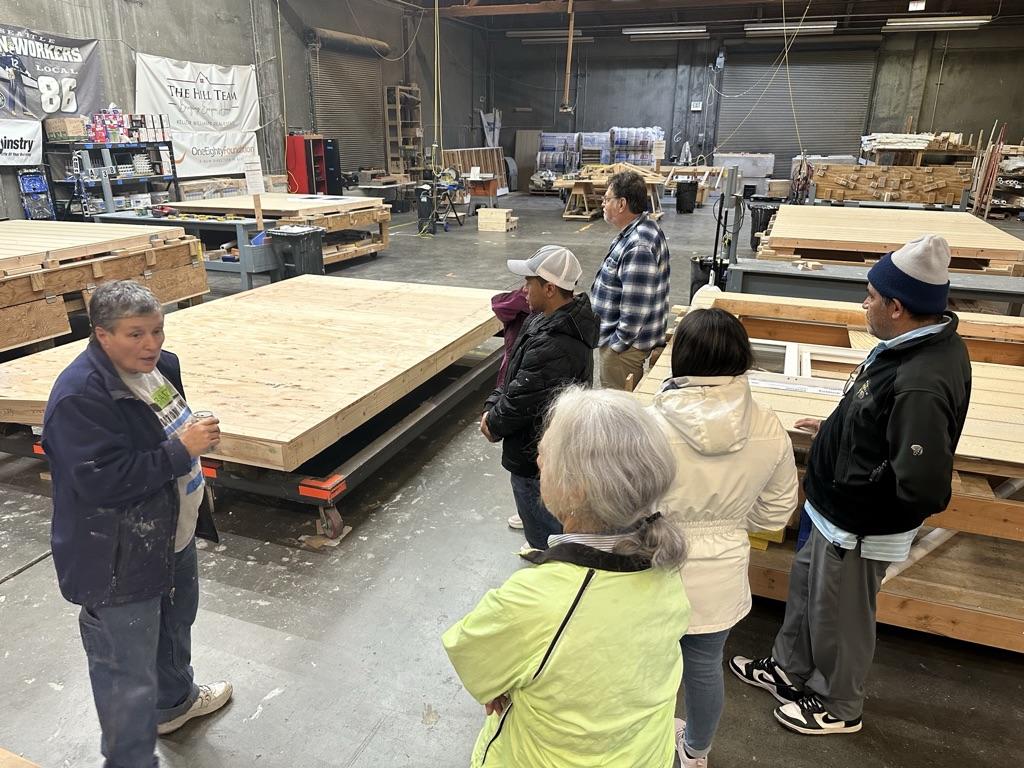
One of the highlights was visiting the factory where we build tiny houses for the homeless. Isidro and Nikki even made a return visit to help build houses on Sunday afternoon.
As is sometimes the case with delegations in both directions, we had a number of physical challenges. Folks who were to host got sick or injured. Others who had signed up for activities were unable to help due to family problems or other issues. Through the entire exciting and fulfilling delegation, one person after another stepped up to assist when called on.
We have a better appreciation for our friends in Guarjila now, especially two young people who were somewhat new to us. We trust that their experiences were fulfilling. The relationship that we continue to build is exemplified by the hymn that we shared, “To you I give, From you I receive, together we share, and from this we live.
La Iglesia Metodista Unida de Wallingford celebró este octubre 24 años de su hermandad con Guarjila, El Salvador, con una delegación de Sur a Norte. Julieta acompañó a tres delegados de Guarjila entre ellos Carlos, Isidro y Marilú.
Los delegados y Julieta llegaron tarde el sábado 14 después de un largo día, y después de abrigarse para el relativo frío se dirigieron a sus estancias en casa. Los siguientes 10 días estuvieron llenos de muchas actividades.
Disfrutamos de una relación con El Dios Viviente, la Iglesia Metodista Unida de Highland Park. La mayoría de los miembros provienen de Centroamérica, incluido el pastor salvadoreño. Asistieron a un servicio por la tarde el domingo y disfrutaron de una cena caliente después del servicio. Debido a enfermedades en nuestro grupo, también pudieron unirse a El Dios Viviente para cenar el siguiente domingo.
Nos centramos en las cuestiones de las personas sin hogar y la inmigración en este viaje al norte. Puede resultar sorprendente para la gente de El Salvador que tengamos gente viviendo en las calles en una ciudad tan rica. Asistir a reuniones y analizar estos temas nos abre los ojos a todos.
Uno de los momentos más destacados fue visitar la fábrica donde construimos pequeñas casas para personas sin hogar. Isidro y Nikki incluso volvieron a visitarlos para ayudar a construir casas el domingo por la tarde.
Como suele ocurrir con las delegaciones en ambas direcciones, tuvimos una serie de desafíos físicos. Las personas que iban a ser anfitriones se enfermaron o resultaron heridas. Otros que se habían inscrito en las actividades no pudieron ayudar debido a problemas familiares u otras cuestiones. A lo largo de toda la emocionante y satisfactoria delegación, una persona tras otra se acercaron para ayudar cuando se les pidió.
Valoramos mejor a nuestros amigos de Guarjila, especialmente a dos jóvenes que eran algo nuevos para nosotros. Confiamos en que sus experiencias hayan sido igual de satisfactorias. La relación que continuamos construyendo se ejemplifica en el himno que compartimos: “A ti doy, de ti recibo, juntos compartimos y de esto vivimos.
It’s well known that due to the global pandemic, our in-person delegations had to be postponed or canceled. After a long wait, we restarted our delegations in 2023 and joyfully returned to one of the best parts of Sister Parish.
Starting in May, East Orrington visited the community of Virginia (Guatemala) for the very first time since they started their relationship. Read more from delegate Doug Fogg.
In August, a group from Saint Joan of Arc (Minnesota) visited their extended family in Tierra Nueva Dos (Guatemala). Delegates included some who had never been in Guatemala before but received the call to participate, as well as members who have been involved in the relationship since the beginning. Here more from delegates Mia, Rylee and Sandi.
We also had the pleasure of coordinating the virtual delegation between St Thomas Lutheran Church and the Catholic church in Chichipate (Guatemala) in February. It was a wonderful way to start the year, as participants shared faith and conversations on issues of common interest like women’s rights and immigration. Read more about the virtual delegation.
All of this has been a great chance for Sister Parish to re-start activities.
And we closed out the year with our big event, the Open Delegation, during which representatives from all the communities in the South coordinated to receive the group and spend time with them.
In Guatemala, we visited UPAVIM and met with the students who are part of the scholarship program supported by their sister parish First United Methodist Church in Downers Grove (Illinois). In Tierra Nueva 1 and Tierra Nueva 2, we met at the parish and had a deep conversation about the effects of climate change on our communities and the current political situation. We learned about the history of Guatemala and the struggles of the people.
Traveling to El Salvador, we participated in the vigil organized for the 34th commemoration of the massacre of six Jesuit priests and two women inside the campus of the Universidad Centroamericana (UCA) during the armed conflict in El Salvador by the government, due to their advocacy to human rights.
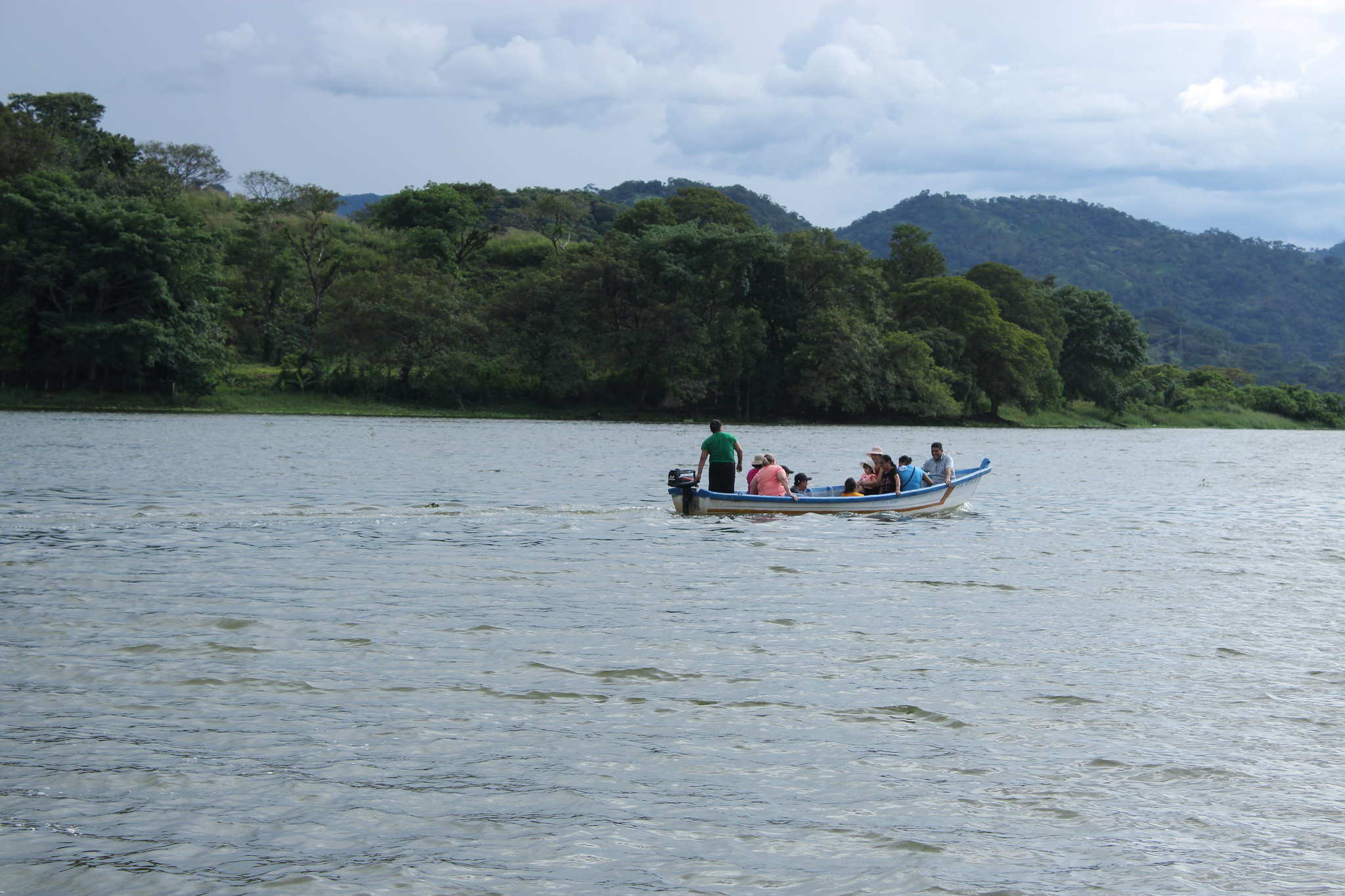
Then traveling to Chalatenango, we visited the communities of Guarjila, Los Ranchos, San José de la Montaña and Potrerillos. Between each community visit, we organized other activities like the visit to El Alto to see the sunset on a high point overlooking valleys and rivers, a relaxing boat ride on the reservoir, and a farewell gathering at the Sumpul River, a place full of stories.
We finished our time at the Tamanique beach, with the group gathered watching the sunset on the Pacific Ocean before the trip back home.
The delegation was a wonderful experience and words can’t describe on how special it was to see so many faces reunite with our chosen family.
As Siter Parish, we can’t say anything other than thank you to all the people who were part of this delegation, one way or another, making this wonderful experience possible for everyone.
Cathy Burrell, a board member of Sister Parish, shares her thoughts here.
Es bien sabido que debido a la pandemia global, nuestras delegaciones presenciales se vieron frustradas y tuvieron que ser pospuestas o canceladas. Después de una larga espera, el 2023 ha sido un año donde hemos reiniciado con las delegaciones, una de las partes que más se disfrutan como parte de Iglesias Hermanas.
También, un grupo de Santa Juana de Arco (Minnesota) visitó a su familia extendida en Tierra Nueva Dos en agosto, con personas que nunca habían estado antes en Guatemala pero recibieron el llamado de participar, así como miembros que han estado en esta relación desde el inicio. Puedes escuchar más de las delegadas Mia, Rylee, y Sandi.
Por supuesto, no queremos dejar de lado la Delegación Virtual entre la Iglesia Luterana de Santo Tomás (Indiana) y la Iglesia Católica de Chichipate (Guatemala) que ocurrió en febrero. Fue una forma maravillosa para comenzar el año. Ahí compartimos sobre temas de interés común y aprendimos mucho de cada uno. Conoce más sobre este evento aquí.
Todo esto ha sido una gran oportunidad para Iglesias Hermanas de reiniciar actividades.
Ahora, llegamos a este gran evento: la delegación abierta, donde representantes de las comunidades del sur se coordinaron para recibir al grupo y poder compartir sus vidas con ellos.
En Guatemala, vistiamos UPAVIM, donde nos reunimos con estudiantes que son parte del programa de becas apoyado por su iglesia hermana en Downers Grove (Illinois); después visitamos Tierra Nueva Uno y Terra Nueva Dos, reuniéndonos en la parroquia y teniendo una conversación profunda sobre los efectos del cambio climático en nuestras comunidades y la situación política actual. Aprendiendo sobre la historia de Guatemala y las luchas de los pueblos.
Después viajando a El Salvador, participando en la Vigilia de conmemoración de los 34 años desde la masacre de seis jesuitas y dos mujeres dentro del campus de la Universidad Centroamericana (UCA) donde los sacerdotes fueron masacrados durante el conflicto armado en El Salvador a manos del gobierno, debido a su defensa por los Derechos Humanos.
Después, viajando a Chalatenango, visitando las comunidades de Guarjila, Los Ranchos, San José de la Montaña y Potrerillos. Con muchas actividades en cada una de las comunidades que visitamos, como ver el atardecer en El Alto, un lugar en lo alto donde pudimos disfrutar de la vista de los valles y ríos, un relajante paseo en el embalse y una despedida en el histórico Río Sumpul, lleno de historias.
El viaje terminó en la playa de Tamanique, con el grupo reunido viendo el atardecer juntos en el Océano Pacífico antes del nuestro regreso a casa.
Una maravillosa experiencia que no podemos describir en cuán especial fue de ver tantas caras reunirnos con nuestra familia escogida.
Como Iglesias Hermanas no podemos decir más que ¡Muchas Gracias! A todas las personas que de alguna u otra manera fueron parte de esta delegación, haciéndola posible y una gran experiencia para todos.
March 24, 1980, a day that marked the history of El Salvador and should never be forgotten, the day that Monsignor Oscar Arnulfo Romero Galdámez was assassinated while celebrating mass in the chapel of the Divina Providencia Hospital at the hands of a sniper who positioned himself in his vehicle at the entrance to the chapel and ended Romero’s life with a bullet to the heart.
St. Romero has become a national and international symbol as a defender of human rights. He became “the voice of a voiceless” during a period of social upheaval in Latin America, when a repressive military government and the oligarchy benefitted from injustice in El Salvador.
The Salvadoran people remember this date and year after year Romero is commemorated throughout the country. This year, the community of Los Ranchos and First Lutheran Church in Duluth, Minnesota, held a conversation on the life of St Romero. Beginning March 21, the church in Duluth screened a biographical film about Romero’s life in the Adult Room, so those who were not aware before were able to learn about his life.
On March 24, the community of San Antonio Los Ranchos carried out a series of events to honor Saint Romero, beginning with a procession around the entire community, with stations to pray and reflect, while they carried a figure of Jesus and another of Romero. The procession finished in the church, where the priest celebrated mass. After the mass, the community gathered outside to watch a documentary about the life of St. Romero that was projected on a side wall of the church while food and drinks were handed out to all attendees. The event ended with a musical group that brought joy to the visitors with their music and encouraged them to dance. This beautiful event reminded the new generations about who Oscar Arnulfo Romero Galdámez was, his struggle for peace and justice, and how we must follow his teachings, always protecting those who need it.
After these activities in each community, people from both Los Ranchos and Duluth met for a video call on March 28 to talk and share reflections. At the beginning of the call, Jaime Galdámez, president of the ADESCO in Los Ranchos, shared a review of St. Romero’s life. This presentation included testimonies from members of the community who had met Romero, also sharing what it was like to receive the news of his death.
The Duluth group participated by sharing about life in the United States in the early 1980s, how the news about St. Romero came to light, how the U.S. government supported military dictatorships in the region at that time.
Finally, a series of questions made us reflect on the works of St. Romero and how to apply his teachings in our lives.
Below, we share a photo album of the activity in Los Ranchos and images from the video call.
24 de marzo de 1980, un día que marcó la historia de El Salvador y no debe ser olvidado jamás, el día que Monseñor Oscar Arnulfo Romero Galdámez fue asesinado mientras celebraba la eucaristía en la capilla del Hospital Divina Providencia a manos francotirador que se posicionó en su vehículo al a entrada de la capilla y terminó con su vida con una bala directa al corazón.
San Romero se ha convertido en un símbolo a nivel nacional e internacional como un defensor de los Derechos Humanos, se convirtió en la voz de un pueblo sin voz, en un período de convulsión social en América Latina, donde en El Salvador un gobierno militar represivo y las oligarquías se beneficiaban de la injusticia.
El pueblo salvadoreño recuerda esta fecha y año con año se conmemora este suceso en todo el territorio nacional. Este año, la comunidad de Los Ranchos y la Primera Iglesia Luterana en Duluth, Minnesota, llevaron a cabo un Conversatorio sobre la de San Romero. Comenzando el 21 de marzo, la iglesia en Duluth proyectó en el Salón de Adultos una película biográfica de Romero, donde los hermanos y hermanas que no le conocían pudieron aprender sobre su vida.
Posteriormente, el 24 de marzo, en San Antonio Los Ranchos, la comunidad se juntó para llevar a cabo una serie de eventos en memoria de San Romero, comenzando con una posesión alrededor de toda la comunidad, con diversas estaciones para orar y reflexionar, mientras cargaban una figura de Jesús y otra de San Romero para terminar la misma dentro de la iglesia donde se celebró la eucaristía dirigida por el párroco; al finalizar, la comunidad se posicionó a un costado de la iglesia, del lado del parque, donde en una de las paredes laterales de la iglesia, se proyectó un documental sobre la vida de San Romero mientras se repartía comida y bebida a todos los asistentes. El evento terminó con un grupo musical que alegró a los visitantes con su música y los puso a bailar. Un bonito evento para recordar a las nuevas generaciones sobre quién fue en vida Oscar Arnulfo Romero Galdámez, su lucha por la paz y la justicia, y cómo debemos seguir sus enseñanzas y proteger a quienes lo necesiten.
Después de estas actividades en cada comunidad, la noche del 28 de marzo, ambos grupos se reunieron a través de una video llamada para conversar e intercambiar opiniones. La llamada comenzó con Jaime Galdámez, presidente de la ADESCO en Los Ranchos, quien compartió un repaso de la vida de San Romero, dicha presentación contó con testimonios de miembros de la misma comunidad quienes pudieron conocer a Romero y contaron cómo fue para ellos la noticia de su deceso.
El grupo de Duluth participó compartiendo cómo se vivía la vida en los Estados Unidos a inicios de los 80s, cómo llegó la noticia de San Romero y su opinión de cómo el gobierno apoyaba las dictaduras militares de la región en aquella época.
Por último una serie de preguntas nos hizo reflexionar sobre las obras de San Romero y cómo poder aplicar sus enseñanzas en nuestras vidas.
Compartimos arriba un álbum de fotos de cómo fue la actividad en Los Ranchos e imágenes de la llamada.
A group from East Orrington Congregational Church, Maine visited our sister parish community Virginia, Guatemala for the first time in May 2023, after waiting anxiously for 3 years because our 2020 delegation was canceled due to the pandemic.
If there is one thing that was confirmed for me over and over on this trip is that, as Christians, we are called to great love and unity. And the best way to pursue greater love and unity is to put yourself into the shoes of another and learn from their reality, whether they be next door or on the other side of the world.
Accepting gracious hospitality
While in Virginia, we stayed with the family of Fernando and Julia. Fernando was a farmer but doesn’t do as much farming anymore. He is also a miller, grinding corn, mostly for his very large family, but for his neighbors. Julia is a registered midwife. She is now 75 and, in her career, has delivered over 1000 babies, including her own 15 children, over 50 grandchildren, and many of her great grandchildren. Of all those deliveries, she has only had to send one woman to the hospital for complications, which is good, because, though they do have a maternity clinic 30 minutes away, the closest hospital is 4 hours away.
On our last night in Virginia, we had a celebratory dinner and prayer service. We thanked them so much for their gracious hospitality and friendship. They thanked us for our visit and for our partnership. It meant so much to them that we stayed in their homes, ate with them, got to know their lives, and listened to what they had to say.
When we left Virginia, there were lots of hugs and lots of tears. I was especially moved when Julia embraced Danielle, not letting go, and shared her love and prayers with us. There were a lot of words and we only understood a few of them. Nonetheless, the love and honor that was conveyed was evident and very intense. Sometimes you just don’t need the words.
Exchanging recipes
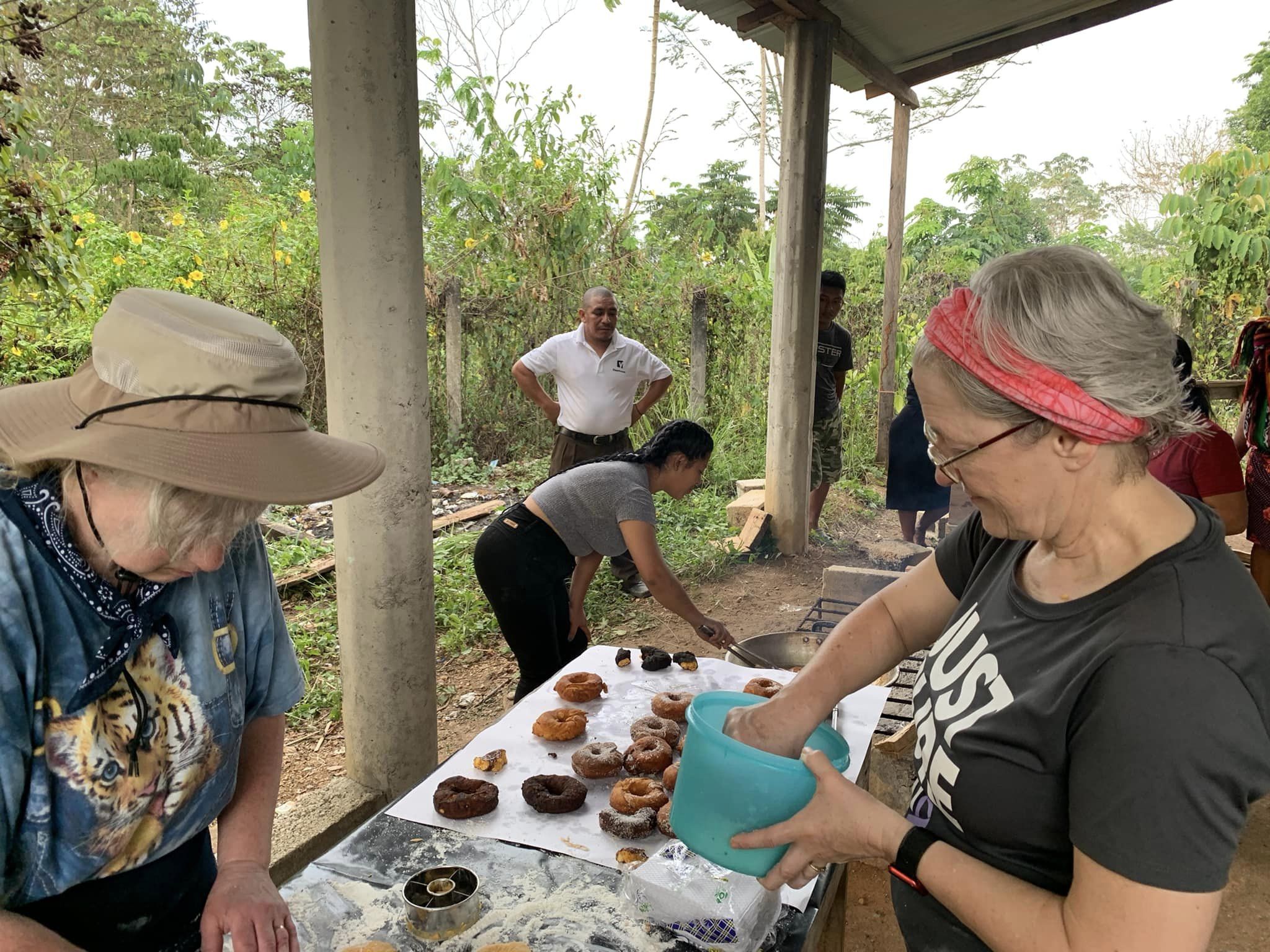
People in Virginia had heard that we raised a major part of our funds for the trip by making and selling doughnuts, so they wanted to learn how we did it. I mixed up a triple batch for 9 dozen doughnuts and started to fry. Now I’ve never deep-fried doughnuts over an open fire before, so I was no good at adjusting the heat. The first few doughnuts burned on the outside. Severiano and his wife Carolina quickly took charge of the fire and frying, and the rest of the doughnuts turned out wonderfully and were a big hit!
The next day, our new friends Pablo and Francisca returned the favor by teaching us how to make chocolate, from tree to the table, Guatemalan style!
Cocoa beans, or cacao, as it is called in Guatemala, grow in a very tasty, good-sized fruit that grows in cacao trees. It is harvested, then the beans have to be extracted, cleaned, and dried in the sun for about 3 days. It is then slow roasted on a clay disc over hot coals for 60 to 90 minutes, while the beans are stirred constantly so they don’t burn. The result is a very dark, bitter nut. They are then husked or peeled, then finely ground, along with sugar and cinnamon (which the family also grows), and mixed and kneaded very carefully, then pressed into a mold. Once this is hardened, the result can either be eaten as candy or melted in hot water (not milk) to be turned into their traditional chocolate drink.
After the beans are roasted, Francisca often roasts corn on the same disc and runs it through the same, uncleaned mill to make a chocolate-flavored corn-based drink that is also traditional to the area. Running the corn through the mill after the cocoa beans also cleans the mill blades! Absolutely fascinating…and delicious!
Laying the foundation for a partnership
While in Virginia, we met with the Sister Parish committee to talk about how we could best move our relationship forward. We discussed what had brought both Virginia and East Orrington Congregational Church to this point, the success of this delegation (all were thrilled with this delegation and the relationship that has been established so quickly), and what to do from here.
We decided we would meet over Zoom or WhatsApp and share prayer intentions. We mentioned that our annual meeting was coming up and prayers would be appreciated for that. They asked for prayers for their national elections in June and support in addressing the lack of water in the community.
We ended the meeting with prayer and thanksgiving for our new friendship, praying that God would bless our relationship for many years to come!
Returning home
Will this experience change our lives? I would say yes, without doubt. Once you put yourself in someone else’s reality, the trajectory of your life can’t help but change, and the perspectives and paradigms you once held shift and broaden.
For the rest of our lives, Danielle and I will be practicing loving people; people who are different from us, people who live different lives, people who have issues, people who don’t believe as we do, people who disagree with us, people who are hurting, people who have made mistakes….we’re going to seek out as many opportunities as we can to do this and we will use what we learn from people to change our views, broaden our perspectives, and do what we can to make the world a better place. That will happen in any place we happen to be in the whole world, including our own backyard. This is what Jesus Christ taught so that’s the way we will live. We are home.
Visitamos nuestro hermanamiento Virginia en Guatemala por primera vez en mayo de 2023, después de esperar ansiosamente durante 3 años porque nuestra delegación de 2020 fue cancelada debido a la pandemia.
Si hay algo que me confirmó una y otra vez en este viaje es que, como cristianos, estamos llamados a un gran amor y unidad. Y la mejor manera de buscar ese gran amor y unidad es ponerse en el lugar del otro y aprender de su realidad, ya sea que sea nuestro vecino o al otro lado del mundo.
Aceptar la hospitalidad amable Mientras estuvimos en Virginia, nos quedamos con la familia de Fernando y Julia. Fernando era agricultor pero ya no se dedica tanto a la agricultura. También es molinero y muele maíz, principalmente para su numerosa familia, pero también para sus vecinos. Julia es partera registrada. Ahora tiene 75 años y, a lo largo de su carrera, ha dado a luz a más de 1000 bebés, incluidos sus 15 hijos, más de 50 nietos y muchos de sus bisnietos. De todos esos partos, sólo ha tenido que enviar a una mujer al hospital por complicaciones, lo cual es bueno, porque, aunque tienen una clínica de maternidad a 30 minutos, el hospital más cercano está a 4 horas.
En nuestra última noche en Virginia, tuvimos una cena de celebración y un servicio de oración con el Comité de Hermanamiento y algunos miembros de la comunidad. Les agradecimos mucho por su amable hospitalidad y amistad. Nos agradecieron nuestra visita y nuestra colaboración. Significó tanto para ellos que nos quedáramos en sus casas, comimos con ellos, conocimos sus vidas y escuchamos lo que tenían que decir.
Cuando dejamos Virginia, hubo muchos abrazos y muchas lágrimas. Me conmovió especialmente cuando Julia abrazó a mi esposa Danielle, sin soltarla, y compartió su amor y sus oraciones con nosotros. Había muchas palabras y sólo entendíamos algunas de ellas. Sin embargo, el amor y el honor que se transmitió fue evidente y muy intenso. A veces simplemente no necesitas las palabras.
Intercambiar recetas La gente de Virginia había oído que recaudamos una parte importante de nuestros fondos para el viaje haciendo y vendiendo donas, por lo que querían saber cómo lo hacíamos. Mezclé un lote triple para 9 docenas de donas y comencé a freír. Ahora bien, nunca antes había frito las donas a fuego abierto, así que no logré ajustar bien el fuego. Las primeras donas se quemaron por fuera. Severiano y su esposa Carolina rápidamente se hicieron cargo del fuego y la fritura, y el resto de las donas quedaron maravillosas y ¡fueron un gran éxito!
Al día siguiente, nuestros nuevos amigos Pablo y Francisca nos devolvieron el favor enseñándonos a hacer chocolate, del árbol a la mesa, ¡al estilo guatemalteco!
Los granos de cocoa, o cacao, como se le llama en Guatemala, vienen de un fruto muy sabroso y de buen tamaño que crece en los árboles de cacao. Se cosecha, luego se extraen los granos, se limpian y se secan al sol durante unos 3 días. Luego se tuesta lentamente sobre un disco de arcilla (o comal) sobre brasas durante 60 a 90 minutos, mientras los granos se revuelven constantemente para que no se quemen. El resultado es una semilla muy oscura y amarga. Luego se descascaran o pelan, luego se muelen finamente, junto con azúcar y canela (que la familia también cultiva), se mezclan y amasan con mucho cuidado y luego se prensan en un molde. Una vez endurecido, el resultado se puede comer como caramelo o derretirse en agua caliente (no en leche) para convertirlo en su tradicional bebida de chocolate.
Después de tostar los granos, Francisca suele tostar el maíz en el mismo disco y lo pasa por el mismo molino sin limpiar para hacer una bebida a base de maíz con sabor a chocolate que también es tradicional de la zona. ¡Pasar el maíz por el molino después de los granos de cacao también limpia las aspas del molino! Absolutamente fascinante… ¡y delicioso!
Sentar las bases para el hermanamiento Mientras estábamos en Virginia, nos reunimos con el Comité de Hermanamiento para hablar sobre cómo podríamos hacer avanzar mejor nuestra relación. Discutimos qué había llevado a Virginia y a la Iglesia Congregacional de East Orrington a este punto, el éxito de esta delegación (todos estaban encantados con esta delegación y la relación que se había establecido tan rápidamente) y qué hacer a partir de ahora.
Decidimos reunirnos por Zoom o WhatsApp y compartir intenciones de oración. Mencionamos que se acercaba nuestra reunión anual y agradeceríamos oraciones por eso. Pidieron oraciones para sus elecciones nacionales en junio y apoyo para abordar la falta de agua en la comunidad.
¡Terminamos la reunión con oración y acción de gracias por nuestra nueva amistad, orando para que Dios bendiga nuestra relación por muchos años más!
Volver a casa ¿Esta experiencia cambiará nuestras vidas? Yo diría que sí, sin duda. Una vez que te pones en la realidad de otra persona, la trayectoria de tu vida no puede evitar cambiar, y las perspectivas y paradigmas que alguna vez tuviste cambian y se amplían.
Por el resto de nuestras vidas, Danielle y yo practicaremos amar a las personas; personas que son diferentes a nosotros, personas que viven vidas diferentes, personas que tienen problemas, personas que no creen como nosotros, personas que no están de acuerdo con nosotros, personas que están sufriendo, personas que han cometido errores… vamos a buscar tantas oportunidades como podamos para hacer esto y usaremos lo que aprendamos de la gente para cambiar nuestros puntos de vista, ampliar nuestras perspectivas y hacer todo lo que podamos para hacer del mundo un lugar mejor. Eso sucederá en cualquier lugar del mundo en el que nos encontremos, incluido nuestro propio patio trasero. Esto es lo que Jesucristo nos enseñó, así es como viviremos. Estamos en casa.
Dina from UPAVIM visited sister church Downers Grove FUMC in July 2023. Below she shares her reflections on the experience.
The experience was very motivating and encouraging for me, because I could see that the brothers and sisters in Downers Grove want to continue with our relationship, despite the distance, despite our differences. They are such special people.
I got to spend time with my pen pal, visit and stay in friends’ homes, and see so many beautiful gardens. I spoke with a cooperative so that they could learn from me. I loved working with the kids in the Vacation Bible School – they loved the book about the worry dolls and the craft and the whole Vacation Bible School was so well organized. A number of people told me how excited their child was that a woman from Guatemala was visiting. I am also grateful I got to meet the committee that is in charge of the scholarships (the Missions, Justice and Community Committee) – I have their names written down so that I can share with UPAVIM.
It was a beautiful experience.
I also met new people who are excited about building our friendship and relationship. This was so important for me. When new people asked me what the relationship was about, I told them, ‘It is about sharing our friendship, our cultures and our faith.’
Thank you everyone at UPAVIM and Downers Grove FUMC who helped give me this opportunity to share.
Dina de UPAVIM visitó a su hermanamiento la Iglesia Metodista de Downers Grove en julio de 2023. Abajo comparte sus reflexiones sobre la experiencia.
Mi experiencia fue muy motivadora y animadora para mí, porque pude ver que los hermanos sí quieren continuar con nuestro hermanamiento a pesar de la distancia, las diferencias. Son tan especiales.
Tenía la oportunidad de compartir con mi compañera en correspondencia y de visitar y quedarme en las casas de amigas/os. Vi muchos jardines bonitos. Hablé con unos miembros de cooperativas de Chicago para que pudieran aprender de mí. Me encantó trabajar con los niños y la Escuela Bíblica de Vacaciones – a los niños les encantó el libro que leí, Ramón preocupón, y las muñequitas quitapenas que hicimos. Toda la Escuela Bíblica de Vacaciones fue muy bien organizada. Algunas personas se acercaban conmigo para contarme que sus hijos estaban muy emocionados con la visita de la señora de Guatemala. Estoy agradecida que tuve la oportunidad de conocer a las personas del Comité de Misiones, Justicia, y Comunidad de la iglesia, el comité que se encarga del programa de becas con UPAVIM. Apunté sus nombres para poder compartirlos con UPAVIM.
Fue una experiencia muy bonita. Vi caritas nuevas que estaban emocionadas de seguir compartiendo estos lazos de amistad y el hermanamiento. Esa era la parte más importante. Cuando la gente nueva me preguntaba qué significa el hermanamiento, yo les decía que significa fortalecer nuestros lazos de amistad y de fe y de compartir nuestras culturas.
Gracias a las personas de Downers Grove FUMC y de UPAVIM por darme esta oportunidad de compartir.
Sister Parish, Inc. promotes intercultural and ecumenical understanding by establishing linkages between churches in the United States and faith-based communities in Central America. Our members tell you more in the brief video Introduction to Sister Parish.