People of Hope visits for the first time – An interview with ACOMUJERZA

Español

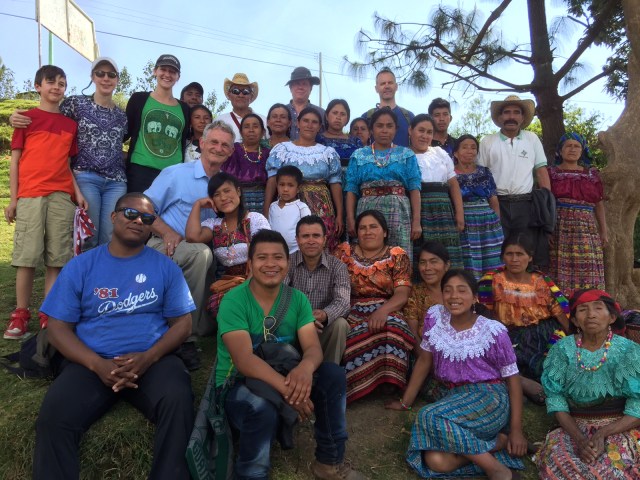
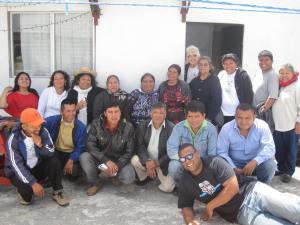
People Hope and ACOMUJERZA are the newest Sister Parish relationship.  We recently talked to two members of ACOMUJERZA about the first visit.

12993339_1088061211234979_1468827441189214869_nMy name is Ana Morales and I have been with ACOMUJERZA for 10 years and I have lived in Zaragoza for 12 years.  I am a member of the Board of ACOMUJERZA and I am also a member of the Sister Parish Committee.

My name is Maria Julia and I have lived in Zaragoza my whole life and I am a founding member of ACOMUJERZA.

Last year they told us that we had been chosen to partner with People of Hope.  When Julieta told us I was so happy.  I told all the members of the cooperative and we were all excited.

Last year we participated in our first event with Sister Parish – the Solidarity Walk.  13 people from Zaragoza went to Los Ranchos.  It was a wonderful experience.  It was so exciting to see the community organizing there and everything the communities have done.

We later formed our Sister Parish committee with 7 people (6 women and one man, 5 cooperative members and 2 members of the community) and we will be the link between People of Hope, Sister Parish and ACOMUJERZA.

The first delegation from People of Hope visited us this year.  We started meeting last year to organize for the visit, so there was no problem.

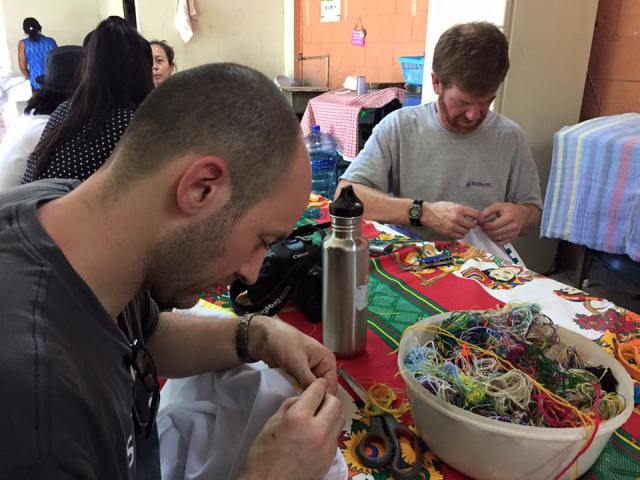
The delegation was here for 9 days full of different activities. They spent time with the cooperative and visited different places in the community, like the health clinic, the school where most of the cooperative members’ children go, and the local radio station.  We also played sports with the students at the school.  We taught the delegates embroidery – they had to plan what they would sew and then make it, so they got to learn more about our lives that way.  We also organized a good-bye party on April 7.

12923089_10154116617074322_2019578116231790071_nThe experience of the delegation was so interesting.  We got to spend time with such wonderful people. Since they moment they arrived at the airport, before we even knew each other, we were so excited.  For their first experience in El Salvador, we took them to eat pupusas.  That’s always the first thing foreigners want to do.  Then we went to the guest house and for dinner we ate a traditional Salvadoran meal together: tamales and beans.  It made us happy to share a meal together.

On Sunday April 3, we had another wonderful experience with the group.  We went to Cuscatlán Park where there is a mural dedicated to the people who died in El Salvador from 1977 on.  There are so many names on that wall.  You can witness, really see, how many people died.  I am still very moved by the mural.  It brings back so many memories.  I know we are living in a different era now, but I remember our martyrs.  They helped us defend our country.

12933064_697901083684998_6453347932440629824_nWe also took the group to the Cathedral where our highest spiritual leader, our pastor Romero, is buried.  We prayed there for a long time.  I was so moved. It brings back so many sad memories for us, but it also gives us hope.

That Sunday in the afternoon, we went to mass and participated in a procession to a local monument to Romero.  The people from People of Hope were always with us.  It was an emotional experience.

We have had many experiences with delegations, but none like this delegation from People of Hope.  We felt closer to them, like we had already known each other for years.

12931249_1088393757868391_6124663990513800606_n 12931196_697903287018111_8532952782054112587_n12417871_697908947017545_6030056183022326976_n

Posted in Delegations, El Salvador, General, North to South | Tagged , , , , | 1 Comment

Prayer

by Ross Starkson
March 2010

P1020588

Let us remember that we are always and everywhere in the presence of God.

You are calling us into the future on a path that sometimes seems steeper than it should be.  Help us to remember that we are not alone.

Others, too, have been called.

Some of them will greet us with open arms, jubilant hearts and welcoming homes that will be sacraments of your healing in the world.

Some will speak to us of things that we do not want to hear and will reveal the pain of their wounds.  Wounds that cut us deeply even in the midst of our ignorance.  They are the sacraments of your compassion.

Some will invite us into their world with the simple hope that we will want to enter.  They are the sacraments of your kingdom.

We are being called into your future.  Help us to embrace it with all of the hope you have for it.  Help us to be sacraments of your love in the world.

Posted in Delegations, General | Tagged , , , , , | Leave a comment

North to South

by Bruce Lohmann

I chose to write about our experience though a poem. The best poems for me using have parts that are clear and parts I do not easily understand.  Poems make me struggle to get the meaning, or the meanings the poet intended even as some parts seem clear, other parts may have multiple meanings.

The Sister Parish experience is a poem, for we clearly perceive parts of what it means, but if you ask anyone of those who have been part of a delegation, they may say that they are still trying to figure out what it means to them, our church, our country and the people of San Antonio de Cunen. This poem is part of my effort to make get my own head and own heart around the amazing experience I am so grateful to be part of.

IMG_6082—————————-

North to South

For some, old friends and for others
New ones,
Await us as
We travel
On a
Blustery rainy San Francisco night,
Weeks of planning
Weeks of study
we finally fly
from North to  South

The Guatemalan Customs Officer escorts us pass the checkpoint
No need to search their luggage
They are Americans
They are welcome
Bienvenido a la Capital, they tell us
Welcome to Guatemala City
we quietly receive the official courtesy
we enjoy not having our belongings searched
We see that we are treated differently
For we are Americans
American Tourists are always welcome

Leaving the Airport
We look at each other
We know we are different
We know that we are not the usual visitors
Not tourists at all
For we come
From North to South
For other reasons
For reasons not easily explained

a long drive
many hours
but we are all together
we share songs
stops along the way
to eat, hug, pray and dance
with Linda and her old friends
but we must journey soon
away from them
climbing the mountain  roads
to our sister church in the Sierra
to San Antonio de Cunen

full download march 21 2016 2118 Jocelyn

We greet our host families
In pairs, we split off
For the first night
For dinner, for talk

Only then, at the table
As we share the corn and beans
I begin to get it
Corn tortillas
Black beans
the dark smoky kitchen
Flames and smoke poking past the pots and grill
Dancing from the wood burning stove
As we eat
I begin to get it

DSC_1252
Sharing their corn
And black beans
Home and hearth
Can I start to see
Can I almost see
Only sisters and brothers
Mothers and fathers
Eating at a crowded
Unpainted common wooden table
But a table at once uncommon
Americans eating with Descendants of Mayan peoples
decimated and impoverished
fertile coastal lands long ago stolen
These steep mountains
A final refuge

Plots cut into the unforgivingly steep  land
corn, onions and apple trees
Prayers for rain
so often unheeded
Never enough to live on

Quiche men abandoning their own fields
Their own families for weeks
Or months
cut cane for the sugar companies
harvest coffee and cardamon
In the distant coastal lands
to earn a little money
Money to keep on
Living with not enough
Never enough
But enough to share

IMG_1655Not enough to live on
Always enough to share

Corn tortillas,
corn ground before the sun rises
dough quickly hand shaped
Into rounds no larger than the woman’s hand
That lays them silently on the smoke blacked grill
Hands silently turning them
making more
As the others eat

For three days and nights
It is always the same meal
A good meal,
Satisfying like no meal before
Grace said in Spanish
For we speak no Quiche
their Mayan language

At each meal
We will silently marvel again at the beans,
Soft and shiny black in their own dark juice
Hints of onion and  garlic

At each meal
Tortillas are again
filled with beans
sometimes graced
with  a piece of soft white cheese
an ounce or two of chicken,
but mostly not

Each meal,
This harvest from their tiny fields ,
Always the smoke-filled kitchen
The too small wooden table
But  enough to share

it is enough to share
From South to North
And from North to South
There is enough to share
And It is enough to share

Quote

Posted in Delegations, General, Guatemala, North to South | Tagged , , , , | 1 Comment

Greetings from Guarjila

The video below tells the story of the relationship between the community of Guarjila and Wallingford United Methodist Church.

The video was made by WUMC and shared at an event to raise both awareness of the relationship and funds for scholarships in Guarjila.

Posted in General | Tagged , , , | Leave a comment

Duluth celebra su hermanamiento con Los Ranchos

English

Las siguientes cartas y reflexiones fueron compartidas durante una actividad en la Iglesia Luterana de Duluth para celebrar su hermanamiento con San Antonio Los Ranchos en El Salvador.

FlowerPastor David Tryggestad
Delegación: marzo del 1998
(Reflexión: abril del 2015)

Nuestro viaje a El Salvador fue una de las experiencias más formativas de mi vida. Volví cambiado, y recuerdo- y todavía siento el gran inquietud en el regreso a mi lugar en nuestra cultura de privilegio y el consumo excesivo. Antes del viaje, compré la bolsa de lona más grande que pude encontrar para mis cosas, ¡creo que podría haber puesto una nevera pequeña adentro! Mi equipaje – mi bolsa de lona – se perdió durante el viaje y fue entregado a mí de una manera muy pública después de haber estado en Los Ranchos por cuatro días, momento en el cual yo estaba esperando que no llegaría nunca; Yo estaba avergonzado por mi noción de necesidad, las cosas que pensaba que necesitaba durante nuestra visita de diez días. Mientras tanto, mi anfitriona lavaba mi ropa interior sucia (yo no sabía que iba a hacer esto) y colgó los artículos a secar en la cerca de alambre de púas en el frente de su casa. Mi compañero de la delegación y yo dormimos en catres en la habitación con piso de tierra; nos bañamos vertiendo palanganas de agua fría de la llave sobre nosotros afuera, en la parte trasera de la casa, la única fuente de agua corriente.

¡La comida y la hospitalidad! ¡Maravillosas! Me sentí avergonzado, otra vez, de que estábamos comiendo más que la gente que vivía allí y quien estaba aportando para nosotros.

Picture4¿Quién puede olvidar la adoración en la iglesia bombardeada, con agujeros en el techo y las paredes, y la fe fuerte y convincente de las personas? ¿Y las mujeres que continúan con el liderazgo de la iglesia?

Durante un hermoso día soleado, visitamos el río Sumpul, el sitio de la masacre, y disfrutábamos del calor y comimos un almuerzo de picnic, tratando de imaginar el horror de las personas desesperadas a huir de la violencia. Visitamos el lugar del enterramiento de Oscar Romero en el 18 aniversario de su asesinato, y fuimos a la capilla donde fue baleado y a su apartamento modesto, donde sus vestiduras colgaban en el armario, aun teniendo el agujero manchado de sangre donde la bala entró en su corazón.

La alegría, la fe y la hospitalidad. Estos son los dones de las personas que todavía llevo en mi corazón.

—–

Picture5KS
Delegaciones: marzo del 1998, noviembre del 1998, febrero del 2000, agosto del 2001
(Reflexión: abril del 2015)

Participé en varias delegaciones a San Antonio Los Ranchos y después continué visitando El Salvador por mi propia cuenta, volviendo para estudiar en el extranjero, trabajar de voluntaria, y trabajar allí por un período de tiempo. Como una persona joven, mi experiencia en El Salvador me afectó de manera significativa y todavía recuerdo mi participación en la primera delegación en 1998. Asimilé las historias de miembros de la comunidad, ya que compartieron sus experiencias de la guerra, del arzobispo Romero, y de su realidad actual. Visitamos el río Sumpul, que en 1998 estaba extraordinariamente limpio, pero en la década anterior fue a menudo el tono de rojo debido a las masacres. Nosotros adoramos en su iglesia que tenía agujeros en las paredes debido a las bombas de la guerra. Mientras aprendíamos acerca de los desafíos que continuaban afectando a la comunidad, escuchábamos atentamente mientras hablaban. Y luego compartimos así… las historias de nuestra iglesia, nuestras familias, nuestra ciudad y país…  nuestros desafíos, nuestras esperanzas… También nos reímos juntos – una vez trataron de enseñarme ordeñar una vaca. También aprendí hacer pupusas y con los años se han puesto más redondas y menos cuadradas… Jugar con los niños con mi español chapurreado, que ha mejorado un poco con el tiempo, y construyendo amistades con miembros de la comunidad me mantuvo volviendo cada año. Las relaciones eran lo que era y siguen siendo lo más importante.

memorialAhora, años después a pesar de muchos obstáculos, hay historias de éxito de la comunidad – de los jóvenes que se elevaron a los roles de liderazgo en Los Ranchos y han obtenido títulos universitarios (algunos con el apoyo de la Iglesia Primera Luterana). Uno de mis hermanos de una familia anfitriona tiene ahora un puesto destacado dentro de la Secretaría de Cultura y continúa haciendo un impacto a través de las artes y el teatro a nivel nacional y, por supuesto, regresa a Los Ranchos cada vez que puede. También soy la madrina orgullosa de la hija de una amiga y, en gran parte debido al impacto de estas experiencias, estoy agradecida y honrada de tener la oportunidad a través de mi trabajo profesional para seguir dedicándome a los derechos humanos y las cuestiones de inclusión social en la región.

——

1999BD
Delegación: febrero del 2008
(Reflexión: abril del 2015)

Me gustaría compartir un mensaje corto reflexionando sobre cómo ha dejado un impacto en mi vida el viaje de la delegación en el 2010. He compartido esto con muchas personas, incluso miembros de mi congregación actual, pero a lo grande, el viaje de Iglesias Hermanas a El Salvador fue uno de los factores decisivos para mi inscripción en el seminario para perseguir el ministerio ordenado. Mientras aprendimos sobre Arzobispo Oscar Romero y cómo Dios tomó este sacerdote de voz suave, estudioso, una personalidad que normalmente no hace olas, y lo llevó a encontrarse con Jesucristo resucitado entre los salvadoreños que estaban experimentando tales dificultades, tanto que su corazón fue cambiado y su corazón se convirtió en uno con el corazón del pueblo, me di cuenta de que si Dios pudo tomar este hombre imperfecto y cambiar el mundo a través de él, Dios ciertamente podría trabajar a través de mí. Me inscribí al programa del seminario en línea varios meses después de regresar y he hablado a menudo de esta delegación con respeto a mi llamado al ministerio ordenado.

La otra gran manera que dejó un impacto en mí fue la experiencia de la hospitalidad de nuestra familia anfitriona. Reagan y yo nos quedamos con la familia Serrano (Miguel Serrano había recibido una beca) y siempre me acuerdo de lo honrado que me sentí como el invitado de ellos, honrado en su formas que yo sabía que estaban haciendo un sacrificio de su parte para alojarme, y que estaban felices de hacerlo. Sus acciones me enseñaron acerca de la naturaleza sacrificial de la hospitalidad radical- el tipo que Cristo nos ha mostrado en la cruz- haciendo espacio para nosotros a un costo real. Y, sin embargo, a pesar del costo, la alegría se puede encontrar allí. ¡Los miembros de familia Serrano eran predicadores poderosos para mí y doy gracias a Dios por ellos y por todos los esfuerzos de ustedes en hacer esa delegación posible y mantener el hermanamiento entre la Iglesia Primera Luterana y Los Ranchos! Ha sido un placer ser parte de él.

Las barreras del idioma, por supuesto, estaban presentes, pero recuerdo que me sentía como un invitado de honor junto con Reagan. El viaje parecía dejar una impresión duradera en los estudiantes de la secundaria que asistieron.

—–

2Tom Sullwold
Delegaciones: marzo del 1998,
febrero del 2000
(Reflexión: abril del 2015)

Acabo de mirar todas mis diapositivas de las dos delegaciones para  refrescar la memoria. Tuve muchos recuerdos buenos que podrían estar en una película de los más destacados y algunos que son extremadamente sobresalientes. Disfruté de la compañía de mis compañeros delegados en ambos viajes. Disfruté nuestros anfitriones John y Walter. En el primer viaje llegamos a Los Ranchos a tiempo para unirnos a la Vía Crucis. Hemos aprendido sobre de la historia de la zona, el sufrimiento, y sobre el papel que el gobierno de Estados Unidos tuvo en ayudar al gobierno en contra de la guerrilla. Otros recuerdos eran; montar caballo a El Alto, la UCA y Romero, la iglesia donde fue asesinado Romero, y mezclarnos con la gente y los burros, cerdos, pollos, ganado y todos los perros.

En el segundo viaje llevé mi guitarra y escuché a Walter cantar todas esas canciones populares. Pedí un mantel de 4 pies del Comité de Mujeres y sigue siendo mi recuerdo favorito. Hemos aprendido más acerca de la estructura de los grupos dentro de la comunidad. Los grupos estaban vinculados como los 5 círculos olímpicos (una observación mia), incluyendo la iglesia. No como en los EE.UU., donde tenemos una estricta (mala) interpretación de la separación de la iglesia y el estado. Me alegra ver que la relación con Los Ranchos haya continuado con numerosas delegaciones en los últimos 10 años.

—–

SingingKatie Rogotzke
Delegación: noviembre del 2004
(Reflexión: abril del 2015)

Mi primera y única experiencia fue hace 12 años, pero todavía recuerdo vívidamente muchas de las experiencias en ella.

Si bien recuerdo las personas, los lugares, la iglesia, el idioma, la comida, aún más importante recuerdo los sentimientos. Recuerdo experimentar la generosidad de un nivel diferente. De las personas que no tienen muchas cosas para ofrecer, pero quien ofrecían todo lo que tenían. Recuerdo la felicidad y la cercanía de la familia. Pero también recuerdo la ausencia de personas – de miembros de la familia que se mudaron, cruzando fronteras y de otros perdidos en la guerra civil sangrienta de los años 80. Las personas compartieron sus recuerdos de la guerra, siempre muy dolorosos, pero que deseaban que no se olvidara su lucha, las razones por ella, los héroes y mártires. Y a pesar de este dolor, no nos echaban la culpa a nosotros y no nos guardaban animosidad. Eran amables y perdonadores, y vivían con el entendimiento de que las personas pueden ser impotentes en su propio país. Estos fueron todos los valores que me impresionaron mucho, me inspiraron y me ayudaron a impulsar a lo que hago hoy en día y espero hacer en el futuro.

—–

Centro de SaludLeah R.
Delegaciones: noviembre del 2004 y febrero del 2008
(Reflexión: abril del 2015)

Durante mi último año de la escuela secundaria, participé en mi segunda delegación para visitar a nuestra iglesia hermana en Los Ranchos, El Salvador. Este viaje, al igual que la primera, era muy diferente a lo que esperaba de un llamado “viaje misionero.” Cuando uno piensa en un viaje de misión, la mayoría imaginan que van a construir una casa. Mientras que esos esfuerzos son necesarios y beneficiosos, el viaje de Los Ranchos es único en su enfoque, lo que es aún más valioso e importante.

Mientras que en Los Ranchos, cada uno de nosotros nos quedamos con una familia anfitriona, muchas veces en casas de uno o dos cuartos, en las cuales toda la familia dormía juntos. En vez de ir allí para “hacer” algo, fuimos allí para aprender: para intercambiar ideas, culturas y sueños. En lugar de simplemente implementar un proyecto, este proceso de intercambio nos permitió encontrar nuestra humanidad compartida. A pesar de que me quedé con las personas con quienes, por mi impresión inicial, no teníamos nada en común, terminamos encontrando que todos estábamos más similares de lo que pensábamos. Como yo, otros jóvenes de mi edad querían ir a la universidad o encontrar empleos que les permitirían mantenerse a sí mismos y tal vez comenzar una familia. Sin embargo, a diferencia de mí, se encontraban con obstáculos muy difíciles a estas cosas que muchos estadounidenses dan por hechas. Cada familia tenía un pariente directamente afectado por la guerra civil larga durante la década de los años 80 y en la década de los 90. Cada familia tenía un familiar que estaba en los EE.UU., de manera ilegal o muy rara vez legal, trabajando solo para poder mantener a sus familias en Los Ranchos. La mayoría había salido sin querer trabajar ilegalmente en los EE.UU., pero había sentido que no tenían otra opción. Los jóvenes de mi edad que quedaron en la comunidad querían ir a la universidad, pero la mayoría carecían de los medios económicos para hacerlo. De todo esto, nos enteramos de que muchos de los problemas más grandes que enfrentaba la comunidad eran las barreras económicas a la educación y las barreras resultantes del empleo. En vez de ir a arreglar algo en la comunidad sin el conocimiento adecuado de los problemas clave de antemano, hemos sido capaces de averiguar directamente de la comunidad lo que más necesitaban. Como resultado, la Iglesia Primera Luterana estableció un fondo de becas para apoyar a estudiantes universitarios inteligentes de Los Ranchos que se han comprometido a permanecer en El Salvador y contribuir al hacer un futuro más vibrante  para Los Ranchos.

Picture2He trabajado más recientemente en un proyecto internacional de desarrollo implementado en el sur de Siria. Nuestro proyecto es para evaluar y reparar la infraestructura esencial en las comunidades asoladas por la guerra. La infraestructura dañada incluye la fuente de agua municipal dañada, escuelas y hospitales bombardeados, e infraestructura eléctrica destrozada. Antes de iniciar el diseño o la implementación de un proyecto, nuestros ingenieros sirios van a una comunidad para hablar con los miembros de la comunidad con el fin de obtener una visión precisa de los proyectos más necesarios de la comunidad. El viaje de Los Ranchos primero abrió mis ojos a la importancia de involucrarse directamente con la gente, encontrar nuestra humanidad compartida, y luego trabajar para mejorar la vida uno al otro. Aunque me gusta pensar que hemos sido capaces de hacer un impacto en las vidas de las personas en Los Ranchos, lo que sí sé con certeza es que mi experiencia con ellos afectó profundamente mi vida, la enriqueció, y me puso en el camino donde estoy ahora.

—–

Picture1Pastora Kris Garey
Delegaciones: marzo del 1998, noviembre del 1998, febrero del 2000, agosto del 2001
(Reflexión: mayo del 2015)

Fue un gran placer escuchar que la reunión de la junta directiva del norte de Iglesias Hermanas del mes pasado (abril de 2015) tomó lugar en la Iglesia Primera Luterana en Duluth. Han pasado nueve años desde que me mudé de Duluth, pero por suerte para mí, los visitantes de nuestros socios del ministerio de San Antonio Los Ranchos pudieron hacer el viaje adicional a la pequeña ciudad en la costa norte del Lago Superior donde vivo ahora y trabajo de pastora (Iglesia Luterana Trinidad en Hovland, MN) hace aproximadamente 4 años. ¡La reconexión me llenó de alegría!

¿Cómo puedo describir cualquiera de las cuatro delegaciones de Iglesias Hermanas a Los Ranchos en las cuales tuve la oportunidad de participar? Todos fueron llenos de aprendizaje, estar orientada, con el shock y la sorpresa y la celebración, con el aprendizaje de la historia, la agricultura, la cultura, el clima, el idioma y las complejidades de un conjunto de circunstancias (las de la gente de Los Ranchos / las de la gente de Duluth), y cómo se le añade complejidad cuando los grupos de “complejidad” se juntan. Nuestros viajes no fueron excursiones de turismo, eran inmersiones en la vida de un pueblo con gran dignidad cuyos medios de vida y las estructuras de las familias habían sido golpeados duramente por la opresión, la guerra, la pobreza, y un mundo más grande que estaba bastante contenta con olvidarse de ellos. Sin embargo, el pueblo de Los Ranchos y de El Salvador continuaron encontrando maneras de levantarse a través de las circunstancias contra ellos, especialmente importante fue el liderazgo y el pastoreo del Arzobispo Oscar Romero. Su asesinato en 1980 fue sin duda un intento de acabar con su voz que usaba para decirle a la gente que se valoraba y se importaba, pero la gente siguió defendiendo su derecho a existir y tener empleos, ingresos, atención de la salud, educación y esperanza. Escribiendo esta reflexión, tantos recuerdos vienen a la mente, y me doy cuenta una vez más que El Salvador es un lugar donde Dios nos muestra la cara real de Isaías 58:11 “Y el SEÑOR te guiará continuamente, saciará tu deseo en los lugares áridos, y dará vigor a tus huesos; y serás como huerto de riego, y como manantial de aguas, cuyas aguas nunca faltan.”

Una historia que revela mucho es lo que yo llamo “la señora samaritana en el pozo.” Estábamos en el extremo más alejado de Los Ranchos, caminando un camino polvoriento, cuando vimos, a un lado, un pozo de agua con cubeta y cuerda. Bajando un camino empinado hacía el pozo estaba una señora mayor, y nuestros anfitriones nos dijeron que sin duda nos había visto caminando, y sentía curiosidad. Nuestros líderes de Los Ranchos luego ofrecieron a llevar el agua para ella; llenamos las cubetas y los llevamos por el camino empinado a su casa. Después de visitar y ver su casa pequeña y no muy sólida, caminamos de regreso por el camino. De nuevo en el camino, nuestros anfitriones nos dijeron que la señora y su familia habían estado en el lado opuesto de la guerra desastrosa — pero todavía se aseguraban de que tenía agua y arroz y a veces la visitaban a ver si ella estaba bien. Jesús en el pozo en Samaria dijo a la mujer que había sido una paria al pueble de él, “ve y diles a los demás… el agua que yo les daré será en ellos un manantial que brota….” Esos líderes en Los Ranchos, comparten con nosotros la imperfección, pero también se encuentran la obediencia a la llamada de Cristo a ser “un manantial que brota,” ya que muestran compasión para los menos propensos a recibirla. Ella podría haber estado fuera del alcanzo de la simpatía de ellos, pero todavía la cuidaban.

Iglesias Hermanas fue un punto de partida fundamental para la Iglesia Primera Luterana. Cuando nuestro grupo pequeño de la Iglesias Primera Luterana inicialmente fue deslumbrado por lo que parecía un deseo imposible, establecer una relación a largo plazo con una comunidad en Centroamérica para aprender juntos como compañeros, buscamos consejo. Y los líderes de la Iglesia Evangélica Luterana de América seguían diciéndonos “que realmente necesitábamos hablar con Iglesias Hermanas.” ¿Cómo podemos agradecer a Dios lo suficiente por los regalos de Iglesias Hermanas y Los Ranchos, a la Iglesia Primera Luterana, y a todos los que han sido tocados por nuestro hermanamiento? Una forma es hacer como la Iglesia Primera Luterana está haciendo: Continuando con el hermanamiento, y continuando a reflexionar sobre la importancia de aprender de y con aquellos cuyas vidas varían tanto de las nuestras.

Picture3El tiempo pasado con las comidas sencillas, tomando café o cerveza con amigos en las pequeñas tiendas y “comedores” de Los Ranchos y pueblos vecinos era agradable; las excursiones en las montañas en las altas temperaturas, para llegar a una casa y estar servidos el caldo de pollo caliente (imagínense el sacrificio hecho por nosotros con la escasez de carne y una comida caliente preparada en un día caluroso) eran difíciles. La dependencia en los intérpretes para nosotros los norteamericanos nos llenó de humildad, porque nos mostró nuestra falta de conocimiento de otros idiomas. Una delegación que se hizo un mes después del huracán Mitch, cuando los intérpretes estaban sirviendo a las organizaciones de auxilio de desastres en las aldeas más afectadas que Los Ranchos, era doblemente difícil. Durante la mayor parte del viaje no tuvimos intérprete. Así que con nuestro pobre Español, el Inglés limitado de los salvadoreños, y una combinación improbable pero necesario (uno de nosotros hablaba noruego, uno de Los Ranchos sabía poco de sueco de haber pasado tiempo allí en un Centro de Recuperación de Trauma) nos tuvo que ser suficiente. Con esta interacción a veces torpe y siempre graciosa, vimos la pena del huracán aumentada (y quizás excedida) por la falta de respuesta por parte del Gobierno de El Salvador (o en la región de Los Ranchos, por organismos internacionales). Y aprendimos profundamente de la atención que las personas nos brindaron a nosotros, incluso en un momento de necesidad grave.

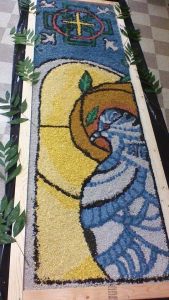
A veces la gente me pregunta, cuando mi encuentro con Dios a través de la gente de El Salvador aparece en conversaciones o sermones, algo así como: “¿qué era exactamente lo que viste…?” Muchas historias vienen a la mente, incluyendo esta: Caminando con un grupo pequeño en una zona en las afueras de Los Ranchos, donde un hombre se sentó y platicó conmigo mientras otros miembros del grupo se iban a otra casa. Y en la conversación, este hombre con los ojos que debo describir como los ojos de Jesús, dio gracias a Dios por nuestra visita, y a nosotros por haberles regalado una pancarta litúrgica para su Iglesia. La pancarta mostraba una iglesia que había sido destruida, como la iglesia de Los Ranchos había sido destruida por el ejército. Pero las personas están corriendo hacia ella con alegría, con las palabras “nosotros el pueblo de Dios nos levantaremos y edificaremos” (de Nehemías en la Biblia) debajo de la gente. Este maravilloso agricultor de camote me dijo, “su regalo nos ayuda a saber que Dios está con nosotros, y que vamos a reconstruir el edificio de la iglesia y nuestras vidas.” Nuestro viaje sencillo, alentando a la gente en maneras que no podríamos haber esperado; y la construcción de la fe y la esperanza en nuestras vidas.

Gracias a Iglesias Hermanas, y a todos en la Iglesia Primera Luterana que seguirá acompañando a la gente de Los Ranchos mientras se levantan y construyen.

Posted in Aniversarios, Delegaciones, El Salvador, Español, General, United States | Tagged , , , , | Leave a comment

Duluth delegates reflect on years of relationship with Los Ranchos

Español

The following reflections were shared at an event to celebrate the relationship between First Lutheran Church in Duluth and San Antonio Los Ranchos in El Salvador.

FlowerPastor David Tryggestad  
Delegation taken: March 1998 (Reflection sent Apr 25, 2015)

Our trip to El Salvador was one of the most formative experiences of my life. I came back changed, and I remember—and still experience—great “dis-ease” in resuming my place in our culture of privilege and over-consumption. Before the trip, I purchased the very largest duffel bag I could find for my stuff—I believe I could have put a small refrigerator inside! My luggage—my duffel—got lost during the trip and was delivered to me in a very public way after we had been in Los Ranchos four days, by which time I was hoping it would never come; I was embarrassed by my notion of necessity, the things I thought I needed to accompany me on our ten-day trip. In the meantime, my hostess washed out my soiled underwear (I did not know she was going to do this) and hung the items to dry on the barbed wire fence in front of her house. My roommate and I slept on cots in a room with a dirt floor; we showered by pouring dishpans of cold tap water over ourselves outside, in the back of the house, the only running water.

The food and the hospitality! Marvelous! I felt embarrassed—again—that we were eating more than the folks who lived there and who were providing for us.

Picture4Who can forget worshiping in the bombed-out church, with holes in the roof and walls, and the strong and compelling faith of the people? And the women who carried on with the leadership of the church?

On a beautiful sunny day, we visited the Sumpul River, the site of the massacre, and basked in the warmth and ate a picnic lunch, trying to imagine the horror of the people desperate to flee the violence. We visited the burial site of Oscar Romero on the 18th anniversary of his assassination, and went to the chapel where he was shot and to his very modest apartment, where his vestments hung in the closet, still bearing the blood-stained hole where the bullet entered his heart.

Joy, faith, and hospitality. These are the gifts of the people that I still carry in my heart.

—–

Picture5KS
Delegations taken: March 1998, November 1998, February 2000, August 2001
(Reflection sent April 24, 2015)

I participated in several delegations to San Antonio Los Ranchos and later continued to visit El Salvador on my own, returning to study abroad, volunteer, and work there for a period of time. As a young person, my experience in El Salvador affected me significantly and I still remember my participation in the first delegation in 1998. I soaked in the stories of community members as they shared about their experiences during the war, Archbishop Romero, and their current reality. We visited the Sumpul River, which in 1998 was remarkably clean but in the decade prior was often the shade of red because of the massacres.  We worshipped in their church which had holes in the walls because of bombs from the war. While we learned about the challenges that continued to impact the community, we listened intently as they spoke.  And then we shared as well… the stories of our church, our families, our city, and country….our challenges, our hopes…We also laughed together – they tried to teach me how to milk a cow one year. I also learned how to make pupusas and over the years they’ve become more round and less square…Playing with the kids with my broken Spanish, which improved a little more over time, and building friendships with community members kept me coming back each year. The relationships were what it was and continues to be all about.

memorialNow years later despite many obstacles, there are success stories from the community – of young people rising into leadership roles in Los Ranchos and getting university degrees (some with support from First Lutheran). One of my host brothers now has a prominent position under the Secretariat of Culture and continues to make an impact through the arts and theatre on a national level and, of course, keeps going back to Los Ranchos whenever he can.  I am also the proud godmother to a friend’s daughter and in large part because of the impact of these experiences, I am grateful and humbled to have the opportunity through my professional work to continue to engage on human rights and social inclusion issues in the region.

—–

1999B D
Delegation taken: February 2008 (Reflection sent April 24, 2015)

I did want to write a short message reflecting upon how the delegation trip in 2010 has left an impact upon my life.  I’ve shared this with many people, including members of my present congregation, but in a big way, the Sister Parish El Salvador trip was one of the deciding factors for my enrollment in seminary to pursue ordained ministry.  As we learned about Archbishop Oscar Romero and how God took this relatively soft-spoken, bookish priest—hardly one to rock any boats—and led him to encounter the risen Jesus Christ among the Salvadoran people who were experiencing such hardships, so much that his heart was changed and his heart became one with the heart of the people, I found that if God could take this imperfect man and change the world through him, God could certainly work through me.  I enrolled in an online seminary program several months after returning and have often spoken of this delegation trip while discussing with others my call to ordained ministry.

The other big way that it left an impact on me was the experience the hospitality of our host family.  Reagan and I stayed with the Serrano family (Miguel Serrano had received a scholarship) and I will forever remember how honored I felt as their guest—honored in ways that I knew they were making a sacrifice on their part to host me—and that they were glad to do that.  Their actions taught me about the sacrificial nature of radical hospitality—the kind that Christ has shown us in the cross—making room for us at a real cost.  And, yet, despite the cost, joy can be found there.  The Serrano family were powerful preachers to me and I thank God for them and for all of your efforts in making that delegation trip possible and maintaining the Sister Parish relationship between First Lutheran and Los Ranchos!  It has been a joy to be a part of.

Language barriers, of course, were present, but I remember feeling very much an honored guest along with Reagan.  The trip seemed to leave a long lasting impression on the high school students that attended.

—–

2Tom Sullwold
Delegations taken: March 1998, February 2000 (Reflection sent Apr 17, 2015)

I just looked through all my slides from both years to jog my memory. I had many good memories that could be on a highlight film and a few that may be exceedingly memorable. I enjoyed the company of my fellow delegates on both trips. I enjoyed our hosts John and Walter. On the first trip we arrived at Los Ranchos in time to join walking the Way of the Cross (stations ?). We learned about the history of the area, the suffering, and about the role the U.S. government had in aiding the government against the guerrillas. Other memories were; horseback to El Alto, UCA and Romero, the church where Romero was assassinated, and mingling with the people and their donkeys, pigs, chickens, cattle, and all those dogs.

On the 2nd trip I brought along my guitar and listened to Walter sing all those folk songs. I ordered my 4 foot table cloth from the Women’s Committee and it remains my favorite souvenir. We learned more about the structure of groups within the community. The groups were linked like the 5 Olympic circles (my observation), including the church. Not like in the U.S. where we have such a strict (mis-) interpretation of separation of church and state. I am glad to see that the relationship with Los Ranchos has continued with numerous delegations in the last 10 years.

—–

SingingKatie Rogotzke
Delegation taken: November 2004 (Reflection sent April 21, 2015)

My first and only experience has now been 12 years ago but I still remember many experiences from it vividly.

While I remember the people, the places, the church, the language, the food, more importantly I remember the feelings. I remember experiencing generosity of a different level. From people who did not have much to offer, but who offered whatever they had. I remember happiness and family closeness. But I also remember the absence of people – of family members moved across borders and of others lost to the bloody civil war of the 80s. People shared their memories of this war, always extremely painful, but they desired for their struggle, reasons, heroes and martyrs, to not be forgotten. And despite this pain, they did not blame us or harbor animosity. They were kind and  forgiving, and lived with the understanding of how powerless people can sometimes be in their own country. These were all values that deeply touched me, inspired me and helped propel me to what I do today and hope to do in the future.

—–

Centro de SaludLeah R. 
Delegations taken November 2004 and February 2008 (Reflection sent April 22, 2015)

During my senior year of high school, I went on my second trip to visit our sister congregation in Los Ranchos, El Salvador. This trip, like the first one, was much different than what I expected of a so-called “mission trip”. When one thinks of a mission trip, most envision building a home and following the general format of a Habitat for Humanity volunteer experience. While those endeavors are necessary and beneficial, the Los Ranchos trip is unique in its approach, making it all the more valuable and important.

While in Los Ranchos, we each stayed with a host family, often in only one or sometimes two room homes where the whole family slept together. Instead of going there to “do” something, we went there first and foremost to learn: to exchange ideas, cultures, and dreams. Rather than simply implementing a project, this process of exchange enabled us to find our shared humanity. Even though I stayed with people with whom, by my initial impression, I had nothing in common, we ended up finding that we were all more similar than we thought. Like me, other kids my age wanted to go to college or find jobs that would enable them to support themselves and perhaps start a family. However, unlike me, they encountered much higher barriers to these things that many Americans take for granted. Every family had a relative directly affected by the drawn out civil war during the 1980s and into the 90’s. Every family had a family member who was in the U.S., illegally or very rarely legally, working just so that they could support their families back in Los Ranchos. Most had left not wanting to work illegally in the U.S., but had felt they had no other option. Kids my age remaining in the community wanted to go to college, but most lacked the financial means to do so. From all of this, we learned that many of the biggest problems the community faced were economic barriers to education and resulting barriers to employment. Rather than going in to fix something in the community without proper knowledge of the key problems beforehand, we were able to find out directly from the community what they needed most. As a result, First Lutheran established a scholarship fund to support bright college students from Los Ranchos who are committed to staying in El Salvador and investing in making the future of Los Ranchos more vibrant.

Picture2I most recently worked on an international development project implemented in Southern Syria. Our project assesses and repairs essential infrastructure in war torn communities. Damaged infrastructure includes damaged municipal water supply, shelled schools and hospitals, and destroyed electrical infrastructure. Before even designing or implementing a project, our Syrian engineers go to a community to speak with the community members in order to get an accurate view of the community’s most needed projects. The Los Ranchos trip first opened my eyes to the importance of directly engaging with people, finding our shared humanity, and then working to improve each other’s lives from there. While I like to think that we were able to make an impact on people’s lives in Los Ranchos, what I know for sure is that my experience with them deeply affected my life, enriched it, and set me on the path where I am now.

—–

Picture1Pastor Kris Garey  
Delegations taken: March 1998, November 1998, February 2000, August 2001
(Reflection sent May 9, 2015)

It was a great treat to hear that the Sister Parish Board meeting last month (April 2015) was at First Lutheran Church in Duluth.  It has been nine years since I moved from Duluth, but fortunately for me, visitors from our partners in ministry from San Antonio Los Ranchos were able to make the additional trip about 4 years ago to the small town along Lake Superior’s north shore where I am now a pastor (Trinity Lutheran Church in Hovland, MN).  The reconnection was joyful for me!

How would I describe any of the four Sister Parish trips to Los Ranchos that I was able to participate in? All were filled with learning, with being mentored, with shock and surprise and rejoicing, with learning of history, agriculture, culture, climate, language, and the complexities of one set of circumstances (those of the people of Los Ranchos / those of the people of Duluth), and how there is added complexity when groups from “complexities” come together.   Our trips weren’t travel excursions, they were immersion in the life of a people with great dignity whose livelihoods and families structures had been hard-hit by oppression, war, poverty, and a larger world that was pretty content to pass them by.  However, the people of Los Ranchos and of El Salvador continued to find ways to rise through the circumstances arrayed against them—especially important was the leadership and shepherding of Archbishop Oscar Romero.  His assassination in 1980 was no doubt intended to end his voice telling the people they are valued and cared about, but the people continued to defend their right to exist and to have occupations, income, health care, education, and hope.  Writing this reflection, so many memories come flooding to mind, and I realize again that El Salvador is a place where God shows us the actual face of Isaiah 58:11 “And the LORD will continually guide you, And satisfy your desire in scorched places, And give strength to your bones; And you will be like a watered garden, And like a spring of water whose waters do not fail.”

Picture3One story that encapsulates much is what I call the “the Samaritan woman at the well.”  We were on the far edge of Los Ranchos, walking a dusty road, when we saw, off to the side, a water-well with bucket and rope.  Coming down a steep path to the well was an older woman, and our hosts told us she had no doubt seen us walking, and was curious.  Our Los Ranchos leaders then offered to carry water for her, and we filled containers and carried them up the steep path to her home.  After visiting and seeing her small and far less than solid home, we walked back down the path.  Back on the road, our hosts told us that the woman and her family had been on the opposite side in the disastrous war—yet they made sure she had water and rice and checked in with her at times.  Jesus at the well in Samaria told the woman who would have been an outcast to his own people, “go and tell others…the water that I will give will become in them a spring of water gushing….” Those leaders in Los Ranchos, share with us in imperfection, yet also find themselves obeying the call of Christ to be “a spring of water gushing” as they show compassion to the least likely to receive it.  She could have been beyond their sympathy, but she was one they still cared for.

Sister Parish was a vital starting point for First Lutheran. When our initially small group at First Lutheran was struck by what seemed an impossible wish, to establish a long-term relationship with a community in Central America to be partners in learning with, we sought advice.  And we kept being told by ELCA  leaders “you really need to talk to Sister Parish”.  How can we thank God enough for the gifts of Sister Parish and Los Ranchos, to First Lutheran, and to all who have been touched by our partnership? One way is to do as First Lutheran is doing: Continuing the connection, and continuing to reflect on the importance of learning from and with those whose lives vary so greatly from our own.

The time spent with simple meals, drinking café or cerveza con amigos in the small tiendas and “comedors” of Los Ranchos and neighboring villages was pleasant; the mountain hikes in high temperatures, to arrive at a home and be served hot chicken soup (think of the sacrifice made for us—scarce meat and a hot meal prepared on a hot day) were a struggle.   The reliance on interpreters for us North Americans was humbling, for it showed us our lack of education in other languages.  One trip made within a month after Hurricane Mitch, when interpreters were serving disaster relief agencies in villages hit harder than our Los Ranchos, was doubly challenging. For most of the trip we had no interpreter.  So our poor Spanish, the Salvadorans’ limited English, and an unlikely but necessary combination (one of us fluent in Norwegian, one from Los Ranchos knew some Swedish from time there at a Trauma Recovery Center) had to see us through. With this at times ungainly and always humorous interaction, we saw the sorrow the hurricane had brought heightened (and perhaps exceeded) by the lack of response from the Salvadoran Government (or in the region of Los Ranchos, by international agencies).   And we learned deeply of the care the people gave to us, even in their time of severe need.

People ask me at times, when my encounter with God through the people of El Salvador shows up in conversations or sermons, something like, “what was it exactly that you saw?…”   Many stories come to mind, including this: Walking with a small group in an area on the outskirts of Los Ranchos, where a man sat down and  visited with me as others in the group went on to another home.  And in the conversation, this man with eyes that I must describe as the eyes of Jesus, gave thanks to God for us visiting, and for us bringing the gift of a liturgical banner for their Church. The banner showed a church that had been destroyed, as the church of Los Ranchos had been by the army. But the people are running towards it in joy, with the words “we God’s people will arise and build” (from Nehemiah in the Bible) beneath the people.   This wonderful sweet-potato farmer told me, “your gift helps us know that God is with us, and that we will rebuild church building and our lives.”  Our simple trip, heartening people in ways we could not have expected; and building faith and hope within our lives.

Thanks to Sister Parish, and to all at First Lutheran who continue to be with the people of Los Ranchos as they rise, and build.

Posted in Anniversaries, Delegations, El Salvador, United States | Tagged , , , | Leave a comment

Wallingford y Guarjila celebran 15 aniversario del hermanamiento

English

Celebración de Pentecostés / Iglesias Hermanas
Iglesia Metodista Unida de Wallingford
24 de mayo de 2015
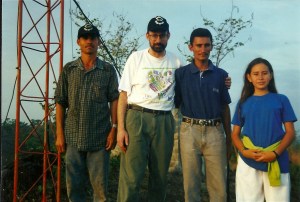
2000 Delegation0017Tom:  No sé lo que pasó ese día – el día de Pentecostés, sobre lo cual leimos. ¿Es literalmente cierto que las lenguas de fuego bajaron y que de repente los presentes podían hablar y entender otros idiomas? ¿O es una historia de la verdad? No lo sé.

Lo que sí conozco son las experiencias de Pentecostés que hemos tenido a través de nuestra relación con la comunidad de Guarjila, El Salvador. Para aquellos de ustedes que no saben, estamos celebrando el 15 aniversario de la primera delegación de nuestra comunidad de la iglesia a Guarjila. Hace poco más de 15 años, un pequeño grupo de gente de aquí decidió que necesitábamos una relación más allá de los límites de nuestro propio país. Eligieron una relación a largo plazo a través de Iglesias Hermanas debido a la filosofía de la organización de establecer relaciones entre las comunidades del sur y del norte basado en el respeto mutuo, la confianza y la igualdad.

En estos 15 años hemos tenido 74 personas viajan a El Salvador en 8 delegaciones – 56 individuos únicos. 31 de ellos han sido jóvenes. Hemos tenido gente de nuestra comunidad pasar semanas en Guarjila viviendo, aprendiendo y dando clases con nuestros amigos. También hemos tenido 9 personas de Guarjila llegar a Seattle en las delegaciones. No son muchos y esto nos dice algo de la desigualdad institucional en las oportunidades de viajar. Es decir, tal vez una conversación para otro momento.

¿Cómo es que llegamos a comprender y ser comprendidos en otra comunidad con esas enormes diferencias de idioma, historia y cultura? Ahí es donde vamos hoy.

El título de nuestras reflexiones de hoy es hermanamiento – literalmente, la hermandad. Es un término que usamos para describir la relación con Guarjila.

En el avión de vuelta de la primera delegación, pedimos a todos escribir un párrafo que resume cómo se sentían acerca de la experiencia. Recientemente hemos invitado a todos los que estaban en la primera delegación en el 2000 a reflexionar sobre ese viaje. No todo el mundo puede estar aquí hoy, pero varias personas van a compartir sus pensamientos para darles un poco de comprensión de lo que podríamos llamar nuestra experiencia de Pentecostés.

La primera persona será Mary Edwards. Mary participó en dos delegaciones – la primera en el 2000 y la tercera en el 2002.

37Mary Edwards:
16 de abril 2000 – Mientras los once de nosotros de la Iglesia Metodista Unida de Wallingford en Seattle bajábamos de la camioneta, Vicky y yo comentamos sobre lo absurdo de lo que estábamos haciendo: Hola. Somos de América del Norte. Queremos ser sus amigos. Como una idea, el concepto de establecer una relación había parecido tan bueno, pero cuando aterrizamos parecía extraño y un tanto cómico.

Sin embargo, una hora más tarde, mientras nos sentamos juntos en su iglesia de concreto, la amabilidad de la gente de la directiva y los líderes de la iglesia dejó en claro que no sólo era posible la relación, sino también que era importante para aquellos de nosotros en los EE.UU. , América del Norte, así como para el pueblo de Guarjila. Los salvadoreños comenzaron a contar su historia de desplazamiento en los campos de refugiados de Honduras después de años de lucha, el asesinato, la tortura, la pobreza y la historia de su regreso como una comunidad para construir una ciudad que sería un testimonio de su creencia en el valor de cada persona; el compromiso con las necesidades básicas de refugio, alimentos, agua, salud y educación para todas las personas; el poder de la fe y del amor.

Les hablamos sobre el dinero que habíamos recaudado para viajar a visitarlos ($ 15.000) y sobre nuestras preguntas sobre este gasto: ¿deberíamos de haberles enviado el dinero y quedarnos en casa? Enfáticamente, dijeron que no. Lo importante es nuestra relación mutua, nuestro amor, nuestra mayor comprensión. Yo era escéptica, pero a medida que pasaba la semana, llegué a creerlos. Gran parte de lo que ellos han sufrido ha sido causada por o exacerbada por el gobierno al cual pago mis impuestos. Para tomar la responsabilidad para ese dolor debo conocerlos como personas. Para tomar la responsabilidad significa no sólo reconocer que estas personas no son una especie de demonios, que sospecho que cualquiera que haya viajado a visitarlos lo entendería ya, pero reconocer que tengo que mantener mi propio gobierno responsable como si estuviera asesinando a mis propios hermanas y hermanos. Lo cual sí está ocurriendo.

Y mientras la gente de Guarjila podría separar el gobierno de los EE.UU. de la gente, yo no puedo.

Hola. Somos de América del Norte. Ahora me doy cuenta. Somos su familia.

Eso, me parece, es el punto. Y es un punto con amplias ramificaciones, no sólo para el pueblo de Guarjila o El Salvador, o Centroamérica o América Latina, pero para las personas sin hogar y torturadas y desesperadas en las calles de Seattle también.
DSC037654 de mayo 2015 – Viajando los caminos polvorientos de El Salvador sin nada en mis manos para hacer o para ofrecer, sólo el español chapurreado y un corazón abierto y curioso (y nervioso), cambió mi vida.

Del pueblo de Guarjila, me enteré de lo sabroso que son las pupusas; Me enteré de que uno puede ser abrumado por demasiados tamales; Aprendí que las amistades a través de fronteras, como las amistades en el vecindario, comienzan con el escuchar uno al otro; Aprendí lo que mi propio país había hecho en nombre de lo correcto (y en el espíritu de temor); y me enteré de que iba a vivir mi vida por la justicia, que iba a aprender de los pobres, que el trabajo de mi vida sería acerca de la esperanza.

Después de ese viaje, regresé a los EE.UU. y comencé a trabajar en las escuelas sirviendo a las personas que viven en la pobreza. En mis últimos años de ser maestra, ayudé a iniciar una pequeña escuela llamada Global Connections (Conexiones Globales) que sirvió a los estudiantes que viven en la pobreza, muchos de ellos refugiados de las guerras civiles del mundo, incluyendo un número significativo de estudiantes de Somalia y México y América Central.

Estoy muy agradecida de haber podido hacer ese trabajo antes de tener mis tumores cerebrales, cuando todavía podía trabajar en las escuelas.

Recuerdos de Guarjila son como diapositivas de un viejo Kodachrome: La Lupe joven, dientes delanteros que faltan, corriendo en las primeras lluvias de la temporada para agarrar mangos y entregarlos a Ann y yo.  El Graham adolescente, sentado en una roca con Martin en el medio del Río Sumpul, los dos hablando por horas, aunque Graham no hablaba español y Martin no hablaba Inglés.  Niños y niñas invisibles gritaban, “Clarita” de las laderas, apareciendo en los cuerpos visibles, por fin, corriendo hacia los brazos abiertos de Clare.  Mary, de diez años de edad, frente a la juventud de Radio Sumpul mientras el grupo luchaba con una cuestión ética, diciéndoles que tenían que consultar el documento de las Naciones Unidas sobre los Derechos del Niño.  Hermana Josephine en Seattle diciéndome que en la noche de mi cirugía cerebral, la comunidad se había reunido en vigilia por mí.

Las palabras de despedida de la directiva en respuesta a la pregunta: “¿Qué hacemos ahora?” La respuesta: “Aprender acerca de su propio país.”

Me acuerdo:  Lágrimas de alegría y de tristeza;  El dolor y la bondad calmante en las conexiones;  Belleza y risas en el polvo.

Tom:  Ann Joyce fue también en la primera delegación hace 15 años y ha seguido siendo una defensora firme de nuestra relación.

74369341-SLD-003-0026Ann Joyce:
16 de abril de, 2000 – David, de seis años de edad, se sentó en su cama en la sala donde todos dormimos en el último día y dijo: “Usted vino aquí. Usted vivió con nosotros. Usted comió con nosotros. Usted jugó juegos con nosotros.” También aprendimos de ellos. Nos enteramos de la alegría y la aceptación en una familia numerosa con pocos recursos físicos financieros. Nos enteramos de fuerza y ​​determinación en una comunidad que se ha enfrentado a la muerte y el desplazamiento. Aprendimos sobre la pasión por la búsqueda de justicia en el mundo de la gente que conocimos cada día. Y nos fuimos sabiendo que tenemos que encontrar la manera de caminar con ellos en su lucha.

Mayo 2015  – En los 15 años desde entonces, hemos desarrollado más amistades y aprendido más mediante las delegaciones y recibiendo delegaciones de Guarjila. Esta  interacción  de persona a persona nos cambia en formas que otras experiencias no pueden hacer. Sobre todo quiero dar las gracias a Tom por su diligencia a través de los años para mantener la conexión y profundizar las relaciones.

Tom:  Vicky Stifter fue una de las personas clave en comenzar nuestra relación con Guarjila. Ella estaba en la primera y segunda delegaciones y ahora es pastora de la Iglesia de la Comunidad de Riverside en Hood River, Oregon.
DSC03246Vicky Stifter:
16 de abril de, 2000 – ¡Qué regalo ha sido esta visita a nuestro hermanamiento (Guarjila, El Salvador)! Sin duda, ha sido una de las experiencias más conmovedoras, desafiantes y transformativas de mi vida, llena de risas, lágrimas y la abrumadora presencia de Dios.


Doy gracias a la gente de Guarjila que han abierto sus casas y sus corazones a nosotros, y le doy gracias a Iglesias Hermanas por dar a luz a este “hermanamiento” de la amistad, la fe y el amor.

21 de marzo 2015 – ¡¿Qué estamos haciendo aquí?!  Había sido un viaje largo desde Seattle a Guarjila. A medida que nos acercábamos al pueblo, la camioneta estaba llena de los viajeros cansados pero ​​todavía emocionados. ¿Qué se vería? ¿Qué se sentiría? ¿A quién conoceríamos? ¿Qué haríamos?

Por fin, la camioneta se detuvo delante del centro comunitario. Y en cuanto abrieron las puertas, mi corazón y la cabeza se llenaron de pánico. “¿Qué estamos haciendo aquí?” me pregunté a mí mismo. Además de nuestro propio equipaje, nuestras manos estaban vacías. No nos traíamos herramientas para construir, medicina para curar, ni dinero para contribuir. Me sentí fuera de lugar, expuesta, ridícula. “¿Qué clase de viaje de misión es esto?”, me pregunté. Anhelaba algo concreto para dar o hacer. Sin embargo, mis manos estaban vacías.

Ahora sé, por supuesto, que ir con las manos vacías es el punto central de la jornada. A diferencia de los viajes misioneros tradicionales en los cuales nosotros (los privilegiados) son los que damos y ellos (los pobres) son los que reciben, fuimos invitados a dejar de lado nuestra necesidad de control. Al ser vulnerables y extender las manos vacías, hemos tenido la oportunidad de construir relaciones reales, humanas de corazón a corazón.

Tuve el honor de viajar en esa primera delegación y ayudar a comenzar el hermanamiento que nos enriquece la vida, la relación de transformación entre el pueblo de WUMC y el pueblo de Guarjila. Sigue siendo uno de los mejores momentos de mi vida adulta, y estoy profundamente agradecida a todos los que han alimentado esta relación preciosa durante los últimos 15 años.

Pido que el Dios de amor y de justicia siga bendiciendo a ambas comunidades en los meses y años que vienen.

Tom: Graham Foster tenía 14 años cuando fue en la primera delegación. Luego viajó con otras dos delegaciones y pasó 5 semanas en Guarjila después de graduarse de la universidad.

DSCN3518Graham Foster:
16 de abril de, 2000 – Este fue el viaje más memorable, más intrigante y más educativo de mi vida. Esta fue la primera vez que había estado fuera de los Estados Unidos y fue asombroso ver las comunidades pobres de San Salvador y saber que los EE.UU. apoyó un gobierno que maltrataba a sus ciudadanos. Estoy muy contento con la manera en que el pueblo de Guarjila recibió a nuestra delegación. Creo que nuestra relación con ellos será excepcional debido a la similitud de nuestras ideas y valores. Será emocionante ver cómo crece esta relación. Muchas gracias a todos los que ayudaron a hacer este viaje posible. Brindar la oportunidad de experimentar algo como esto es muy bueno. Me siento muy afortunado de haber podido aprovechar esta oportunidad y viajar.

12 de mayo de 2015 – Fue una experiencia poderosa tener amigos y ver que ellos no tienen las mismas oportunidades que tenemos aquí. Tener estos viajes, en los que están tan centrados en las relaciones, se obtiene esta perspectiva que no se puede conseguir de ninguna otra manera. Reconocemos lo privilegiados que somos, y para mí aprendí lo importante que es no dar por hecho esa realidad – para tratar ese privilegio con mucho respeto, y aprovecharlo y no malgastarla. Nos damos cuenta de que los demás no tienen eso y hacemos lo que podamos para hacer un pequeño cambio positivo para ayudar a otros a alcanzar su potencial también.

Tom: Marie Shaw fue otra parte de ese equipo que sentó las bases de nuestra relación con Guarjila. Ella estaba en la primera delegación, la cuarta delegación en 2004 y también pasó varias semanas en la comunidad por su cuenta.

2000 Delegation0015Marie Shaw:
10 de abril de, 2000 – Son las 5:30 de la mañana y me estoy despertando con el sonido de los gallos cacareando, gallinas cacareando, cerdos resoplando y la palmada, palmada, palmada de Francisca dando forma a la masa en tortillas perfectas para el desayuno esta mañana. Me siento sudada con la humedad y noto tierra bajo las uñas mientras escribo. Tengo por lo menos dos capas de repelente de mosquitos en la piel después de haberme duchado en agua fría ayer por la mañana en San Salvador. ¡Hemos llegado! Estamos aquí en Guarjila, completamente presentes para el comienzo de nuestro segundo día de la construcción de una relación con nuestro hermanamiento tan esperado. Me siento libre. ¡Siento emociones adentro, y estoy profundamente agradecida!

3 de marzo 2015 – Reconociendo el Jesús que vive en las historias de la gente ha sido la experiencia más transformadora para mí. Es en presenciar estas historias, sobre todo de la guerra- sintiendo el dolor, la pérdida, la fortaleza, la perseverancia, la solidaridad, el compromiso con la justicia, éstas son las historias y los sentimientos que se apoderaron de mi corazón en esa primera delegación y continúan hasta hoy. El testimonio de Romero y Cortina y Grande y otros que dieron su vida, trajo mi Jesús a la vida. Ahora puedo ver a Jesús más claramente en todos los pueblos del mundo.

Tom:  Kari Olson fue la directora  del pastoral de jóvenes y familias en el 2000 cuando ella fue en la primera delegación. Ella volvió con la segunda delegación en 2001 y de nuevo con la sexta delegación en 2008.

DSC03872Kari Olson:
1 de abril 2015 – El experimentar el hermanamiento de Guarjila y Wallingford IMU ha sido un cambio de vida para mí, desde el momento de la preparación con la primera delegación hasta ahora. Esa relación ha cambiado cómo veo y experimento el mundo a mi alrededor y me ha ayudado a ver con nuevos ojos.

Ser parte de la primera delegación y experimentar otras delegaciones ha sido un regalo increíble y abrió mis ojos y mi corazón al pueblo de El Salvador. Presenciar el efecto duradero que ha tenido en la juventud de Wallingford ha sido increíble. Llegar a conocer a la gente, escuchar sus historias, y quedarme en sus hogares ha ayudado a entender lo que significa vivir mi fe y entender que tanto lo que hago en los Estados Unidos tiene impacto en ellos y el resto del mundo. La relación me ha ayudado a entender mejor y vivir con la fe, la esperanza, la hospitalidad, la gracia y el amor. Siempre estaré agradecida.

Tom:  Hay un par de otras voces que nos gustaría compartir esta mañana. Chuck Freeman fue otro de los organizadores de nuestro hermanamiento y estaba en la segunda delegación en el 2001 y de nuevo en la séptima delegación en el 2010. Él escribió este poema durante la delegación en el 2001.

Chuck Freeman:

Los fantasmas de El Salvador viven en los árboles
Ellos arrullan suavemente
Viéndonos movernos
entre los monumentos

¿Ellos estaban presentes para todo?
¿Ellos lloraban con los heridos?
¿Se agarraron de las manos de las madres
al oír el viento en las gargantas de sus bebés?

¿O eran iguales que el resto del mundo?
Sólo viendo, cacareando, y diciendo:
¿No es una pena lo de El Salvador?

Y así llegamos con nuestras cámaras,
a devorar la ciudad.
Tenemos hambre de saber.
De sentir el dolor
De sufrir como este pueblo sufrió

Pero nuestras lágrimas no son necesarias.
El pueblo ya tiene un montón de ellas.
Son nuestras manos
Son nuestras espaldas
Son nuestras voces fuertes estadounidenses
que tienen alguna oportunidad de ser escuchadas.
Eso es lo que se necesita ahora.

¿En cuanto a los fantasmas?
Ellos cantarán como siempre lo han hecho.
Así como ellos cantaban hace 500 años
cuando los españoles llegaron con su
armas invisibles que podrían propagar la muerte
con un solo toque.

Y los fantasmas todavía cantarán
mucho después de que los nombres de los mártires
hayan sido molidos en símbolos puros
por la piedra de molino del tiempo.

Paz, cantarán.
La paz, la paz – monos tontos.
¿Nunca aprenderán esta melodía sencilla?

Tom: Bruce Sherman ha apoyado el hermanamiento con Guarjila por mucho tiempo y viajó con la delegación más reciente en el 2013. En las reflexiones una noche en San Salvador, compartió este poema que escribió después de visitar la tumba de Monseñor Oscar Romero.

Los campesinos en sus
manos y rodillas
Fundaciones construidas de catedrales
En sus espaldas sudadas y quebradas
Las espaldas que cortan el añil y los frijoles que
llenan el mundo con cafeína.

El arzobispo del pueblo
Descansa en paz entre ellos.
El centro de la misa del pueblo
Pero ahora está atrapado en
El Bronce Negro Duro.

Nunca será liberado
Para volver a caminar con su pueblo
Esperando la llamada Canon
Ya adorado como un santo
Por los que importan.
2000 Delegation0001Tom Pouliot:
Déjenme contarles la historia de Pentecostés que traigo de El Salvador.

En abril de 2000 tuve la suerte de ser parte de la primera delegación de esta congregación a nuestro posible hermanamiento, Guarjila, El Salvador. Fue una visita increíble – que cambió mi vida. Hemos escuchado de primera mano la historia del pueblo de Guarjila – los eventos que condujeron a la guerra, la huida con destino a los campamentos de refugiados en Honduras y el regreso a Guarjila mientras la guerra continuaba a su alrededor. Sinceramente me sentí como el apóstol Tomás, que tocó las heridas de Cristo resucitado y llegó a una creencia más fuerte.

Después del viaje de mi mente giraba con todas las vistas y sonidos. Luché por ponerlos en perspectiva y encontrar lo que Dios me estaba llamando a hacer con todo el conocimiento. ¿Era posible que yo estaba siendo llamado a dedicar mi vida a la gente de El Salvador? ¿Cómo podría hacerlo?

Así era mi estado de ánimo el próximo año, mientras me preparaba para ir a Guarjila por segunda vez. Esta visita se coordinó para coincidir con el aniversario de la muerte de Monseñor Romero, la voz de los pobres, el que representaba y murió por los que no tienen voz. Una de nuestras primeras paradas en San Salvador fue a la catedral, donde se produciría una misa de jóvenes para celebrar la vida de Romero. Me dio escalofríos por todo el cuerpo cuando escuché decenas de jóvenes que cantaban el nombre de Romero mientras marchaban hacia el sótano de la catedral cerca de donde se encuentra la tumba de Romero. La misa era hermosa en muchos aspectos, pero también planificábamos  asistir a un servicio en una iglesia bautista en otra parte de la ciudad. La misa, por supuesto, comenzó tarde y por eso teníamos un poco de prisa para seguir al siguiente destino cuando la misa terminó.

Pero yo quería un poco de tiempo en la tumba de Romero. Quería un poco de silencio, tiempo de calidad en la tumba para pedir dirección – de Dios, de Romero, o de alguien acerca de dónde tengo que estar y que tengo que hacer. Tiempo de silencio en San Salvador es un concepto relativo. Hay tantas personas- incluyendo aquellos pidiendo limosnas.

Cuando comencé a orar para pedir guía en la tumba me sentí un tironcito en la manga. Volteé con vacilación a ver a una señora mayor de edad, al igual que muchas que se ven alrededor de esa ciudad. Asumí que quería una limosna, así que cuando ella empezó a hablar, rápidamente le dije, “lo siento, no hablo español” y volví a rezar de nuevo. Quedaba poco tiempo y yo quería una respuesta.

2000 Delegation0020Pronto, sin embargo, sentí otro tironcito en la manga y la señora, todavía allí, me habló de nuevo. Le ofrecí una sonrisa condescendiente y rápidamente volteé por no querer quedarme atrapado en algo. Una vez más me puse a tratar de tener un tiempito de calidad de oración y una vez más me tiró de la manga.

Respiré profundamente, me di la vuelta y por primera vez realmente miré a esta señora. Era pequeña, como la mayoría de personas en ese país y le faltaban muchos dientes. Su ropa, aunque desgastada, estaba limpia y ordenada. Ella tenía una sonrisa radiante mientras me miró y por primera vez escuché sus palabras. Mientras escuchaba, le entendí. Señaló el libro de visitas en la tumba y me preguntó si podría poner su nombre en el libro, ya que no podía escribir. Letra por letra me deletreó su nombre y lo escribí en el libro. El brillo en su rostro cuando terminé no se puede expresar con palabras. Ella tomó mis manos entre las suyas y me agradeció.

Los dos salimos en nuestros caminos diferentes. Ella a vivir su vida en ese país hermoso, pero en apuros, y yo corriendo para alcanzar el resto de nuestro grupo.

Es obvio, ¿no?  Somos las manos de Dios aquí en la tierra – llamados a realizar el trabajo pastoral de Dios. Creo que Dios nos llama a su ministerio de reconciliación.
Posted in Aniversarios, Delegaciones, El Salvador, Español, United States | Tagged , , , , | Leave a comment

Wallingford and Guarjila celebrate 15-year relationship

Español

Pentecost/Sister Parish Celebration
Wallingford United Methodist Church
May 24, 2015

2000 Delegation0017Tom:  I don’t know what happened that day – that Pentecost day we read about. Is it literally true that tongues of fire came down and that suddenly those present could speak and understand other languages?  Or is it a story of truth? I don’t know.

What I do know about are the Pentecost experiences we’ve had through our relationship with the community of Guarjila, El Salvador.  For those of you who may not be aware, we are celebrating the 15th anniversary of the first delegation from our church community to Guarjila. Just over 15 years ago, a small group of people here decided that we needed a relationship beyond the boundaries of our own country.  They chose a long-term relationship through Sister Parish because of the organization’s philosophy of establishing relationships between southern and northern communities based on mutual respect, trust and equality.

In these 15 years we’ve had 74 people travel to El Salvador in 8 delegations – 56 unique individuals.  31 of those have been young people. We’ve had folks from our community spend weeks on their own in Guarjila living, learning and teaching with our friends. We’ve also had 9 people from Guarjila come on delegations to Seattle. It isn’t very many and speaks to some of the institutional inequity in the ability to travel.  That is, perhaps a talk for another time.

How is it that we come to understand and be understood in another community with such vast differences in language, history and culture? That is where we’re going today.

The title of our time today is hermanamiento – literally sisterhood or brotherhood.  It is a term we use to describe the relationship with Guarjila.

On the plane home from the first delegation, we asked everyone to write a paragraph that summarized how they felt about the experience.  Recently we invited all those who were on the first delegation in 2000 to reflect on back that trip. Not everyone could be here today, but several people put together their thoughts to give you some understanding of what we might call our Pentecost experience.

The first up will be Mary Edwards.  Mary was on two delegations – the first in 2000 and the third in 2002.

37Mary Edwards:
April 16, 2000 – As the eleven of us from Wallingford United Methodist Church in Seattle Washington climbed out of the van, Vicky and I commented on the absurdity of what we were doing:  Hi.  We’re from North America.  We want to be your friends.  As an idea, the concept of establishing a relationship had seemed so right, but as we landed it seemed bizarre and somewhat comical.

An hour later, however, as we sat together in their concrete block church, the graciousness of the people in the directiva and the church leaders made it clear that not only was relationship possible but also that it was important for those of us in the USA, North America as well as for the people of Guarjila.  The Salvadorans began to tell their story of displacement in Honduran refugee camps after years of struggle, murder, torture, poverty and then the story of their return as a community to build a town that would be a testament to their belief in the value of every person; the commitment to basic needs of shelter, food, water, health, and education for all people; the power of faith and of love.

We told them about the money we had raised to come ($15,000) and about our questions concerning this expenditure:  should we have sent the money and stayed home?  Emphatically, they said no.  What is important is our mutual relationship, our love, our increased understanding.  I was skeptical, but as the week went on I came to believe them.  So much of what they have suffered has been caused by or exacerbated by the government to which I pay my taxes.  To take responsibility for that pain I must know them as people.  To take responsibility means not only to recognize that these people are not some sort of demons, which I suspect anyone who would take such a trip would understand already, but to recognize that I must hold my own government responsible as if it were murdering my own sisters and brothers.  Which they are.

And while the people of Guarjila could separate the government of the US from the people, I can not.

Hi.  We’re from  North America.  Now I realize.  We are your family.

That, it seems to me, is the point.  And it is a point with broad ramifications, not only for the people of Guarjila or El Salvador, or Central America or Latin America, but for the homeless and tortured and desperate on the streets of Seattle too.

DSC03765May 4, 2015 – Traveling El Salvador’s dusty roads with nothing in my hands to do or to offer, with only broken Spanish and an open and curious (and nervous) heart, changed my life.

From the people of Guarjila, I learned how tasty pupusas are; I learned that one can be overwhelmed by too many tamales; I learned that friendships cross borders, like friendships in the neighborhood, begin with listening;; I learned what my own country had done in the name of right (and in the spirit of fear); and I learned that I would live my life for justice, that I would learn from the poor, that my life’s work would be about hope.
After that trip, I returned to the U.S. and began working in schools served people living in poverty. In my last teaching years, I helped start a small school called Global Connections that served students living in poverty, many of them refugees from the world’s civil wars, including significant numbers of students from Somalia and Mexico and Central America.

I am so grateful that I did this work before my brain tumors, when I could still work in schools.

Guarjila memories are like slides from an old Kodachrome:  Young Lupe, front teeth missing, running through the season’s first rains to catch mangos and deliver them to Ann and me.  Teenage Graham, sitting on a rock with Martin in the middle of Rio Sumpul, the two talking for hours though Graham didn’t speak Spanish and Martin didn’t speak English.  Invisible children shouting, “Clarita!” from the hillsides, appearing in visible bodies at last, running to jump in Clare’s arms.  Ten year-old Mary addressing the Radio Sumpul youth as the group struggled with an ethical issue, telling them that they needed to consult the United Nations document on The Rights of the Child.  Sister Josephine in Seattle telling me that on the night of my brain surgery, the community had gathered in vigil for me.
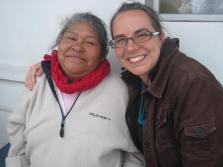
Parting words from the directiva in response to the question, “What do we do now?” The response: “Learn about your own country.”

I remember:  Tears of joy and of sadness;  Pain and soothing kindness in connections;  Beauty and laughter in the dust.

Tom:  Ann Joyce was also on that first delegation 15 years ago and has continued to be a strong supporter of our relationship.

Ann Joy74369341-SLD-003-0026ce:
April 16, 2000 – Six year old David sat up in his bed in the room we all slept in on the last day and said “You came here.  You lived with us.  You ate with us.  You played games with us.”  We also learned from them.  We learned about joy and acceptance in a large family with few financial physical resources.  We learned about strength and determination in a community that has faced death and displacement.  We learned about passion for seeking justice in the world from people we met each day.  And we left knowing that we must find ways to walk with them in their struggle.

May 2015 – In the 15 years since, we have developed more friendships and learned more by sending delegations and hosting delegations from Guarjila.  This person to person interaction changes is in ways that other experiences can’t quite do.  I especially want to thank Tom for his diligence through the years to keep the connection and deepen relationships.

Tom:  Vicky Stifter was one of the key people in getting our relationship with Guarjila established.  She was on both the first and second delegations and is now pastor at Riverside Community Church in Hood River, Oregon.

Vicky StiDSC03246fter:
April 16, 2000 – What a gift this visit to our Sister Parish (Guarjila, El Salvador) has been!  Without a doubt, it has been one of the most moving, challenging and transforming experiences of my life, filled with laughter, tears and the overwhelming presence of God.

I give thanks to the people of Guarjila who have opened their homes and hearts to us, and I give thanks to Sister Parish for giving birth to this “hermaniento” of friendship, faith and love.

March 21, 2015  – What are we doing here?!  It had been a long journey from Seattle to Guarjila.   As we neared the village, the van was filled with weary yet excited travelers.   What would it look like?  What would it feel like?  Who would we meet?  What would we do?

Finally, the van pulled up in front of the community center.  And as the doors opened, my heart and head filled with panic.  “What are we doing here?!” I thought to myself.    Aside from our own luggage, our hands were empty.  We didn’t bring tools to build, medicine to heal, or money to contribute.  I felt out of place, exposed, ridiculous.  “What kind of a mission trip is this?” I wondered.   I longed for something concrete to give or do.  Yet my hands were empty.

I now know, of course, that empty handedness is the whole point of the journey.   Unlike traditional mission trips where WE (the privileged ones) are the givers and THEY (the poor ones) are the takers, we were invited to let go of our need for control.     By being vulnerable and extending our empty hands, we have had the opportunity to build real, human, heart-to-heart relationships.

I was honored to travel on that first delegation and help begin the life giving, transformative relationship between the people of WUMC and the people of Guarjila.    It remains one of the highlights of my adult life, and I am deeply grateful to everyone who has nurtured this precious relationship during the past 15 years.

I pray that the God of love and justice might continue to bless both communities in the months and years ahead.

Tom:  Graham Foster was 14 when he went on the first delegation.  He went on two other delegations and spent 5 weeks in Guarjila after graduating from college.

Graham FDSCN3518oster:
April 16, 2000 – This was the most memorable, most intriguing and most educational trip of my life.  This was the first time I had ever been out of the United States and it was astonishing to see the slums of San Salvador and the US supported a government that so poorly mistreated it’s citizens.  I’m very happy with how our delegation was received by the people of Guarjila.  I think that our relationship with them will be exceptional because of how similar our ideas and values are.  It will be exciting to see how this relationship grows. Very much thanks to everybody that helped make this trip happen.  Providing a chance to experience something like this is great.  I feel very lucky to have been able to take advantage of this chance and go.

May 12, 2015 – It was a powerful experience to have friends and see that they don’t have the same opportunity we’re given here.  Having these trips, where they are so focused on relationships, you get this perspective that you can’t get in any other way.  We recognize how privileged we are, and for me it really drove home how important it is to not take that for granted – to treat that privilege with a lot of respect, and take advantage of that and not squander it.  We realize that others don’t have that and do what we can to make small positive change to help others reach their potential as well.

Tom:  Marie Shaw was another part of that team that laid the foundation for our relationship with Guarjila.  She was on the first delegation, the fourth delegation in 2004 and also spent several weeks in the community on her own.

2000 Delegation0015Marie Shaw:
April 10, 2000 – It is 5:30 a.m. and I am awakening to the sound of roosters crowing, hens clucking, pigs snorting and the slap, slap, slap of Francisca shaping the masa into perfect tortillas for breakfast this morning.  I feel sticky with humidity and notice dirt under my nails as I write.  I have at least two layers of mosquito repellent on since yesterday morning’s cold shower in San Salvador.  We have arrived!  We are here in Guarjila, fully present for the beginning of our second day of building a relationship with our long-awaited sister community.  I feel open.  I feel movement within, and I am deeply grateful!

March 3, 2015 – Recognizing the living Jesus in the stories of the people has been the most transforming experience for me. It is in witnessing these stories, especially from the war—feeling the grief, the loss, the fortitude, the perseverance, the solidarity, the commitment to justice—these are the stories and the feelings that gripped my heart on that first delegation and continue to today. The witness of Romero and Cortina and Grande and others who gave their lives, brought my Jesus to life. Now I can see Jesus more clearly in all the people of the world.

Tom:  Kari Olson was the director of youth and family ministries in 2000 when she went on the first delegation. She returned with the second delegation in 2001 and again with the 6th delegation in 2008.

DSC03872Kari Olson:
April 1, 2015 – Experiencing the sister parish relationship between Guarjila and Wallingford UMC has been life changing for me. From the time of preparation with the first delegation until now. That relationship has changed how I look at and experience the world around me and has helped me to see with new eyes.

Being part of the first delegation and experiencing others was an incredible gift and opened my eyes and my heart to the people of El Salvador. Witnessing the lasting effect it has had on the youth of Wallingford has been amazing. Getting to know the people, hearing their stories, and staying in their homes has helped me understand what it means to live my faith and just how much what I do in the United States impacts them and the rest of the world. The relationship has helped me to better understand and live with faith, hope, hospitality, grace, and love. I will forever be grateful.

Tom:  There are a couple other voices we’d like to share this morning. Chuck Freeman was another of the organizers of our Sister Parish relationship and was on the second delegation in 2001 and again on the 7th delegation in 2010.  He wrote this poem during the delegation in 2001.

Chuck Freeman:
The ghosts of El Salvador live in the trees
They coo softly
Watching as we move
between the monuments

Were they present through it all?
Did they cry with the wounded?
Did they hold the mothers’
hands as they heard the wind catch
in their babies’ throats?

Or were they like the rest of the world?
Just watching, clucking, and saying
Isn’t it a shame about El Salvador?

And so we arrive with our cameras,
and devour the city.
We are hungry to know.
To feel the pain
To suffer as these people have suffered

But our tears are not needed.
The people have plenty of those already.
It is our hands
It is our backs
It is our strong American voices
that have some chance of being heard.
That is what is needed now.

As for the ghosts?
They will sing as they have always done.
Just as they were singing 500 years ago
when the Spanish arrived with their
invisible weapons that could spread death
with a single touch.

And the ghosts will still sing
long after the names of the martyrs
have been ground into pure symbols
by the millstone of time.

Peace, they will sing.
Peace, peace you silly monkeys.
Will you never learn this simple tune?

Tom:  Bruce Sherman is a long-time supporter of our relationship with Guarjila and went on the most recent delegation in 2013.  At reflections one evening in San Salvador, he shared this poem after visiting the Archbishop Oscar Romero’s tomb.

Peasants on their
hands and knees
Cathedral foundations built
On their broken sweat stained backs.
Backs that pick indigo, and harvest beans that
Caffeinate the world.

The Peoples Archbishop
Lay in state among them.
The center of the people’s Mass
But now he lies trapped in
Hard Black Bronze.

Never to be freed
To walk again with his people
Waiting the Canon call
Already worshiped as a saint
By those who matter.

2000 Delegation0001Tom Pouliot:

Let me tell you the Pentecost story I bring back from El Salvador.

In April of 2000 I was fortunate enough to be part of the first delegation from this congregation to our perspective sister community, Guarjila, El Salvador.  It was an amazing visit – one that changed my life.  We heard firsthand the history of the people of Guarjila – the events leading up to the war, the flight to refugee camps in Honduras and the resettlement back to Guarjila while the war continued around them.  I honestly felt like the apostle Thomas who touched the wounds of the risen Christ and came to a stronger belief.

After the trip my mind whirled with all the sights and sounds.  I struggled to put it in some perspective and to find what God was calling me to do with all the knowledge.  Was it possible I was being called to devote my life to the people of El Salvador?  How could I do that?

So was my state of mind the next year as I prepared to go to Guarjila a second time.  This visit was to coincide with the anniversary of the death of Archbishop Romero the voice of the poor, the one who stood for and died for those without a voice.  One of our first stops in San Salvador was to the cathedral where a youth mass would occur to celebrate Romero’s life.  It sent shivers up my spine when I heard dozens of young people chanting Romero’s name as they marched into the basement of the cathedral near where the tomb of Romero sits.  The mass was beautiful in many ways, but we were also scheduled to attend a service at a Baptist church across town.  The mass, of course, started late meaning we were in a bit of a hurry to get on the road again when the mass finished.

I wanted some time though, at Romero’s tomb.  I wanted some quiet, quality time at the tomb to ask for direction – to ask God, Romero, someone where I need to be.  Quiet time in San Salvador is relative.  There are so many people around – including those begging for handouts.

As I started to pray for guidance at the tomb I felt a tug at my sleeve.  Hesitantly I turned to see an old woman, like many you see around that city.  I assumed she wanted a handout, so when she spoke I was quick to say, “lo siento, no hablo español” and turned away to pray again.  Time was short and I wanted an answer.

Soon though, there was another tug and the woman, still there, spoke to me again.  I offered a patronizing smile and quickly turned away not wanting to get caught up in something.  Once more I set about trying to get some quality prayer in and once more there was a tug at my sleeve.

2000 Delegation0020Taking a deep breath, I turned and for the first time really looked at this woman.  She was small, like most in that country and was missing many teeth.  Her clothes, though worn, were clean and neat.  She had a glowing smile as she looked at me and for the first time I listened to her words.  As I listened I understood.  She pointed to the guest book at the tomb and asked if I would put her name in the book, as she could not write.  Letter by letter she spelled her name out for me and I wrote in the book.  The glow on her face as I finished was priceless.  She took both my hands in hers and held them and said thank you.

We both went our own ways.  She off to whatever life she leads in that beautiful, but struggling country and me running to catch up with the rest of our group.

Pretty obvious isn’t it?  We are God’s hands on earth called to do God’s work.  I believe God calls us to a ministry of reconciliation.

Posted in Anniversaries, Delegations, El Salvador, General, United States | Tagged , , , | Leave a comment

Celebrating Lent and Easter with beautiful sawdust carpets

160327SPalfom01A number of Sister Parish faith communities marked Lent and Easter this year by making colorful sawdust carpets and participating in processions.  The tradition is widely practiced in Guatemala, as well as other Latin American countries and Spain.

We’ve posted pictures from this year’s sawdust carpets below.

If you like what you see here, we encourage you to create your own sawdust carpet to build community and raise awareness.


St. Joan of Arc – Minneapolis, Minnesota

160327SPalfom07 160327SPalfom04


160327SPalfom03160327SPalfom12


Our Lady of Guadalupe – Tierra Nueva II, Guatemala

1914542_1751715928398811_5838513281177720800_n 12512380_1751716008398803_8552889867887753322_n


Church of the New Jerusalem – Fryeburg, Maine

alfommainealfommaine3


alfommaine4alfommaine2

Posted in General | Tagged , | 1 Comment

Guatemala Representatives Meeting – February 2016

IMG_7533On February 20-21, representatives from Sister Parish communities in Guatemala gathered at UPAVIM for the bi-annual representatives meeting.  UPAVIM was a great host and we were all impressed by the organization and warmth with which we were received.

The photos of our weekend give a sense of the connections we made.

IMG_7515Throughout the weekend, Guatemalan Sister Parish representatives enjoyed learning about the history of UPAVIM’s work and current programs.  A number of SP communities in Guatemala have craft projects, scholarship projects, or women’s projects, and could learn from UPAVIM’s organization, creativity and tenacity.

UPAVIM also set up a presentation about nutrition that was given by two volunteers.  The volunteers did a great job covering a lot of material and adjusting recommendations to the reality for most families at UPAVIM.

IMG_7537During the weekend’s meetings, Sister Parish representatives discussed plans for hosting the Southern Encounter in November of 2016.  At this event, representatives from Sister Parish communities in El Salvador and Guatemala gather to learn from each other, worship, and envision our future as a Sister Parish community.  This year, a delegation from the U.S. will also join the activities.  The delegation is open to the public, to Sister Parish friends both old and new.  Please contact us if you are interested in joining the delegation or would like more information.

Read more in the Guatemala Representatives Meeting Report.

IMG_7500IMG_7524IMG_7522 IMG_7523

Posted in Guatemala | Tagged , | Leave a comment