Life in Guatemala with coronavirus measures

Check online for up to date numbers of coronavirus cases in Guatemala.

Social distancing and public health measures in Guatemala

As of April 30, 2020, Guatemala continues to be under curfew from 6pm to 4am.  There is  no public transportation. Private vehicles can have a maximum of 3 people.  Interstate travel is limited. Many people in Guatemala have family members that live and work in Guatemala City seasonally. Now those family members are stuck in Guatemala City, many with no jobs and no ability to work because of the lack of public transportation. Returning to their home communities is often not an option, as local authorities are limiting who can come in and out, even people that are very well-known to the community.The lack of work in the city is creating great economic strain for community members that live in the city.

The federal government in the past month has declared that they are going to help alleviate financial strain by offering Q1,000 and food relief to qualifying families. The distribution of this aid is in motion. However, many rural communities are still in the dark as to whether this support will reach them. Many doubt that it will. In the city, many people are not eligible for unemployment benefits if their employers were behind on paying social security or never paid social security for their employees.  Businesses with financial trouble are declaring bankruptcy, getting loans from the central government to re-open under a new name, and laying off their former workers without wages or severance pay.

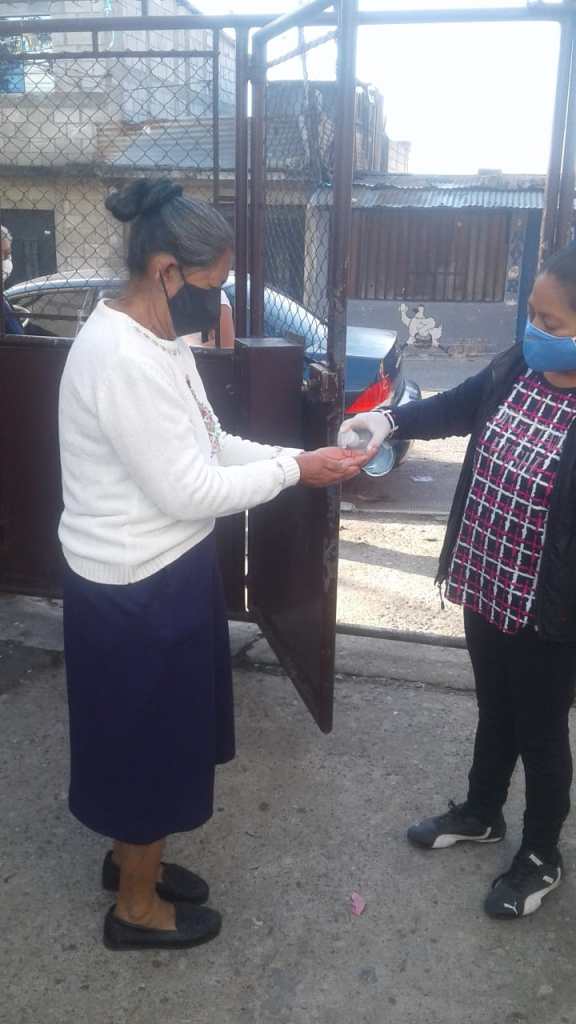
As of Sunday, April 12, the use of face masks is required by law in public and private spaces. The government has placed heavy fines on those that do not wear masks in public and those who violate the national 6pm curfew.

The situation is very difficult, but there are also many examples of how communities are organizing to support each other.

Las Margaritas 2 and Virginia, Ixcan, El Quiche

Many people in LM2 are concerned with if/how restrictions will affect the selling of their harvests in the coming months. If there is an ongoing need to restrict movement, the market value of their harvest could fall or transportation costs involved in getting their harvest to market could rise.

Chontala, Chichicastenango

Chontala is a town that is very dependent on commerce from tourism, as well as access to the municipality of Chichicastenango to sell its harvest and other products. Public transportation to Chichicastenango before the virus cost Q5 per person. Since there is only private transportation available now it costs Q70 per person. Many people also have family members that work seasonally in Guatemala City which is about 5 hours from Chontala. Some of these seasonal workers have been stuck in Guatemala City since the beginning of the national stay-at-home orders that started in mid-March. The community of Chontala is not allowing people from Guatemala City to enter the community because of fear of infection. Guatemala City has the highest infection rate nationally. This has created a group of people that are without employment, stable housing, and food.

Chichipate, El Estor

In general, people are able to still work within the community of Chichipate. People that relied on traveling to the nearest municipality for work have been hit the hardest economically.  Without public transportation and with the informal economy shrinking, these families have no way to make money right now. They may not have access to enough land to provide food for their families throughout the year.  In Chichipate, many families have to rent land to plant on because they do not own enough land to provide for their family. With the increase in large monocrops, like African palm and biofuel crops, some families have had trouble accessing plots in recent years.

UPAVIM, La Esperanza, Mesquital, Guatemala 

In the month of April, UPAVIM was able to pay its salaried workers. Work from home on crafts was permitted for those who work in the crafts department. For May, all pending craft orders have been completed, so there is no longer work available for those UPAVIMas that work in crafts. UPAVIM is continuing to evaluate if they are able to pay its salaried workers for the month of May.  UPAVIM is composed of those that are salaried and those that work as contractors (their pay is based on the quantity of crafts produced or services they provide).

Tierra Nueva 1 and Tierra Nueva 2, Chinautla, Guatemala

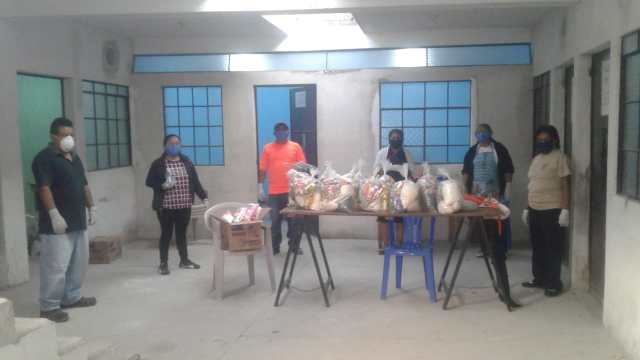
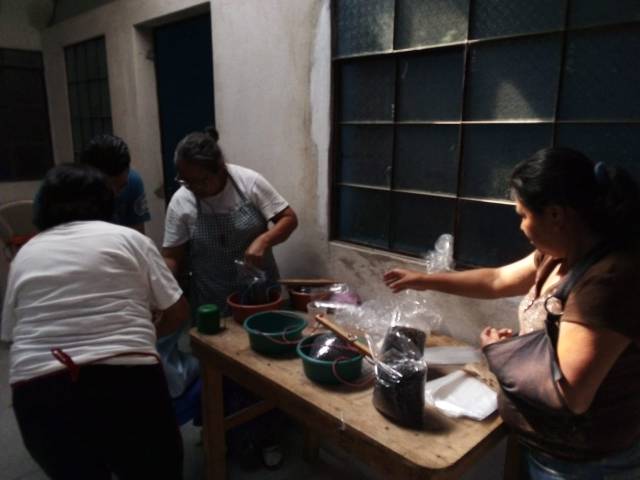
This community has been directly affected by virus infections since it is near Guatemala City. The health authorities are working around the clock to test potential patients. Some people have been placed in quarantine in their homes. Streets have been blocked off in certain areas of the community to prevent people from entering and leaving.  People are trying their best to comply with stay-at-home orders but because most families rely on a daily income to eat, many people still need to leave their house and the community each day, some walking long distances because of the lack of public transportation.  Tierra Nueva 1 and Tierra Nueva 2 have organized food aid for some of the most high-risk people, including families in quarantine, elders, and single mothers.

San Andres Itzapa, Chimaltenango

San Andres is one of the many communities in Guatemala that has suffered from drought the past several years. Many families are heavily dependent on their crops and/or ability to access the municipality of Chimaltenango. With the history of drought and now travel restrictions food insecure families are falling deeper into poverty and families who once had stable income are also suffering.

San Antonio, Cunén

San Antonio is a small, agricultural community. People can still work in their fields and families can do social distancing.  They have said the stores run out of food quickly, but can restock.  In addition to their crops, most families also depend on additional income because their plots of land are very small.  The drop in income from family members working in construction, the sugar cane fields, and other jobs in the city or the U.S. will very much affect the community in the mid-to-long-term. For now, people are more worried about their family members in the U.S. because they have heard about the infection rate and unemployment.  They know that, while they are poor, they have food, but their family members in the U.S. have to pay for rent, bills and food to survive.

Food aid in Tierra Nueva 1 for families in quarantine and others in need.

Food aid in Tierra Nueva 2
Posted in Guatemala, News | Tagged | Leave a comment

Tierra Nueva 2 entrega víveres a la gente necesitada

English

En un esfuerzo por frenar la propagación del nuevo coronavirus mientras preparan hospitales de campaña, el gobierno guatemalteco ha cerrado escuelas y muchos negocios no esenciales.  Ha prohibido la mayoría de los viajes internacionales y el transporte público, y ha declarado un toque de queda de 6pm a 4am . El gobierno también ha recomendado que las personas se queden en casa siempre que sea posible.

Sin embargo, en un país como Guatemala, un gran porcentaje de la población depende de su salario diario para comer, creando una tensión desgarradora entre prevenir la propagación del virus y alimentar a una familia.

En Tierra Nueva 2, las personas se están adaptando a la vida en cuarentena y se quedan en casa tanto como sea posible, mientras continúan trabajando tanto como puedan sin el transporte público. Las personas con problemas previos de salud esperan nuevas fechas para sus citas en los hospitales públicos. Los niños están todos en casa estudiando sus tareas. El personal de la clínica en Tierra Nueva está haciendo todo lo posible para prepararse con recursos limitados. Después de dos semanas de cuarentena nacional, algunas personas ya han acudido al sacerdote de la iglesia en Tierra Nueva 1 para pedir ayuda porque no tienen qué comer.

Con una generosa donación de su hermanamiento, Santa Juana de Arco, el Comité Hermanamiento en TN2 está preparando bolsas de víveres y productos de higiene para la gente de la tercera edad y madres solteras en su comunidad, a quienes consideran los más vulnerables. Esperan también comprar tres termómetros digitales para la clínica, pero actualmente están agotados en el país. La entrega de víveres no resolverá los problemas creados por generaciones de desigualdad, pero es una gran ayuda en un momento de gran necesidad. Y quizás, lo más importante, las personas en TN2 saben que no están solas. Son amadas.

El Comité de Hermanamiento de TN2 envió un enorme agradecimiento a sus hermanos y hermanas en Santa Juana de Arco. Les agradecemos a cada uno de los miembros del comité en TN2 también. En un momento de crisis, cuando sus familias intentan adaptarse y prepararse, cuando sus familias tampoco saben de dónde vendrá su comida, tomaron el tiempo y se arriesgaron para ayudar a los más necesitados de su comunidad. Se ve y se aprecia: un hermoso ejemplo de la solidaridad.

Con las medidas de distanciamiento, se preparan para entregar los víveres.

Se preparan las bolsas de frijol.

Se consiguieron pasta, frijol, Incaparina, arroz y otros víveres, a pesar de las dificultades de la cuarentena.

Entregaron los víveres en la iglesia con todas las medidas de prevención.

Posted in Emergency Aid 2020, Español, Guatemala, News | Tagged , , , | 1 Comment

Unidos en la oración y la solidaridad – Iglesias Hermanas en los tiempos de coronavirus

English

Querida familia de Iglesias Hermanas,

La pandemia de coronavirus está afectando a todos. ¿Cómo son los hermanamientos en medio de una pandemia? Aunque los detalles del día a día cambiarán, nuestra misión sigue siendo la misma. Continuaremos compartiendo nuestras alegrías y nuestras tristezas y nos uniremos en la oración y la solidaridad.

Por el momento, Iglesias Hermanas está tomando todas las precauciones disponibles.  No realizaremos delegaciones ni visitas a las comunidades, pero estaremos disponibles para ayudar con la comunicación entre ustedes y sus hermanos del norte. No duden en comunicarse con nosotros con cualquier duda o pregunta. Favor de compartir sus oraciones, sus preocupaciones, sus esperanzas y su amor con los hermanos del norte. Quieren saber cómo están y escuchar de ustedes.

A corto plazo, nosotros
– Vamos a platicar con los hermanamientos sobre cómo Iglesias Hermanas puede ayudar a los esfuerzos comunitarios para ayudar a la gente más necesitada.
– Vamos a seguir en contacto con sus hermanos del norte, al compartir oraciones, saludos, mensajes, video, y fotos con ellos.  Podemos organizar llamadas de Skype o WhatsApp o Zoom con miembros del norte y del sur.
– Hemos cancelado las delegaciones de marzo, abril, y octubre y también las reuniones de representantes.  No sabemos cuándo se va a poder retomar las delegaciones, las reuniones o las visitas pero estaremos en comunicación con cada comunidad para decidir juntos los pasos a tomar.
– Estaremos en contacto con todas las comunidades de Iglesias Hermanas para tomar decisiones sobre los hermanamientos al largo plazo.

De lo que hemos escuchado de los hermanamientos del norte, están bien por el momento. Cada ciudad tiene sus propias medidas, pero en la mayoría se ha cancelado las escuelas y la población está en cuarentena para frenar el brote de coronavirus allá.  Aunque la mayoría de los miembros de Iglesias Hermanas está bien, mucha gente está sufriendo.  Igual que en Centro América, este virus en los EEUU expondrá todas las desigualdades y otras “pandemias”, como el racismo, el hambre, la desnutrición, y la falta de acceso a la vivienda, el agua y la salud.

En este mundo, todos estamos interconectados y dependemos el uno del otro – esta crisis lo ha revelado. Mantenemos en nuestras oraciones a todos en el mundo que lloran por sus seres queridos, los  que están enfermos o ansiosos o se sienten solos. Mantenemos en nuestras oraciones a quienes enfrentarán más dificultades económicas, hambre, falta de vivienda, discriminación y racismo a causa de esta crisis. Agradecemos en nuestras oraciones a las personas que siembran y cosechan y empacan la comida, todo personal de salud, y todos que están trabajando duro para mantener a sus familias.

En este momento de incertidumbre y dificultades, ojalá encontremos nuevas formas de cuidar a las personas en nuestras comunidades, nuestras familias, nuestros hermanamientos y a nosotros mismos. Tenemos nuestra fe para sostenernos y organizaremos nuevos sistemas de apoyo mutuo. Es lo que nos da esperanza. Así es como lo superaremos juntos.

Un abrazo para todas y todos,
Carrie Stengel

Posted in El Salvador, Español, Guatemala, News, United States | Tagged | 1 Comment

Distanciamiento físico y la solidaridad – Iglesias Hermanas en los tiempos de coronavirus

English

Querida familia de Iglesias Hermanas,

En nombre de la Junta Directiva del Norte, quiero compartir con ustedes que, en medio de la pandemia, nosotros, como organización, estamos comprometidos a practicar el distanciamiento físico y la solidaridad social. Si bien el distanciamiento físico es un cambio para nosotros, ya que ha impactado significativamente nuestras delegaciones y las visitas comunitarias, seguimos comprometidos con la solidaridad y seguimos trabajando por la paz y la justicia.

Como Junta Directiva del Norte, nos damos cuenta de que somos afortunados de contar con nuestros trabajadores de Iglesias Hermanas que ya trabajan desde sus casas.  La forma de comunicarse con las comunidades cambiará mientras no se permiten las visitas, pero seguirá siempre una parte importante del trabajo. Favor de seguir en comunicación con los trabajadores de Iglesias Hermanas para que puedan compartir sus noticias, sus oraciones, sus alegrías y sus luchas con sus hermanos del norte.

También estamos explorando qué podemos hacer para apoyar a las comunidades de Iglesias Hermanas en el sur durante estos tiempos de incertidumbre y mucha necesidad. Siempre nos hemos enfocado en fortalecer los lazos de amistad y compartir la cultura y la fe.  Seguiremos con el mismo trabajo pero a la vez sabemos que habrá necesidades materiales en las comunidades.

Estos desafíos no tienen precedentes, pero no son insuperables. Pedimos sus oraciones y apoyo para la salud y la seguridad de todos los miembros de la familia de Iglesias Hermanas, Norte y Sur. Que sigamos unidos en la oración y la solidaridad, ahora más que nunca.

Sinceramente,
Maria Van Der Maaten
Presidente de la Junta Directiva del Norte

Posted in El Salvador, Español, General, Guatemala, United States | Tagged | 1 Comment

How is COVID-19 affecting our brothers and sisters in Guatemala? – Las Margaritas 2

How’s COVID-19 Affecting our Brothers and Sisters in Guatemala?

by Trevor Thompson
Director of Justice and Peace, Catholic Community of St Francis of Assisi
Originally posted in church newsletter

One of the things I have been doing over this last month is checking in on my family members, colleagues, and friends more than usual. Life seems so disorienting, unpredictable, and fragile right now, and so somehow these conversations feel grounding. They also express well the sense of solidarity that we are all feeling right now, how small the world is, how interdependent we all are, how universal are our fears, anxieties, questions, hopes, and dreams.

In this spirit, one of the relationships I have been checking in on over the last month is with our Sister Parish, the village of Las Margaritas II (LM2) in Guatemala. We watch the news to get a sense of what is happening in our cities, states, and in our nation, but we likely get only a vague and piecemeal vision of how our brothers and sisters in other places are experiencing COVID-19. As many of you know, we have had a dear relationship with LM2 for over 25 years now. LM2 is a rural village of about 100 indigenous Mayan families located about a 10-hour drive northwest of Guatemala City. It might be fairly easy for us to imagine how our brothers and sisters in New York or Ohio or even Italy are faring, but  what about our friends in Las Margaritas II, Guatemala?

Through a series of emails with Brian Tyler, the Sister Parish staff person who lives in Guatemala and our liaison with LM2, I have been able to get a bit of a picture of what things look in Guatemala and in the village in particular. I wanted to share this with you to enrich your sense of solidarity and prayer during this time.

In response to COVID-19, Guatemala has enacted a nationwide curfew 4pm to 4am, suspended all public transport, closed borders, limited transportation in private vehicles to 3 persons, limited the amount of people that are allowed in open air markets, restricted travel within country, and made it an obligatory by law to wear face masks in public.

Even before COVID-19, most people in LMII struggle economically, with farming as the main profession, which rolls on with the seasonality of life and the vagaries of weather and markets. At this point, the national restrictions have not prevented the village from continuing their planting, harvesting, and selling of their crops, but much depends on the future re-normalizing in terms of how things will affect them long-term. In order to supplement family income, many LM2 family members travel to and even live in neighboring urban areas, other farms, or in even in Guatemala City. With travel restricted and the economy halted, there is a great economic strain put on those who remain in the village and there is more pressure on farming to sustain their already tenuous existence.

At this point, most basic necessities are able to be secured in a town about 30 minutes away from LMII. The Guatemala government has made a decision to provide stimulus aid of 1,000 Quetzales (about $130) and some food aid to individuals, but LM2 community members are still in the dark as to whether this support will reach them. Many doubt that it will. At this point, there are only 200 confirmed cases of COVID-19 and 5 deaths in all of Guatemala (0 cases in LM2). A large number of these cases are migrants who have been deported from the US over this past month who tested positive for COVID-19. There is very little access to COVID-19 testing in the country, and in areas like LM2, there is very poor health care and hospital infrastructure to support anyone who would be in need of extraordinary care. Guatemala’s economy relies heavily on agricultural exports and tourism, as well as the large amount of remittances sent by Guatemalans living in the United States to relatives in Guatemala. All of this is being affected in negative ways and will undoubtedly affect the most vulnerable most severely.

Although many of the Holy Week services and festivities were curtailed in Guatemala, LM2 continues to find solace in their new church they have been building over the last five years. They send us their prayers.

I invite you to please keep our brothers and sisters in LM2 in your prayers during this time when we are all feeling so distant and yet so connected.

Posted in General, Guatemala, News | Tagged , , | Leave a comment

TN2 responds to needs in community

Español

In an effort to slow the spread of COVID-19 while they prepare field hospitals, the Guatemalan government has closed schools and all large, non-essential businesses, banned most international travel and public transportation, and declared a curfew from 4pm-4am every day. The government has also recommended that people stay at home whenever possible. In a country like Guatemala, however, a large percentage of the
population depends on their daily wage in order to eat, creating a heartbreaking tension between preventing the spread of the virus and feeding a family. This virus will expose all preexisting inequalities and other deadly “pandemics”, including racism, hunger, homelessness, malnutrition, lack of access to water, and lack of access to health care. This is, of course, also true in the U.S.

In Tierra Nueva 2, people are adjusting to life in quarantine and staying at home as much as possible, while continuing to work as much as they can, even without public transportation. People with ongoing health problems await new dates for their appointments in the public hospitals. The children are all at home. The clinic staff in Tierra Nueva 1 is doing their best to prepare with limited resources. After two weeks of the national quarantine, some people have already gone to the priest to ask for help because they have nothing to eat.

With a generous donation from their partner church St Joan of Arc, the Sister Parish Committee in TN2 is preparing food baskets for the elders and single mothers in their community, those they consider most vulnerable. They hope to also purchase three digital thermometers for the clinic, but there are none currently available to purchase. The emergency aid will not solve the problems created by generations of inequality, but it is a huge help in a time of great need. And perhaps, most importantly, people in TN2 know they are not alone. They are beloved.

The Sister Parish Committee in TN2 sent a huge thank you to their brothers and sisters at St Joan of Arc.  I also made sure I thanked each of the TN2 committee members. In a time of crisis, when their families are trying to adjust and prepare, when their families are also worried about where their food and water will come from, they are taking time and putting themselves at risk to help the most needy in their community. This is seen and appreciated – a beautiful example of true solidarity.

TN2 Sister Parish Committee using masks and social distancing measures while preparing food baskets for families in need.

Food baskets included rice, beans, pasta, sugar, oil and Incaparina, among other necessities.

Preparing food baskets, weighing the rice and beans.

Preparing food baskets, weighing the beans.

Posted in Emergency Aid 2020, Guatemala, News | Tagged , , , | 1 Comment

Uniting in prayer and solidarity – Sister Parish and COVID-19

Español

Dear Sister Parish friends and family,

We know the coronavirus outbreak is causing disruptions in everyone’s daily life at this point.  We wanted to reach out to connect and to let you know what we are doing in the short-term.  What do our sister parish relationships look like in the middle of a pandemic?  Though the details will change, our essential mission remains the same. We continue to share our joys and our struggles and we unite in prayer and solidarity.

For the moment, Sister Parish is doing whatever we can to flatten the curve while continuing our work.  Please also read this letter from our Board President Maria Van Der Maaten.  We will not be doing community visits, but we will be available to help with remote communication any way possible.  Please don’t hesitate to reach out if you have questions or concerns.  We are available by email, phone or Skype/WhatsApp/Zoom anytime.  And please continue to share your prayers, your worries, your hopes, and your love with your brothers and sisters in the south.  They want to hear how you are doing and connect in any way possible. In the short-term, we will:

  • Reach out to U.S. communities about the possibility of providing emergency aid if/when it is needed. Right now, we are already seeing an urgent need for food and water in the urban communities in Guatemala due to the social distancing measures.
  • Continue to exchange prayer requests, letters, community updates, and videos, as well as help organize calls by Skype or Zoom.
  • Keep you posted and include all of our communities as we develop more long-term plans for the organization.
  • Evaluate our scheduled delegations on a case by case basis as the situation progresses. We have already cancelled or postponed our March, April and October delegations. This, of course, is a drastic change in our work and in our annual budget.  We know that some are facing economic hardship right now, but if you are able to continue to support us financially, we would really appreciate it.

In terms of an update from Central America, as you all know, the health care systems here are not equipped to deal with a pandemic of this nature. In an effort to slow the spread of COVID-19, the governments in El Salvador and Guatemala have closed schools and non-essential businesses. They have also banned large events, most international travel, and public transportation, and declared curfews or mandatory quarantines.   A huge percentage of the population, however, depends on their daily wage in order to eat, creating a heartbreaking tension between slowing the spread of the virus and feeding a family.  Both Guatemala and El Salvador have passed economic relief packages, but many fear they are insufficient to meet people’s needs. This virus will expose all preexisting inequalities and other deadly “pandemics”, including racism, hunger, malnutrition, homelessness, lack of access to water, and lack of access to health care.  This is, of course, also true in the U.S.

What are our members in Central America saying about their experience?

  • Miriam from Guatemala says, “Please pray for all of us.  We don’t know the way out or what to hang on to at this point.  Our only hope is God. Many of us are affected by the economic impact already, just at different levels.  Faith in God is the only thing that can help us.  We will pray for all of you – you are in the same situation. Maybe we are experiencing this in different ways, but we have many of the same feelings. We are all feeling shut up inside. We are all worried about what will happen.  It is so good that we are united in prayer.  We feel stronger and closer to you. We know we are not alone.”
  • Consuelo from El Salvador says, “Families are very worried about the virus because our health system has very little capacity to provide adequate care for an epidemic like this that is advancing so quickly.  People here also have a lot of family members who are migrants (in the U.S.).  The situation is very difficult for them because their workplaces are closing.  We know that this is done to prevent more people from getting infected with the virus, but we are worried about how long they can stay in their apartments and we are worried about their health.  We are praying for all of our brothers and sisters in the church and for protection for our elders, emigrants, and prisoners.  On March 24, a mass was transmitted by audio and we listened to it from our homes.  The mass was to commemorate and remember the 40 years since the assassination of Saint Oscar Arnulfo Romero.”

In this world, we are all interconnected and we rely on each other in ways that have now been unveiled for all to see.  We hold in our prayers those all over the world who are grieving, those who are ill or anxious or lonely.  We hold in our prayers those who will face more economic hardship, hunger, homelessness, discrimination, and racism.  We hold in our prayers the people who are feeding us, providing medical care, delivering to homes, and cleaning buildings – they are stepping up to care for us all, sometimes without the guarantees or pay they deserve.

In this time of uncertainty and hardship, may we find new ways to care for people in our communities, our families, our sistering relationships, and ourselves.  May we rebuild our global society based on the values of equality and mutual care.  We have our faith to ground us and we will find new ways of holding each other up. This is what gives us hope. This is how we get through this together.

Carrie Stengel

p.s. Even though international travel is banned to Guatemala and El Salvador, the U.S. continues to deport people from detention centers (some of them have already tested positive for COVID-19).  The returning people have nowhere to go but back to their communities (if the communities have not blocked their entrance), easily spreading the virus to communities with no health infrastructure.  If interested, you can sign a petition by the Latin America Working Group to ask the U.S. government to halt deportations during the COVID-19 outbreak.  There is also a national campaign to free immigrants from U.S. detention centers and limit immigration enforcement right now in light of the health risks posed for immigrants and society at large.

Posted in El Salvador, General, Guatemala, United States | Tagged | 2 Comments

Physical distancing and social solidarity – Sister Parish and COVID-19

Español

Dear Sister Parish family, friends, and supporters:

On behalf of the Sister Parish, Inc. Board of Directors I want to share with you that in the midst of the COVID-19 pandemic, we, as an organization, are committed to practicing physical distancing and social solidarity. While the physical distancing is a change for us, as it has significantly impacted our delegation schedule and community visits, we remain committed to solidarity and fostering mutual understanding, peace and justice.

As all our staff members currently reside in Guatemala and El Salvador, we are taking precautions to protect them and maintain their livelihoods. As a Board, we realize that we are fortunate to have such capable and committed staff members who already work from home and we know that their communication skills will be different while community visits are not permissible (Guatemala and El Salvador are both essentially closed and under curfew), but will remain a key component of our mission. We are also exploring what we can do to support our Sister Parish communities in the South during these uncertain times. While the focus of our mission and vision is relationships, we know that there will be some specific material needs that communities will face if or when they are impacted by the crisis.

These challenges are unprecedented, but not insurmountable. We ask for your prayers and support for the health and safety of everyone in the Sister Parish family—North and South—and ask you, if you are able, to continue to support us financially as well. The loss of delegations (our main source of revenue) will be felt this year and possibly for years to come, however, we can already see glimmers of hope and opportunity for the relationships we have been building for years between and within countries to come together, especially at times like this. Sister Parish has social solidarity covered.

Sincerely,
Maria Van Der Maaten
President, Sister Parish, Inc. Board of Directors

p.s. See also this letter from Executive Director Carrie Stengel.

Posted in El Salvador, Guatemala, News, United States | Tagged | 2 Comments

Open Delegation stories shared in Duluth

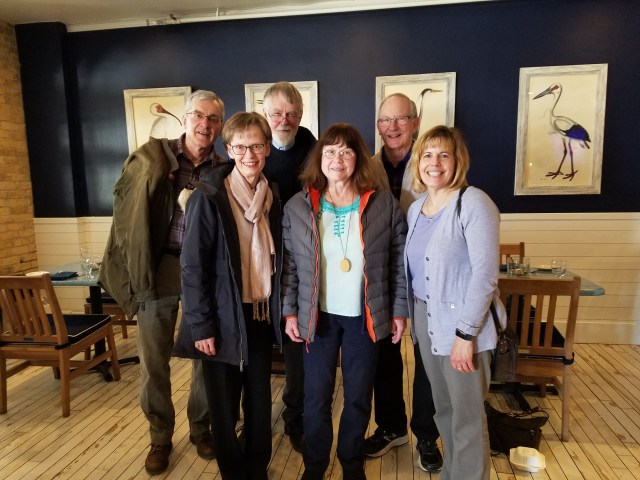
In mid-March, three delegates from the Sister Parish 2019 Open Delegation traveled to  First Lutheran Church in Duluth to share their experiences from the delegation.  Nancy Wiens told us, “We shared our open delegation experiences, talked about the push/pull factors of migration, and told about the resilience and positive efforts of several communities including San Antonio Los Ranchos. It was a good weekend!”

The delegates shared updates about the impressive community projects in Los Ranchos like the day care center and the library – both rare resources in rural Central America.  The delegation was also guided through a historical memory tour by Ingrid, one of the scholarship students supported by First Lutheran Church.  The community has put up beautiful murals and monuments in the central park.

In terms of what the delegation learned about migration, when we met with people in Guatemala last November, the specific requests for people in the U.S. were 1) to help reunite families affected by the zero tolerance and family separation policies, 2) to support immigration reform that acknowledges the transnational reality of Central American communities, and 3) to address the root causes of migration.  These are big goals, but you can connect to local efforts in your community, educate others, and stay tuned for action alerts from organizations like the Latin America Working Group and Opening Borders.

Posted in Education and Advocacy, United States | Tagged , , | Leave a comment

Wallingford and Guarjila celebrate 20-year anniversary / Seattle y Guarjila celebran 20 años

(español abajo)

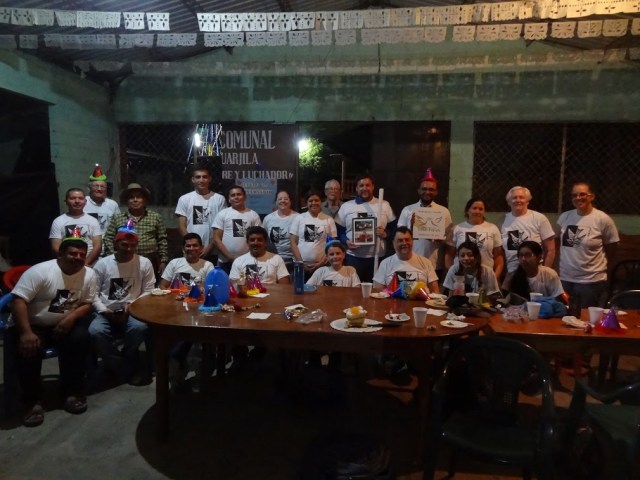
In February, we celebrated the 20th anniversary of the relationship between Wallingford United Methodist Church and the community of Guarjila. During our delegation, we joined in festivities for the community’s patron saint, we worshiped, we learned about the history and resistance of the community, and we saw the important community work being carried out today. Even more importantly, we strengthened the bonds of friendship and solidarity between the two communities.

Thank you to everyone who did their part to make sure this was such a wonderful experience. May this relationship celebrate many more anniversaries in the future!

Celebrando los 20 años del hermanamiento entre la Iglesia Metodista Unida Wallingford y la comunidad de Gurajila. Durante esta delegación, compartimos en la fiesta patronal, aprendimos sobre la historia y la resistencia de la comunidad, y vimos el trabajo comunitario que se hace hoy en día. Aún más importante, profundizamos los lazos de amistad y solidaridad entre las dos comunidades.

Muchas gracias a todas y todos que pusieron su granito de arena para que esta experiencia fuera tan bonita. ¡¡Que cumpla muchos años más el hermanamiento!!

Sharing hugs and greetings after mass. / Abrazos y saludos después de la misa.

Gathering with the elders group. / Encuentro con el grupo de adultos mayores.

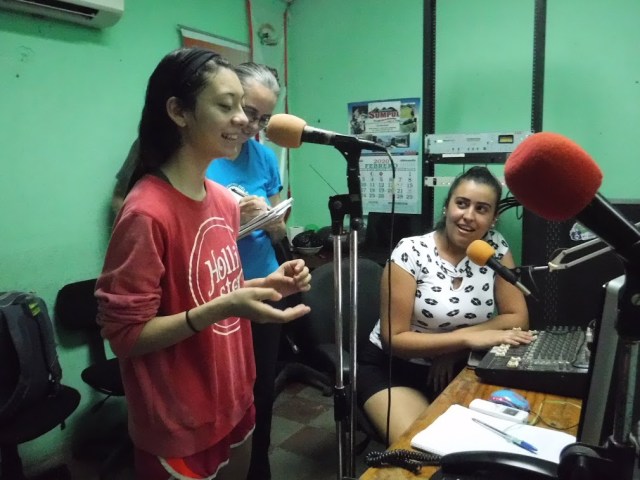
Speaking to the community on the local Radio Sumpul. / Saludando a la comunidad en la Radio Sumpul.

Enjoying the local playground. / Disfrutando los juegos en el parque.

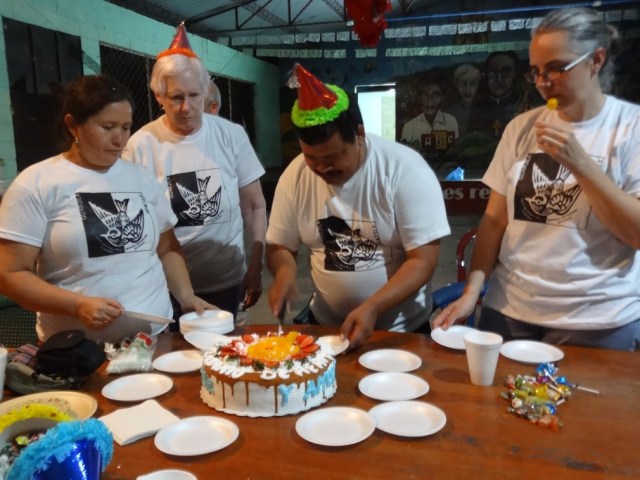
Celebrating the 20th “birthday” of the relationship. / Celebrando los 20 años del hermanamiento.

Party time! / Pura fiesta.

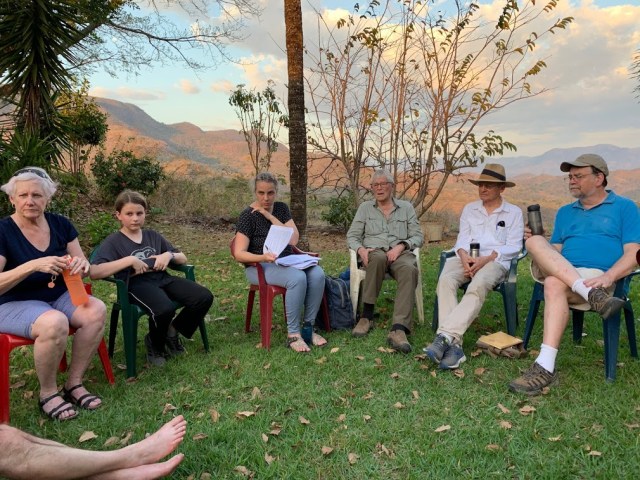
Daily reflection at the Jon Cortina museum. / Reflexión diaria en la Casa Museo Jon Cortina.

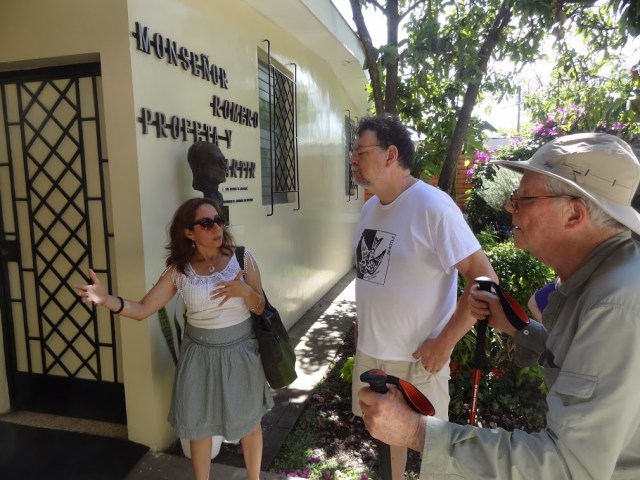
Visiting Divina Providencia and Saint Romero’s house. / Visitando a Divina Providencia y la casa de San Romero.

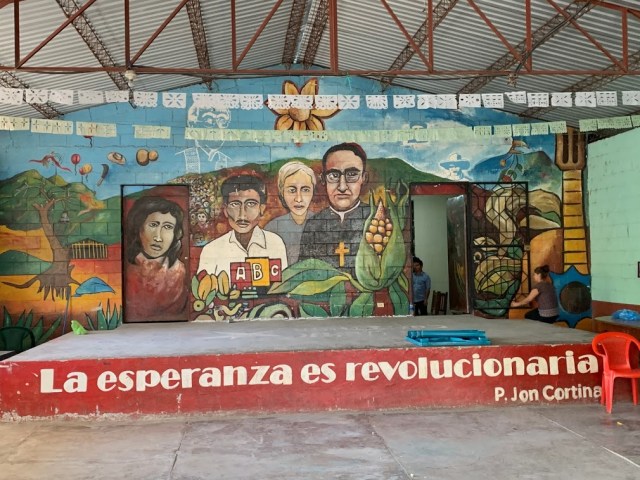
“Hope is revolutionary” – Father Jon Cortina / “La esperanza es revolucionaria.” – Padre Jon Cortina

Posted in Delegations, El Salvador, Español, North to South | Tagged , , , , , , , , | Leave a comment