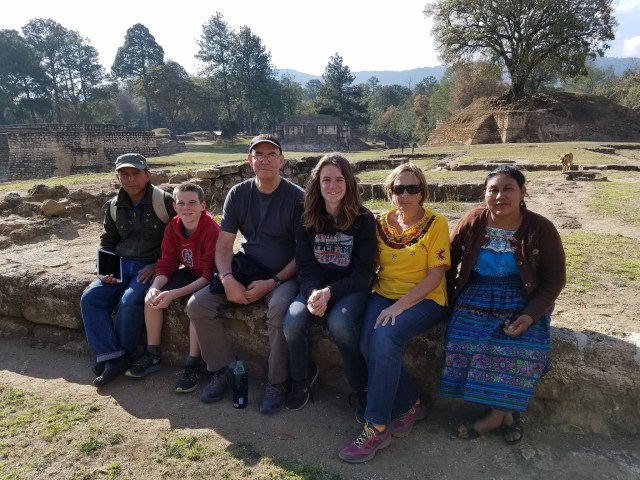
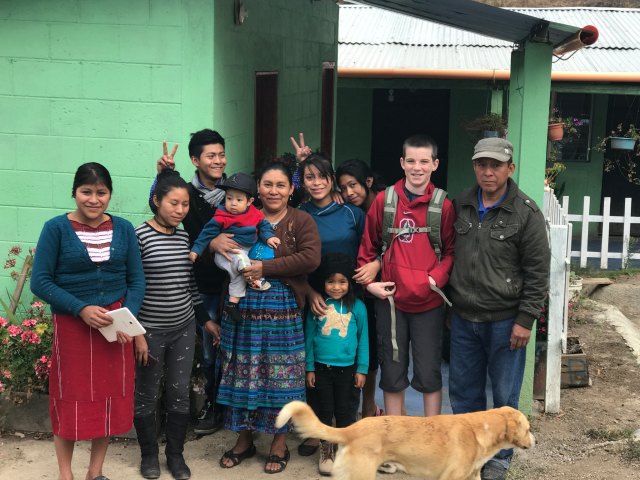
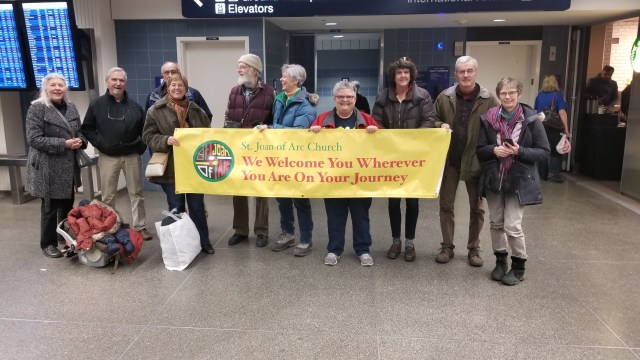
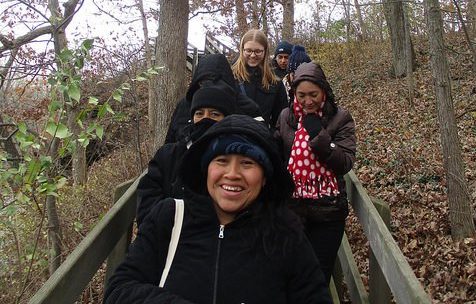
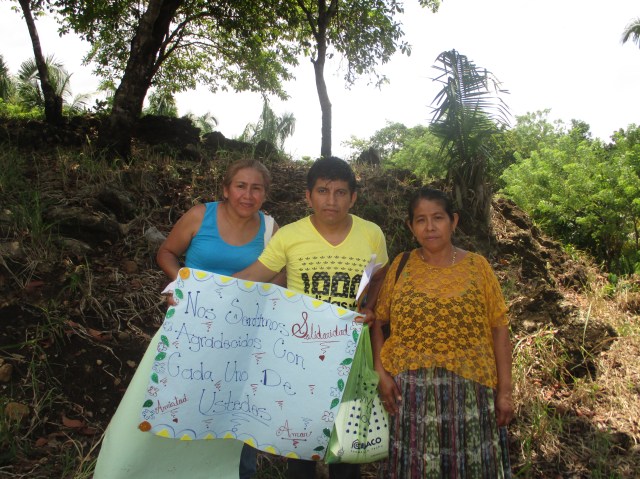
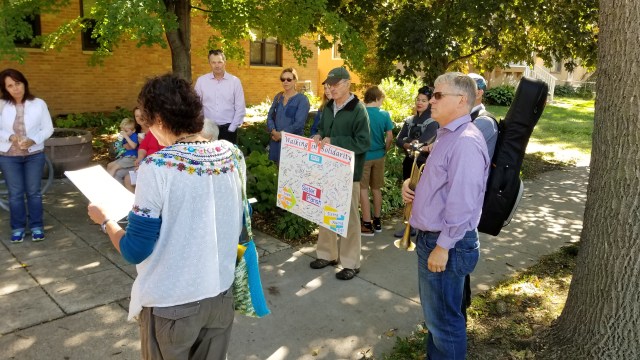
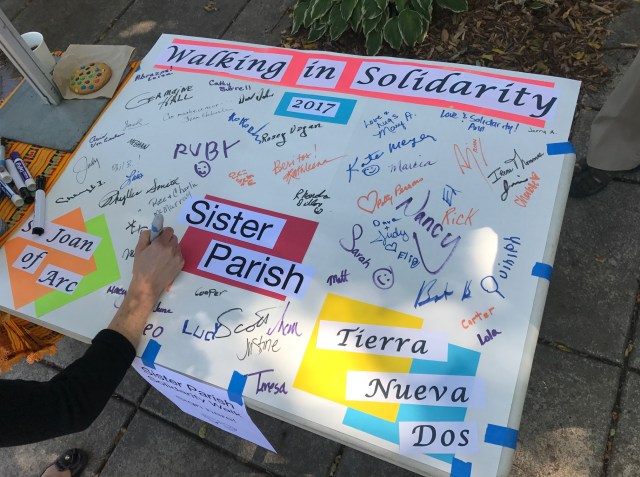
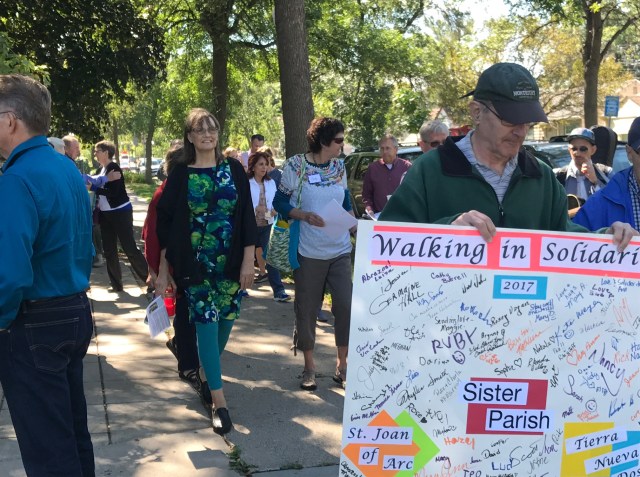
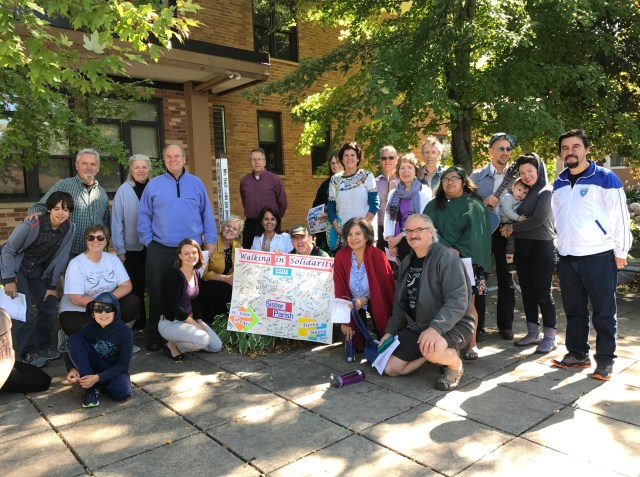
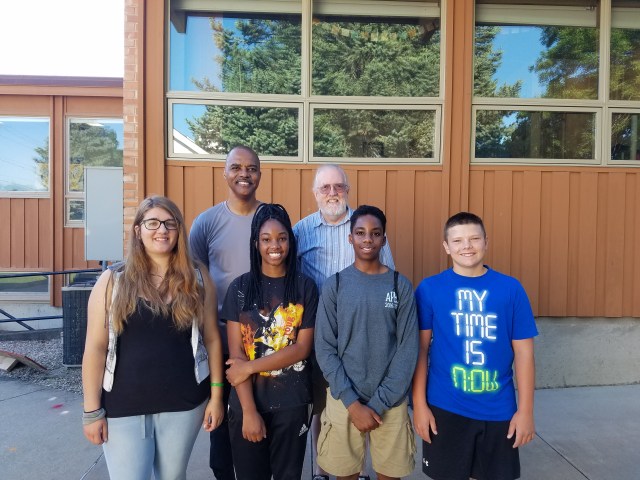
Seven delegates from Danville Congregational Church visited their partner community San Antonio in April 2017. After the delegates returned, the church held a Sister Parish-themed service to share the experience and the relationship with the wider church. Reverend Eric Sherlock shared the following sermon that Sunday, reflecting on the his delegation experience, the parable of the Good Samaritan, and the Archbishop Oscar Romero Prayer
 So this morning, I’d like to start off with a story. In the winter of 2007 an astonishing thing happened in New York City. A construction worker named Wesley Autrey was standing on a subway platform with his two young daughters, ages 4 and 6, waiting on a train. Suddenly another man on the platform, apparently suffering from a seizure stumbled and fell off the platform and down onto the subway tracks. Just at that moment, the headlights of a rapidly approaching train appeared in the subway tunnel. Acting quickly and with no thought for himself, Wesley jumped down onto the tracks and he pressed the man into the hollowed out space between the rails and spread his own body over him to protect him as the train passed over the two of them. The train cleared Wesley by mere inches, coming close enough to leave grease marks on his hat. Almost immediately and for good reason, Wesley became a national hero. People were deeply moved by his selflessness and they marveled at his bravery. What Wesley had done was a remarkable deed of concern for another person. He had no obvious reason to help the stranger. He didn’t know the man. He had his young daughters to think about. What he did was severe risk for his own life. But a human being was in desperate need and Wesley saw it and moved with compassion, did what he could to save him. The Subway Superman, that’s what the press called him. The Harlem Hero. But the headline in one newspaper described Wesley in Biblical terms. It read, “Good Samaritan Saves Man on Subway Tracks.”
This is a remarkable story. But when you think about it to hear someone referred to as a Good Samaritan is not all that uncommon in our culture. Whether it’s a person who stops for someone stranded on the highway or someone who chases down a purse thief, we all seem to have heard of at least one story in modern day of a Good Samaritan. The parable of the Good Samaritan is certain one of the most well-known parables in the Bible. Virtually everyone knows it or at least knows what it means to be a Good Samaritan. The story was included in our Sister Parish delegation devotional and was one that accompanied us on our journey to Guatemala. Now, while on this trip, it became pretty clear to me that this was a familiar story. In fact, I’d venture to say that we might know this parable a little too well. And sometimes when you become comfortable with a story, you take it for granted. You can forget the details that make it so great to begin with. And the story can lose its punch. I think that’s what’s happened with the story. It’s lost its punch, its shock value. And I think it has lost the heart of its message. So this morning, I’d like to unpack the message that we find in this parable and see if it might relate to our Sister Parish partnership.
 Often preachers like to turn this story into a moralistic tale about how we simply ought to go and help people. “Will you be a Good Samaritan today?” they ask. It becomes about how we should be polite and nice and if someone seems to be in need of help, well then, we ought to go help them. But the problem is we all already know this. Our church does a pretty good job of outreach and providing support and a friendly hand to those in need. So I’m not sure the story is simply about getting someone to be a better person and to do more good in the world. Thomas Long, a famous preacher, makes a good point. If this story were simply about being good and taking care of people, Jesus would have told the story a little differently. He would have left out all the business about the Samaritan. He would have simply said this, “A guy was lying in a ditch and three men passed him by. The first two didn’t do a thing and the third one did. Which one was the neighbor to the man in the ditch? That’s right, the third one. Be like him.” No need to say anything about the Samaritan at all and we can all go home and be happy. But Jesus didn’t tell the story that way, did he?
Just after Jesus tells the lawyer that the way to life is to love God with all your heart, soul, strength and mind and your neighbor as yourself, the lawyer asks Jesus another question. “But who, who is my neighbor?” It seems like the neighbor is trying to qualify the law, as if what the lawyer is really asking is, “Who isn’t my neighbor? Who don’t I have to love?” And we do that, don’t we? Sometimes we want to know the minimum amount of love we are asked to give. And so Jesus tells him a story about a man on the road from Jerusalem to Jericho. The man is given no race, no religion, no regional distinction and no indication of occupation, which means he could be any of us. And on this road to Jericho, the man is stripped, beaten and left for dead. And then, by chance, along comes a priest, an expert in the law. The priest sees the half-dead man and crosses to the other side of the road. Along comes a Levite, another expert of the law, who also sees the half-dead man and then crosses to the other side of the road, leaving him there. And then, Jesus says, came a Samaritan. Now if you listen closely enough you can hear everyone’s back straighten and their jaws clench. Along comes a Samaritan, the enemy of the Jews, the hated, the unclean one. The ending of Jesus’ story is clear. The Samaritan would be the one to help, the one to truly see, to truly see the man in the ditch. And not only would he help, but he would go above and beyond the call by paying for this man’s lodging and other expenses, and even coming back to check on him. A Samaritan becomes the hero of the story. There is no way around it and yet to combine hero with Samaritan would be like mixing oil with water. They don’t go together. It shatters the Jews moral universe because suddenly that which was bad is now good. And then Jesus asks the lawyer which of the three was a neighbor. The lawyer couldn’t muster the word Samaritan out of his mouth so he resorted to, “the one who showed him mercy.” The lawyer asked a question that would build walls. Tell me who my neighbor is, define it for me, give me parameters to work with. And in response, Jesus told a story that tore down all of his walls, a story in which the enemy becomes the hero, a story in which those listening are forced to see a different landscape, a different view, a reality without walls.
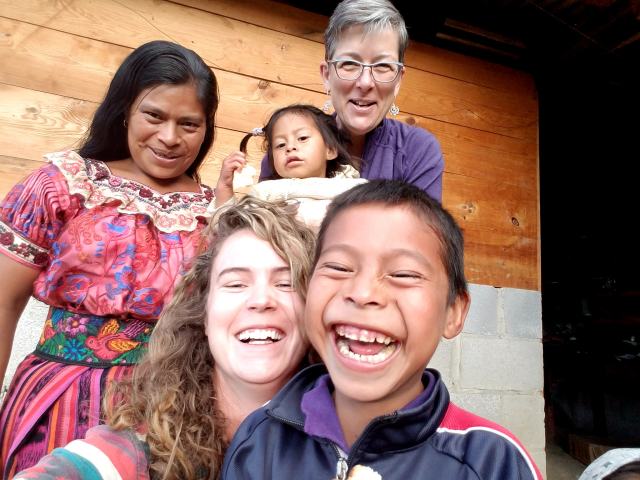
So, do you know who your neighbor is? Before going on this year’s trip with the Sister Parish delegation, questions swirled in my mind. What would the people be like? Would I be able to communicate beyond language? Where would I sleep? Would I like the food? And most importantly, what would the bathroom situation be like? And then, on top of all of that, I wondered, what is the purpose for this whole Sister Parish partnership? For me, the concept of Sister Parish was unfamiliar. How in the world is this mission? How is it outreach? My definition of outreach was already pretty well defined. I went to seminary. I had already built my wall. I had already set my parameters for mission and outreach to a nice, neat box and it was informed by my limited experience. For me, mission and outreach was all about being part of a project and helping those in need. And so we do this, don’t we? We make up our mind on a topic based on our limited experience as human beings. And so we build walls and we define parameters. It took the actual experience, however, of me going on the trip for me to see a different landscape of mission, mission that is not based on some project, mission that is not based on some monetary value where we go in as these white knights from the first world with a savior complex. Sister Parish is not based on any of these well-defined parameters. Instead, it is mission grounded in relationship. The Sister Parish partnership is a relationship where we in the North, with all of our access, with all of our education, with all of our privilege might journey South not to save, not to help, but to immerse ourselves in learning. To immerse ourselves in learning. By going South, we acknowledge that our brothers and sisters might have something to teach us about life, about faith, and about relationship, and that through the experience of immersion, we might receive unexpected love and grace from people who were once strangers.
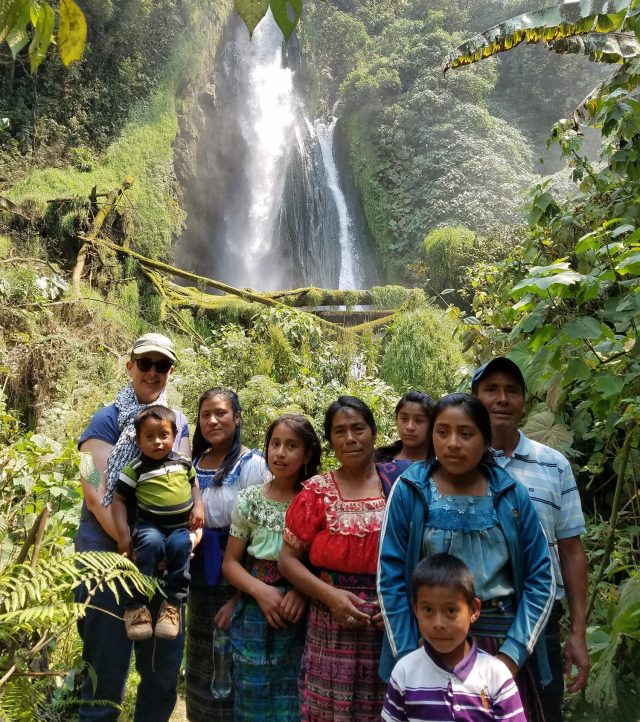 And so I wonder, can you see our brothers and sisters in San Antonio as your neighbors, as children of God whom you are called to love? Can you see the people in this room, sitting here this morning in this community as children of God and as your neighbor whom you are called to love? And then let’s take it a step further shall we. The single mother living on welfare, the handsome man driving the Tessla, the boring science teacher, the woman in the Prius with bumper stickers that prove she is a socialist or the man in the truck with decals all about Trump, guns and loving America. Can you see them? Can you really see them? Can you see them as your neighbor, as children of God? You see, I don’t think our eyesight is something easily changed, at least my eyesight about Sister Parish wasn’t easily changed, the kind of seeing Jesus asks of us can’t be easily changed with a new pair of glasses, rather it calls for a whole new set of eyes. And sometimes the only thing that can give us such a transplant is an experience, an experience of immersion where we encounter the stranger and receive unexpected love and grace.
I’d like to close this morning with one more story, a story about Jack Casey. When looking at his life, Jack had little reason to be a Good Samaritan. Casey was raised in a tough home, the child of an alcoholic father. He once said, “All my father every taught me was that I didn’t want to grow up to be like him.” But something happened to Jack when he was a child that changed his life. It changed his heart. He was having surgery one day and he was frightened. He remembers the surgical nurse standing there and compassionately reassuring him. “Don’t worry,” she said to Jack, “I’ll be here right beside you no matter what happens.” When Jack woke up again, she was true to her word and she was still there. Years later, Jack became a paramedic. One day, he was sent to the scene of a highway accident. A man was pinned upside down in his pick-up truck and as Jack was trying to get him out of the wreckage, gasoline was dripping down on the two of them. The rescuers were using power tools to cut the metal, so one spark could have caused everything to go up in flames. The driver was frightened, crying out how scared he was of dying. Jack remembered what had happened to him long ago on the operating table, how that nurse had spoken tenderly to him and stayed with him. And he said and did the same thing for the truck driver. “Look, don’t worry,” he said, “I’m right here with you, I’m going nowhere.” When he said that, he was reminded of how that nurse had said the same thing and she never left him. Days later, the rescued truck driver said to Jack, “You know, you were an idiot. The thing could have exploded and we both would have burned up.” Jack said, “I just could not leave you.”
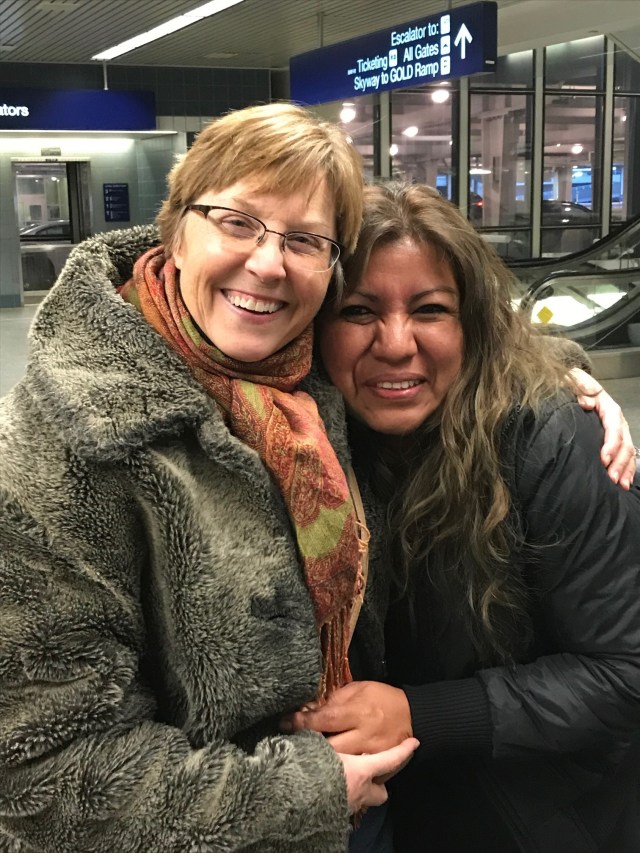
My prayer today, my friends, is that each one of us might have an experience, an experience of encountering people who were once strangers, but now are neighbors, where we receive love and grace. Amen.






















 sisterparishinc