Jan Heikes, a member of the Sister Parish Board of Directors, gave the following talk during a Sister Parish-themed service at Wallingford United Methodist Church in Seattle, Washington. The Sister Parish board rotates the location of meetings to visit current and potential Sister Parish churches. Contact us if you would like to host our board for a meeting. It is a great opportunity to gather and share Sister Parish with more people.
Hi! I’m Jan Heikes from Decorah, Iowa.
Our affiliation with Sister Parish began in about 1996 after my husband, Lee Zook, took a three-week summer course in Guatemala in preparation for course that he was leading for Luther College students. One of the activities was a visit to UPAVIM where he met Dick Fenske, one of Sister Parish’s founders. He came back very excited, and a core group including our current pastor, Jim Dale, started exploring the idea.
After some time of education and discernment, our first delegation traveled to Nebaj, Guatemala in June of 1999. Over the next three years, we had two additional delegations south, and one north. Although none of us considered ourselves financially well off, the living situations of our hosts showed us the reality of how many people lived…dirt floors, cooking over an open fire, hand dug pits in the corn field for bathrooms. But incredible hospitality in sharing all that they had with us, and with those even less fortunate than they were. And we struggled in how to be in solidarity with these folks given our wealth. We financed scholarships and a chicken raising project. I’m not sure exactly what happened…internal conflicts, politics, the leadership not acting on behalf of the entire Nebaj community…it’s all a little murky. And, staff recommended that the relationship end.
I tell you this because we don’t tend to talk about the things that can go wrong. The experience shook us, and it took a couple of years to regroup. Could we really make the same connection with another community like we did with the people of Nebaj? What would be our role in funding projects? How could we make sure that our relationship was based on our solidarity with each other?
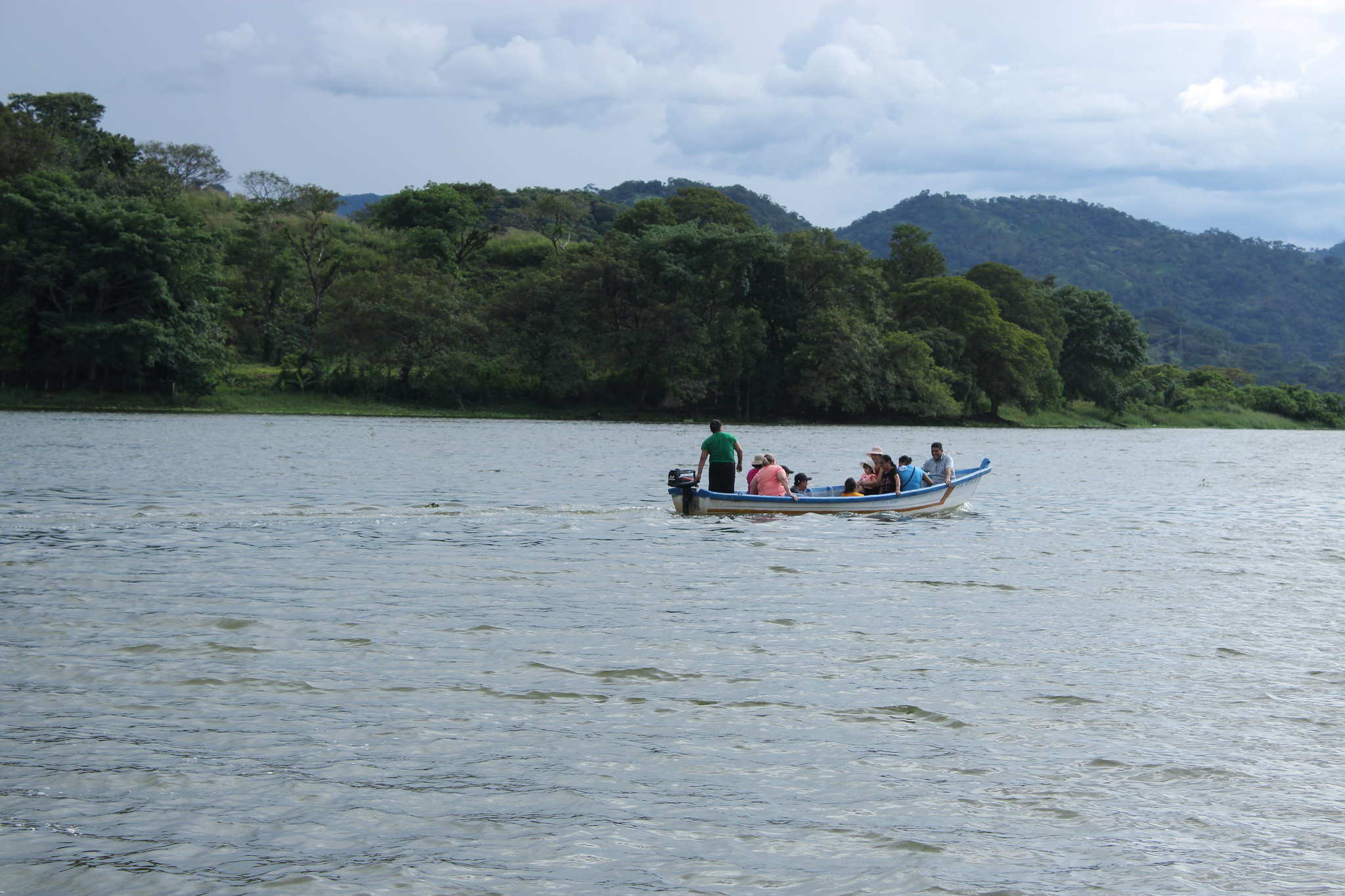
But in 2003, we had our first delegation to Potrerillos, El Salvador with delegations going north (January & November of 2005, 2007, 2011, 2013, and 2017) or south (2006 and 2014) every year until 2017. Maria Van Der Maaten & I have been back as part of open delegations, but COVID, Sister Parish active members growing older, and busy schedules interrupted several “almost” delegations. About 2 years ago, the group expanded to include the Congregational UCC across the street.
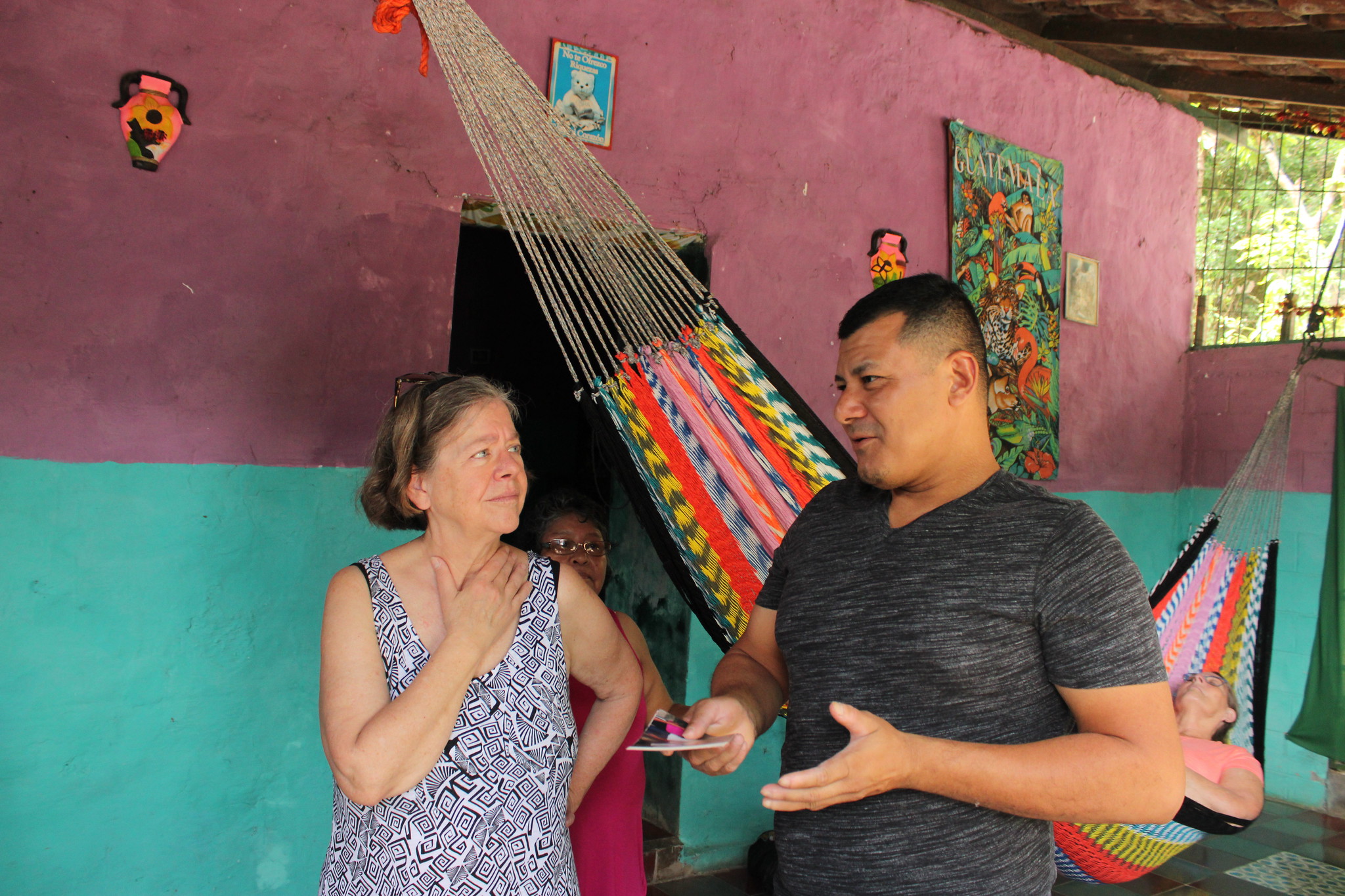
I continue to be struck by the importance of relationships built through Sister Parish, relationships that have long-lasting impacts even if the contact is not frequent. We know their stories. We can tell their stories. And this is powerful in a community that continues to have an increasing immigrant population that fill jobs in meat packing plants and on farms that would otherwise go unfilled. One of our delegates was a Decorah police officer who wanted to see what life was like for those people that he was running into on the streets. Now, Warren is a big man who towered over most of our friends in El Salvador. And when the host family found out that he was a policeman from the US, they were terrified. This was not the reaction that this teddy bear of a man had expected.
Personally I’ve had to confront and become aware of prejudices that I didn’t think I had…things like poor people aren’t in touch with the political situation. Boy, was I wrong there!!
But, I think that a piece that my younger son, Sam, wrote on return from his first visit as a 14 year old might say it best….
“Since I have come back from El Salvador, I have changed the way that I look at the world, the U.S., and everyday items that are supposedly necessities in America. Potrerillos, where we stayed as a delegation, was the poorest place I have been in all of my life. But it was remarkably one of the places with the most smiles walking the streets… This joyfulness that surrounded me affected the way I acted, and what I did. So when I came back home, I felt almost sad—that I wasn’t in that environment and that I had so many things around to distract me unlike my time in El Salvador.”




¡Hola! Soy Jan Heikes de Decorah, Iowa.
Nuestra conexción con Iglesias Hermanas comenzó alrededor de 1996 después de que mi esposo, Lee Zook, tomó un curso de verano de tres semanas en Guatemala como preparación para el curso que estaba dirigiendo para los estudiantes de la universidsad Luther College. Una de las actividades fue una visita a UPAVIM donde conoció a Dick Fenske, uno de los fundadores de Iglesias Hermanas. Regresó muy entusiasmado y un grupo en nuestra iglesia que incluía a nuestro pastor en ese entonces, Jim Dale, comenzó a explorar la idea.
Después de un tiempo de educación y discernimiento, nuestra primera delegación viajó a Nebaj, Guatemala en junio de 1999. Durante los siguientes tres años, tuvimos dos delegaciones más al sur y una al norte. Aunque ninguno de nosotros nos considerábamos económicamente ricos, las condiciones de vida de nuestro hermanamiento nos mostraron la realidad de cómo vivía mucha gente. También una hospitalidad increíble al compartir todo lo que tenían con nosotros y con aquellos aún más pobres que ellos. Y luchamos para ser solidarios con la gente dada nuestra riqueza. Financiamos becas y un proyecto de cría de pollos. No estoy seguro de qué sucedió exactamente… conflictos internos, política, unos líderes que tal vez no actuaron en nombre de toda la comunidad de Nebaj… todo es un poco confuso. Y el personal de Iglesias Hermanas recomendó que la relación terminara.
Les cuento esto porque no solemos hablar de las cosas que pueden salir mal. La experiencia nos sacudió y nos llevó un par de años reagruparnos. ¿Podríamos realmente establecer la misma conexión con otra comunidad como la que establecimos con la gente de Nebaj? ¿Cuál sería nuestro papel en la financiación de proyectos? ¿Cómo podríamos asegurarnos de que nuestra relación se basara en nuestra solidaridad mutua?
En 2003, tuvimos nuestra primera delegación a nuestro nuevo hermanamiento en Potrerillos, El Salvador, con delegaciones que iban al norte (en 2005, 2007, 2011, 2013 y 2017) y al sur (2006 y 2014) cada año hasta 2017. Maria Van Der Maaten y yo hemos vuelto como parte de delegaciones abiertas, pero el COVID, el envejecimiento de los miembros activos de Iglesias Hermanas y las agendas ocupadas interrumpieron varias delegaciones “casi”. Hace 2 años, el grupo se expandió para incluir a la la Iglesia Unida Congregacional al otro lado de la calle.
Sigo sorprendiéndome por la importancia de los hermanamientos construidos a través de Iglesias Hermanas, relaciones que tienen impactos duraderos incluso si el contacto no es frecuente. Conocemos la historia. Podemos contar sus historias. Y esto es poderoso en una comunidad que sigue teniendo una población inmigrante en aumento que ocupa puestos de trabajo en plantas empacadoras de carne y en granjas que de otra manera quedarían vacantes. Uno de nuestros delegados era un policía de Decorah que quería ver cómo era la vida de las personas con las que se cruzaba en la calle en Decorah. Warren es un hombre corpulento que superaba en altura a la mayoría de nuestros amigos de El Salvador. Y cuando la familia anfitriona descubrió que era un policía de los Estados Unidos, se aterrorizaron. Esta no era la reacción que este hombre con corazón grande esperaba.
Personalmente, he tenido que enfrentarme y tomar conciencia de prejuicios que no creía tener… cosas como que la gente pobre no está en contacto con la situación política. ¡Vaya, estaba muy equivocada!
Creo que un texto que mi hijo menor, Sam, escribió al regresar de su primera visita a los 14 años lo explica mejor…
“Desde que regresé de El Salvador, he cambiado la forma en que veo el mundo, los Estados Unidos y los artículos cotidianos que supuestamente son necesidades en Estados Unidos. Potrerillos, donde nos quedamos como delegación, fue el lugar más pobre en el que he estado en toda mi vida. Pero, sorprendentemente, era uno de los lugares con más sonrisas al caminar por las calles… Esta alegría que me rodeaba afectó la forma en que actuaba y lo que hacía. Así que cuando regresé a casa, me sentí casi triste, porque no estaba en ese entorno y tenía tantas cosas a mi alrededor que me distraían, a diferencia de mi tiempo en El Salvador.”


 sisterparishinc